





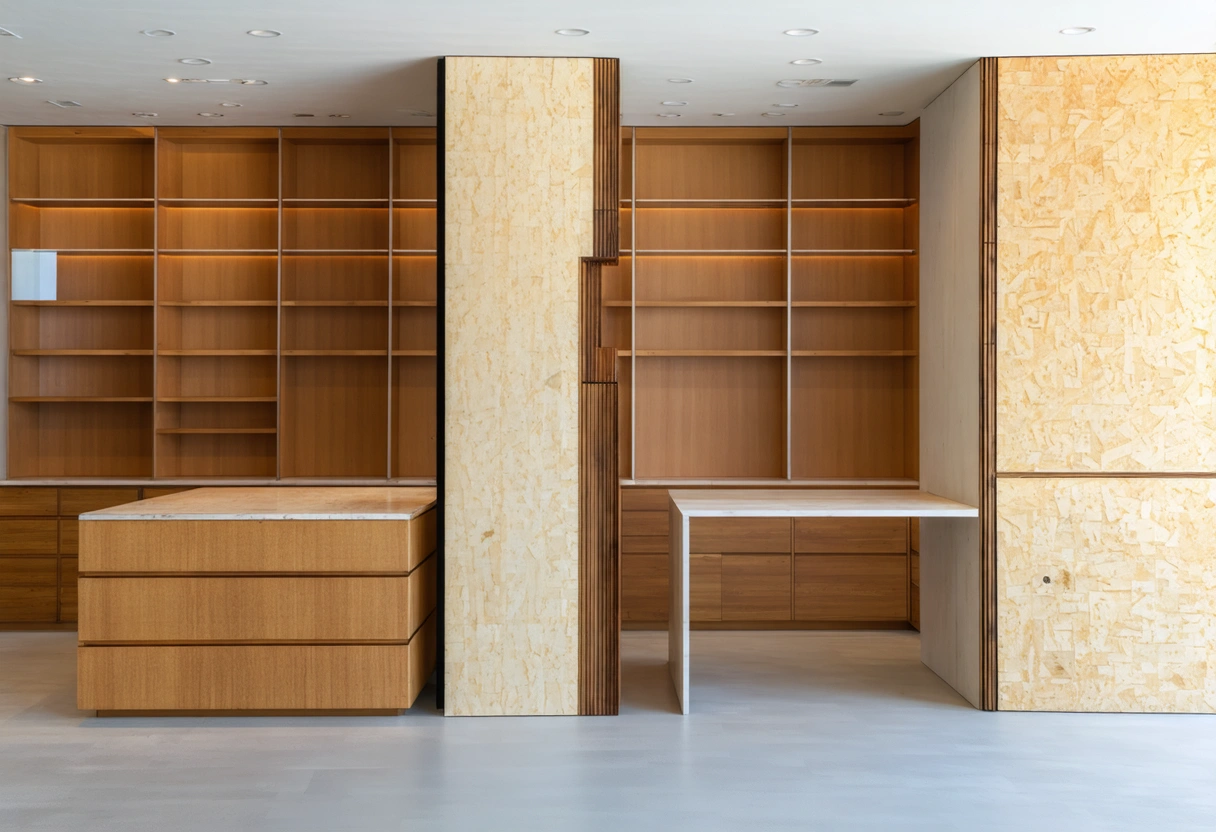
Cabinet boxes do a lot of quiet work. They support dishes, survive daily door swings, resist occasional spills, and help keep countertops, drawers, and hardware aligned year after year.
Two of the most common cabinet box materials are plywood and particleboard. Both can be used in quality cabinets, but they behave differently when exposed to weight, moisture, fasteners, and long-term wear.
What These Cabinet Materials Are Made Of
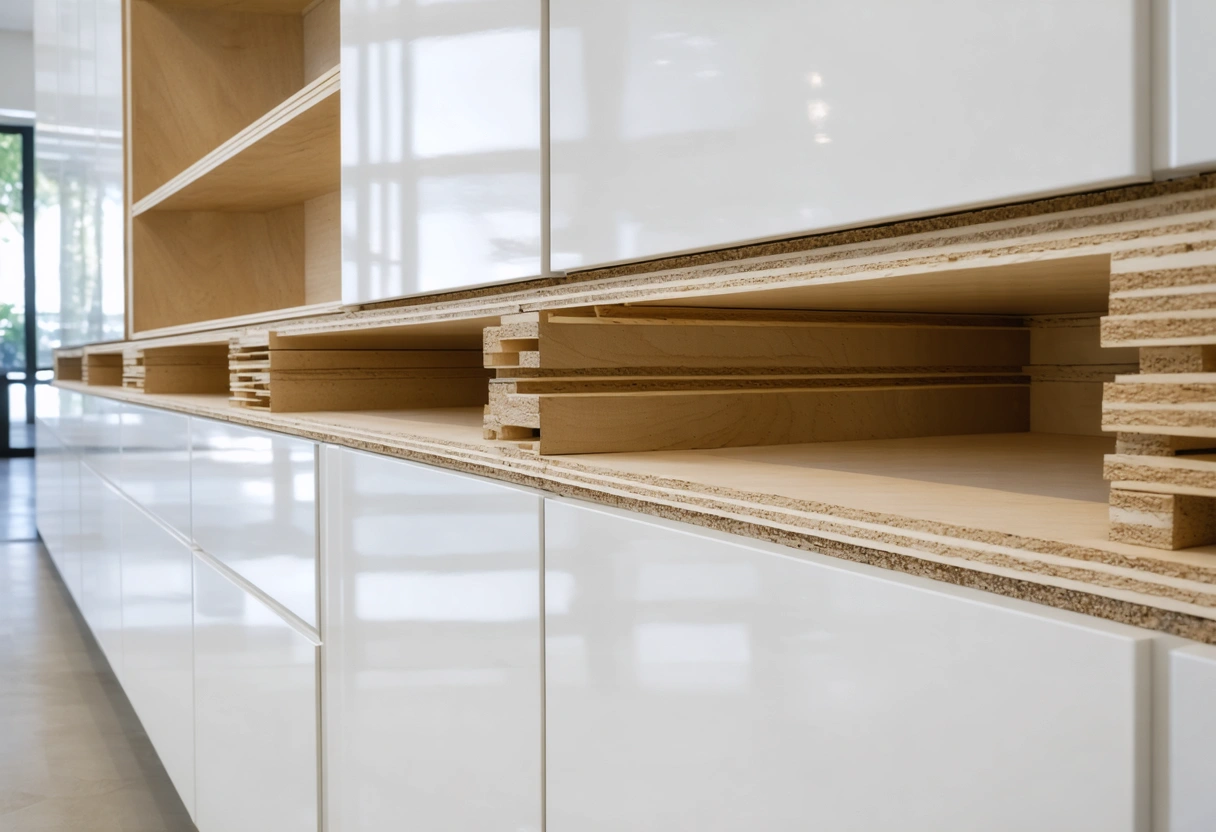
Plywood is an engineered wood panel made from thin layers of wood veneer that are glued together with the grain direction alternating from layer to layer.
Particleboard is also an engineered wood product, but it is made from wood particles, chips, sawdust, and resin that are compressed into flat panels under heat and pressure.
The key difference is not simply that one is “wood” and the other is not. Both are manufactured materials designed for predictable performance. The more important distinction is how each panel is structured internally, because that structure affects screw holding, moisture resistance, shelf strength, weight, and how well the cabinet box handles stress over time.
Why the Core Construction Matters
In plywood, the layered veneer structure distributes force across multiple directions. This can make the panel more resilient when cabinets are moved, installed, loaded with heavy items, or fastened to walls.
In particleboard, the compressed particle core is dense and consistent, but it does not have long continuous grain fibers. Fasteners can hold well when properly installed, especially with modern cabinet hardware and confirmat screws, but the material is less forgiving if screws are overtightened, removed, and reinstalled repeatedly.
How They Perform Under Everyday Kitchen Wear
Kitchen cabinets face stress that adds up slowly. Plates and cookware create steady weight, drawers are opened thousands of times, and small leaks or splashes can go unnoticed near sinks, dishwashers, and coffee stations.
Plywood generally performs better when strength and impact resistance are priorities. It is often preferred for cabinets that need to support stone countertops, wide shelves, heavy pantry storage, or frequent use.
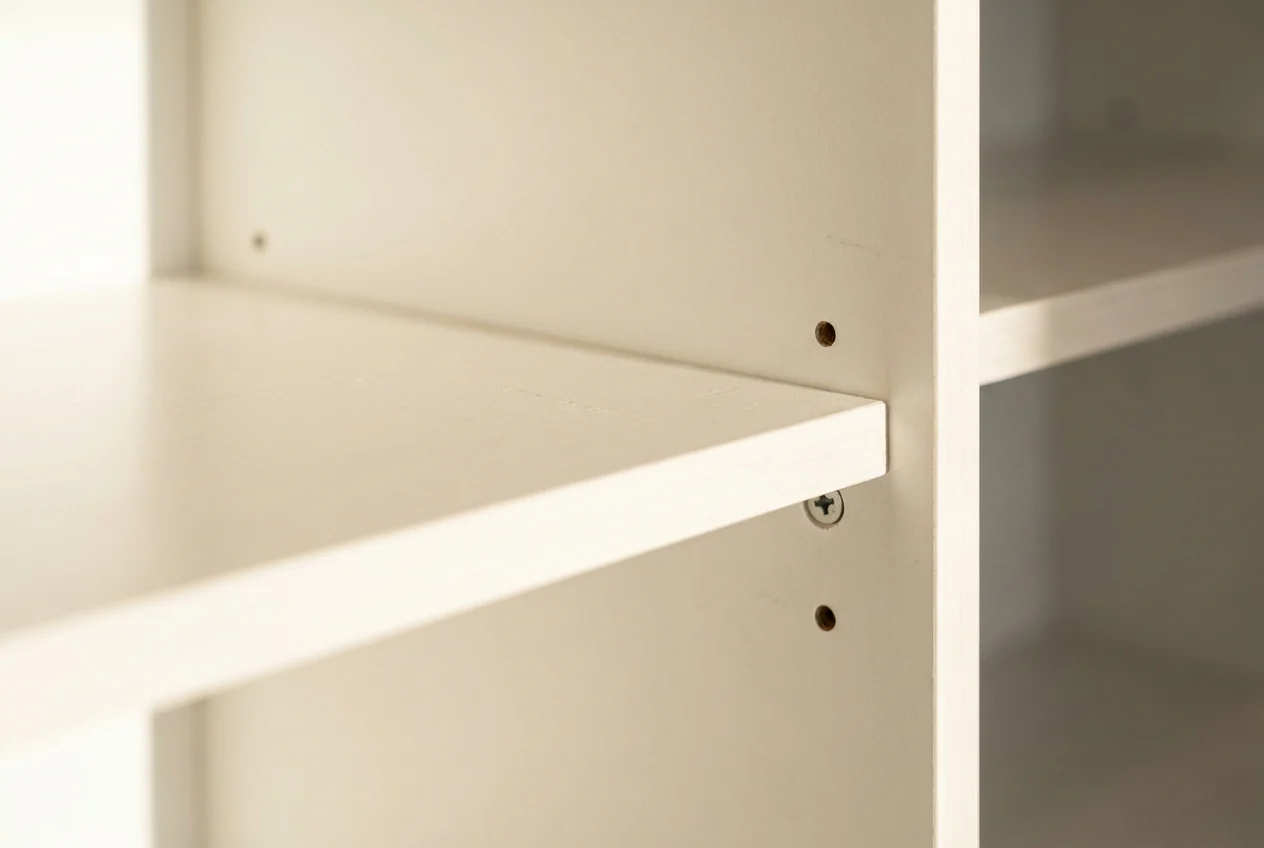
Particleboard can perform well in dry, controlled conditions, particularly when it is properly sealed and covered with a durable surface. Its smooth, flat composition works well with laminates and melamine interiors, creating a clean and consistent appearance inside the cabinet.
Moisture Resistance and Water Damage
Moisture is one of the biggest separators between plywood and particleboard cabinets over time. Kitchens and bathrooms are full of small water risks, including sink splashes, dishwasher steam, plumbing leaks, wet cleaning cloths, and damp items placed inside base cabinets.
Plywood usually tolerates incidental moisture better than particleboard. It can still delaminate, stain, or warp if exposed to enough water for long enough, but its layered veneer structure often remains more stable after minor exposure.
Particleboard is more vulnerable when water reaches the core. Because it is made from compressed wood particles, it can swell noticeably as it absorbs moisture.
Where Water Damage Usually Starts
Water damage often begins at the least protected parts of the cabinet, not at the broad finished face. Exposed cut edges, cabinet bottoms, toe kicks, shelf pin holes, plumbing cutouts, and seams around sink bases are common weak points.
The quality of the surface covering also matters. Melamine, laminate, and veneer can protect either material when they are intact and well bonded. However, if a corner chips or an edge band separates, particleboard is usually less forgiving.
Best Locations for Each Material Around Moisture
For sink bases, bathroom vanities, laundry rooms, and cabinets near dishwashers, plywood is often the safer long-term choice. These locations are more likely to experience leaks, humidity, and repeated moisture contact.
Particleboard can still be suitable in dry cabinet areas, such as upper cabinets, linen cabinets, office built-ins, entertainment centers, and pantry storage that is not exposed to plumbing.
Screw Holding, Hardware, and Long-Term Adjustability
Cabinet durability is not only about the panels themselves. Hinges, drawer slides, pullouts, shelf supports, and installation screws all depend on the cabinet material to hold fasteners securely.
Plywood generally has stronger screw holding because screws bite into layers of wood veneer. This is especially helpful at cabinet sides where drawer slides are mounted, at hinge plates on frameless cabinets, and at wall attachment points.
Particleboard can hold screws adequately when the right fasteners are used and the cabinet is assembled correctly. Many manufacturers design particleboard cabinets with specialized screws, dowels, cam locks, or construction methods that improve strength.
Why This Matters for Hinges and Drawer Slides
Hinges create repeated stress because cabinet doors act like levers. A heavy door that is opened and closed daily puts ongoing pull on the hinge screws and mounting plates.
Drawer slides create similar concerns. A drawer full of pots, canned goods, or small appliances places weight on the slide fasteners every time it moves.
Repairability After Hardware Damage
If a screw strips out in plywood, repairs are usually more straightforward. A carpenter may be able to use a larger screw, wood glue and dowel, or another wood repair method to restore holding strength.
Stripped particleboard holes can be more difficult to repair cleanly. Fillers and inserts may work, but the surrounding core can continue to crumble if the damage is extensive.
Shelf Strength, Sagging, and Load Capacity
Cabinet shelves reveal material differences in a practical way. A shelf may look straight when new, but after years of holding dishes, pantry goods, books, or appliances, weaker panels may begin to sag.
Plywood tends to resist sagging better than particleboard at the same thickness, especially when the shelf is wide or heavily loaded. Its layered construction gives it more bending strength, making it a good choice for tall pantry cabinets, wide base cabinets, and storage areas used for cookware or small appliances.
Particleboard shelves can perform acceptably when the spans are shorter and the loads are moderate. Many melamine-coated particleboard shelves work well for everyday dishes, glassware, and packaged food.
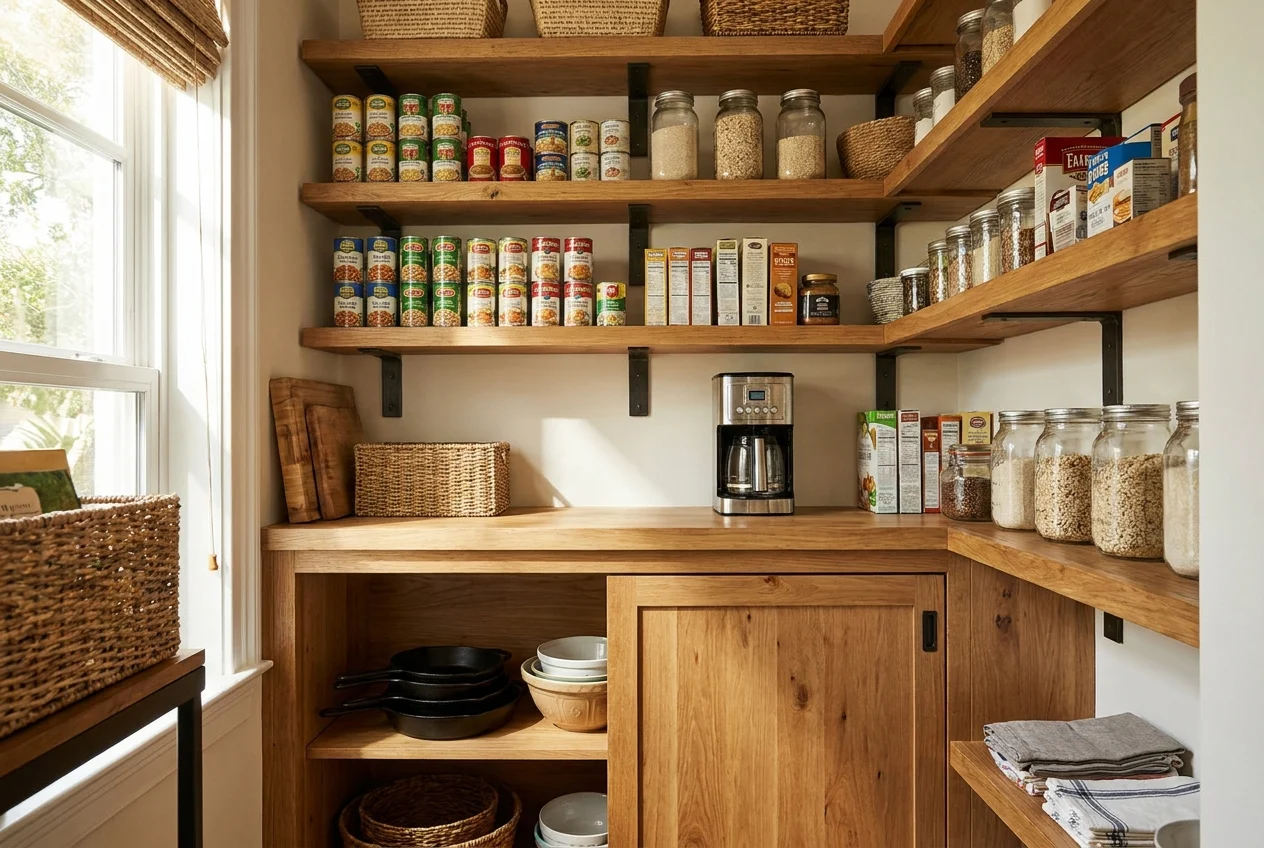
Examples of High-Load Cabinet Areas
A pantry shelf loaded with canned goods places much more stress on a panel than an upper cabinet shelf holding mugs. A base cabinet storing cast iron pans, mixing bowls, or countertop appliances also creates demanding conditions.
For lighter-duty storage, particleboard may be perfectly serviceable. A laundry cabinet holding towels, an office cabinet holding supplies, or an upper cabinet holding lightweight dinnerware may not require the added strength of plywood.
How Cabinet Design Can Reduce Sagging
Material choice is important, but design also plays a major role. Thicker shelves, shorter spans, center supports, solid front edging, and adjustable shelf pins with strong side support can all improve performance.
For homeowners comparing cabinet lines, it is worth looking beyond the material name and checking shelf thickness, cabinet width, and support details. A wide cabinet with a thin adjustable shelf should raise questions, especially if it will be used for heavy storage.
Weight, Installation, and Structural Support
Particleboard is typically heavier than plywood in comparable cabinet panels. This extra weight can affect delivery, installation, wall mounting, and long-term stress on fasteners. While weight alone does not determine quality, it does influence how easy cabinets are to handle and how carefully they must be installed.
Plywood cabinets are often easier for installers to lift, level, and secure, particularly in large wall cabinets or tall pantry units.
Particleboard cabinets may require more careful handling because the panels are heavier and edges can be more vulnerable to chipping if dropped or dragged. Proper wall anchoring, level installation, and support during fastening are especially important.
Why Installation Quality Matters
Even the best cabinet material can fail early if the boxes are not installed correctly. Cabinets should be level, square, securely fastened to studs or appropriate blocking, and supported where necessary.
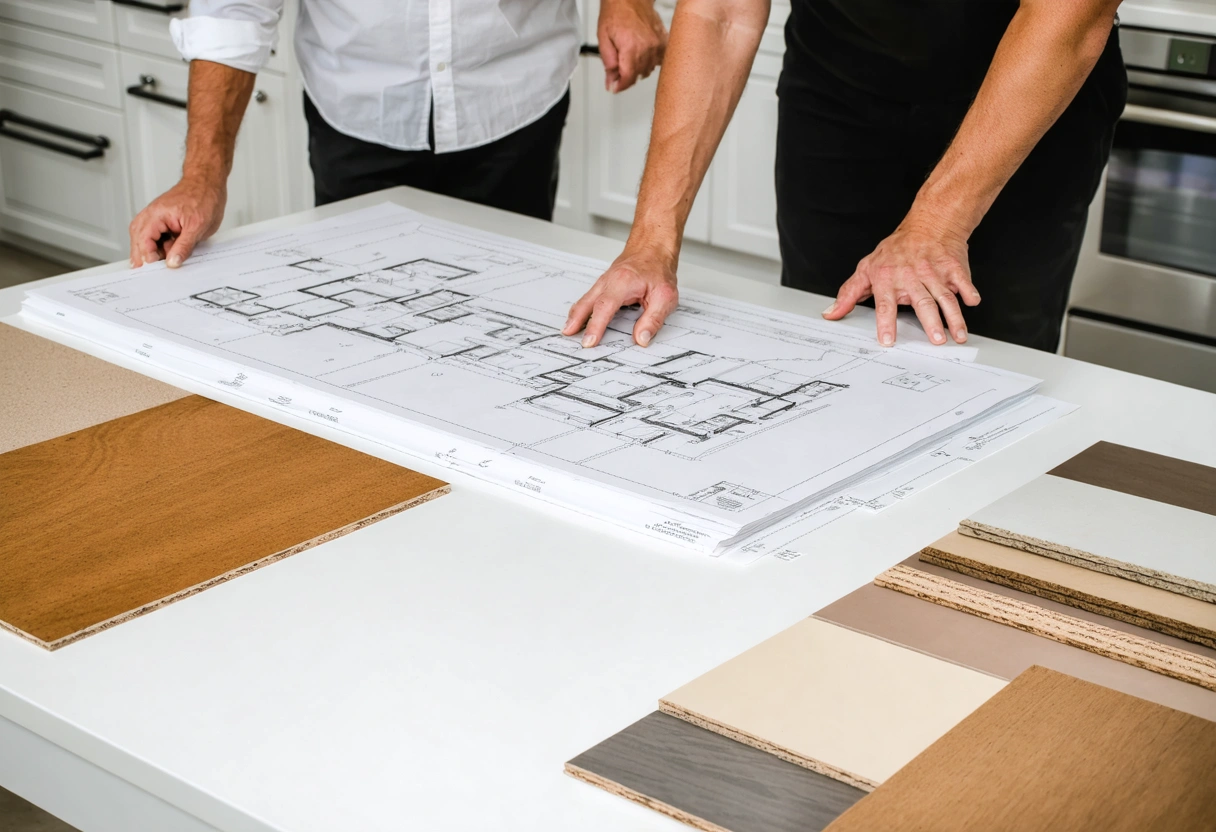
This is particularly important for stone countertops, large pantry cabinets, and wall cabinets loaded with dishes. Plywood offers a wider margin for error, but neither plywood nor particleboard should be expected to compensate for rushed installation or inadequate wall support.
Cost, Value, and When Each Material Makes Sense
Plywood usually costs more than particleboard, which is one reason it is often associated with upgraded cabinet lines. The higher price reflects the material itself, added manufacturing costs, and the performance advantages it can provide in demanding conditions.
Particleboard is often the more budget-friendly choice. For many homeowners, that lower cost can make a project more realistic, especially in rentals, secondary spaces, laundry rooms, or remodels where the cabinets do not need to last for decades.
When Plywood Is Usually Worth the Upgrade
Plywood is often worth considering for sink bases, bathroom vanities, heavy-use kitchens, wide drawer bases, tall pantry cabinets, and homes where cabinets are expected to last through many years of daily use.
If the budget does not allow plywood throughout the entire kitchen, some cabinet lines allow upgrades in selected areas. For example, choosing plywood for the sink base and pantry cabinets while using particleboard elsewhere can balance durability and cost.
When Particleboard Can Be a Practical Choice
Particleboard can make sense for dry areas, light to moderate storage, budget-conscious remodels, and projects where a smooth melamine or laminate interior is preferred. It is also common in many factory-built cabinets because it provides a flat, consistent surface for finishes and machining.
The best particleboard cabinets are not simply cheap boxes. They should have durable surface coverings, sealed or protected edges, sturdy joinery, quality hardware, and proper installation.
How to Compare Cabinet Quality Beyond the Material Label
The words plywood and particleboard are useful, but they do not tell the whole story. Cabinet quality depends on panel thickness, joinery, back construction, drawer box material, hardware quality, finish durability, and installation standards.
When comparing cabinets, ask what parts are made from each material. Some cabinets may have plywood sides but particleboard shelves. Others may use particleboard boxes with plywood backs or solid wood face frames.
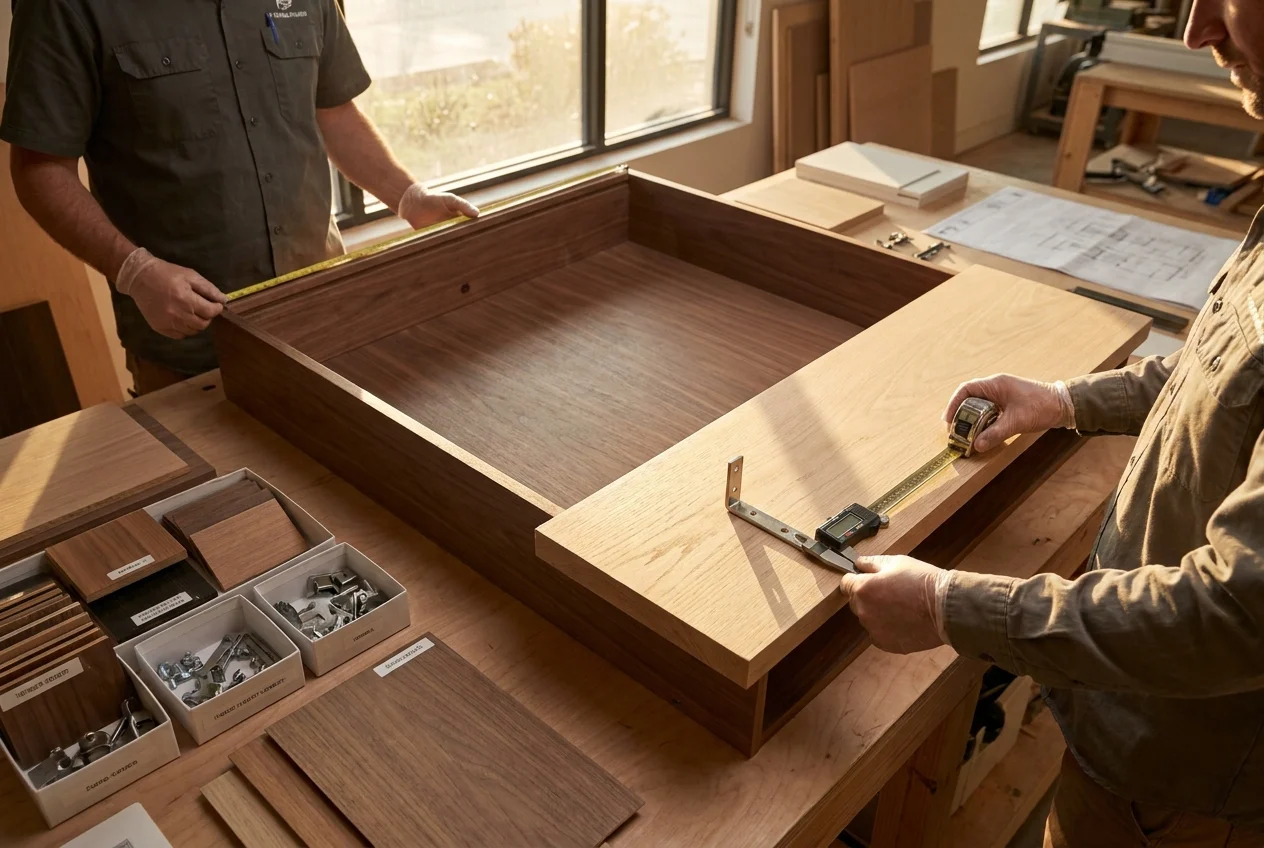
Details Worth Checking Before You Buy
Look at the cabinet back, not just the sides. A strong full-height back panel can improve rigidity and installation strength. Check shelf thickness and support method, especially in wide cabinets.
Open and close drawers to evaluate slide quality and box stiffness. Inspect hinge mounting areas and ask whether hardware can be adjusted or replaced easily.
The Role of Finish and Edge Banding
Surface protection can dramatically affect how long either material lasts. A durable finish, well-bonded laminate, or quality melamine surface helps prevent moisture and wear from reaching the core.
With particleboard, edge protection is critical. Exposed or poorly sealed edges can absorb moisture quickly and begin to swell. With plywood, edge protection still matters for appearance and longevity, but the material is generally more tolerant if a small area is exposed.
Which Material Holds Up Best Over Time?
In most demanding kitchen and bath conditions, plywood holds up better over time. It offers stronger screw holding, better resistance to moisture damage, greater strength for shelves and structural panels, and improved repairability.
Particleboard can still hold up well when it is used in the right conditions. In dry areas with moderate loads, quality surface protection, good hardware, and careful installation, it can provide years of reliable service at a lower cost.
A Practical Buying Rule
Choose plywood where failure would be most expensive or inconvenient, such as sink bases, vanities, pantry cabinets, and heavily used drawer bases. Consider particleboard where conditions are dry, loads are lighter, and replacement cost is less of a concern.
Most importantly, compare the whole cabinet, not just the core material. A durable cabinet comes from the right combination of material, panel thickness, joinery, finish, hardware, and installation.
Need help with Plywood vs. Particleboard Cabinets: Which Material Holds Up Best Over Time??