



Choosing between cabinet refacing and full cabinet replacement is one of the most important decisions in a kitchen remodel. Cabinets dominate the room visually, influence how the kitchen functions, and often take up a large share of the renovation budget.
The right choice depends on more than whether your cabinet doors look outdated. It comes down to cabinet box condition, layout, budget, timeline, sustainability goals, storage needs, and the long-term value you want from your investment.
Start With the Cabinets You Already Have
Before comparing prices, door styles, finishes, or hardware, take a close look at the existing cabinet structure. Cabinet refacing works best when the cabinet boxes are sturdy, square, and securely attached to the walls. If the frames are solid wood or high-quality plywood, and the layout already works well for your household, refacing can transform the look of the kitchen without tearing everything out.
Open every cabinet door and drawer. Look for water damage under the sink, swelling around the dishwasher, sagging shelves, loose frames, cracked side panels, musty smells, or evidence of pests. Minor surface wear is not a dealbreaker. Deep structural damage, extensive mold, crumbling particleboard, or cabinets pulling away from the wall usually point toward replacement.
Also consider how the kitchen feels day to day. If you constantly struggle with blind corners, narrow drawers, poor traffic flow, or cabinets that block appliances from opening fully, the issue may be layout rather than appearance. Refacing can refresh what is there, but it cannot completely reinvent an inefficient footprint unless paired with targeted modifications.
What Cabinet Refacing Actually Includes
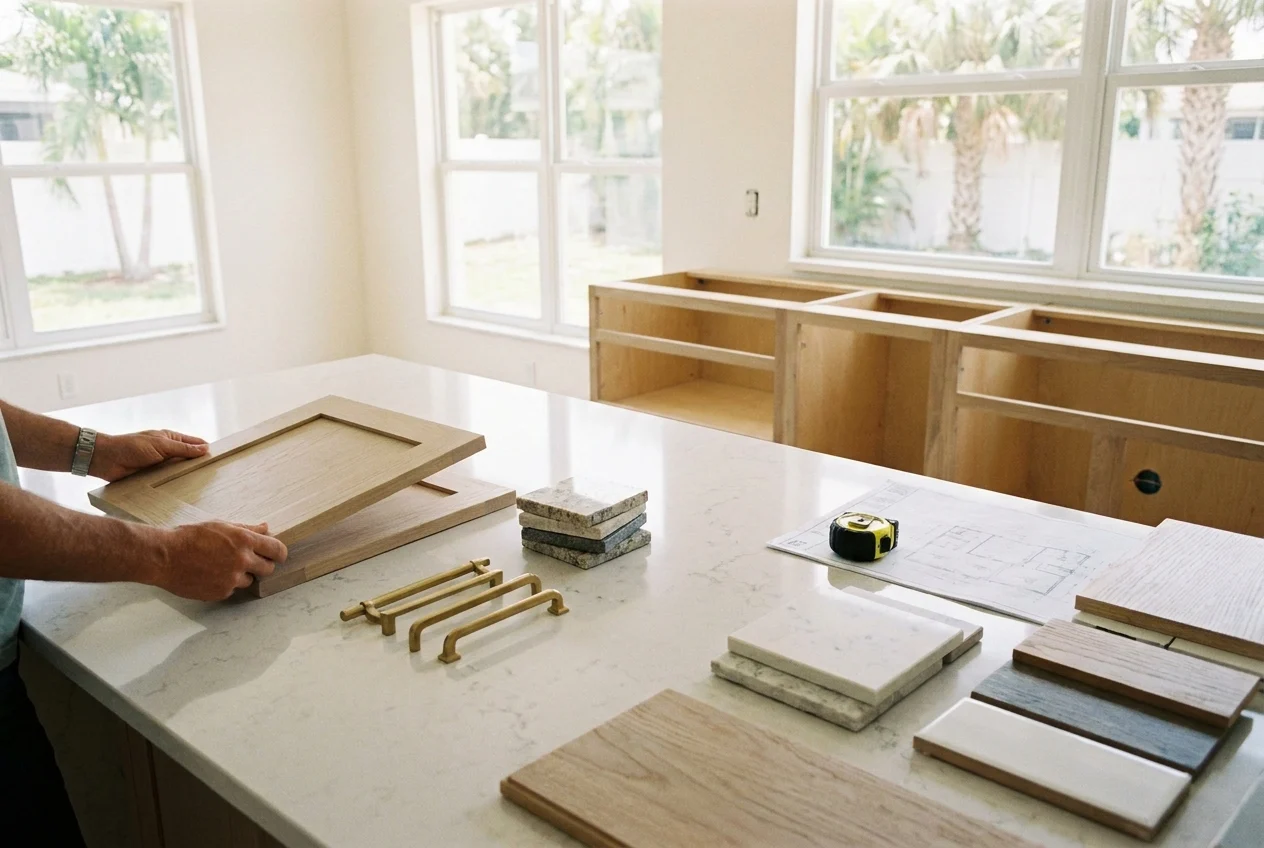
Cabinet refacing is a remodeling method that keeps the existing cabinet boxes in place while replacing or covering the visible surfaces. Typically, the old doors and drawer fronts are removed, the face frames and exposed cabinet sides are covered with matching veneer or laminate, and new doors, drawer fronts, hinges, pulls, and knobs are installed.
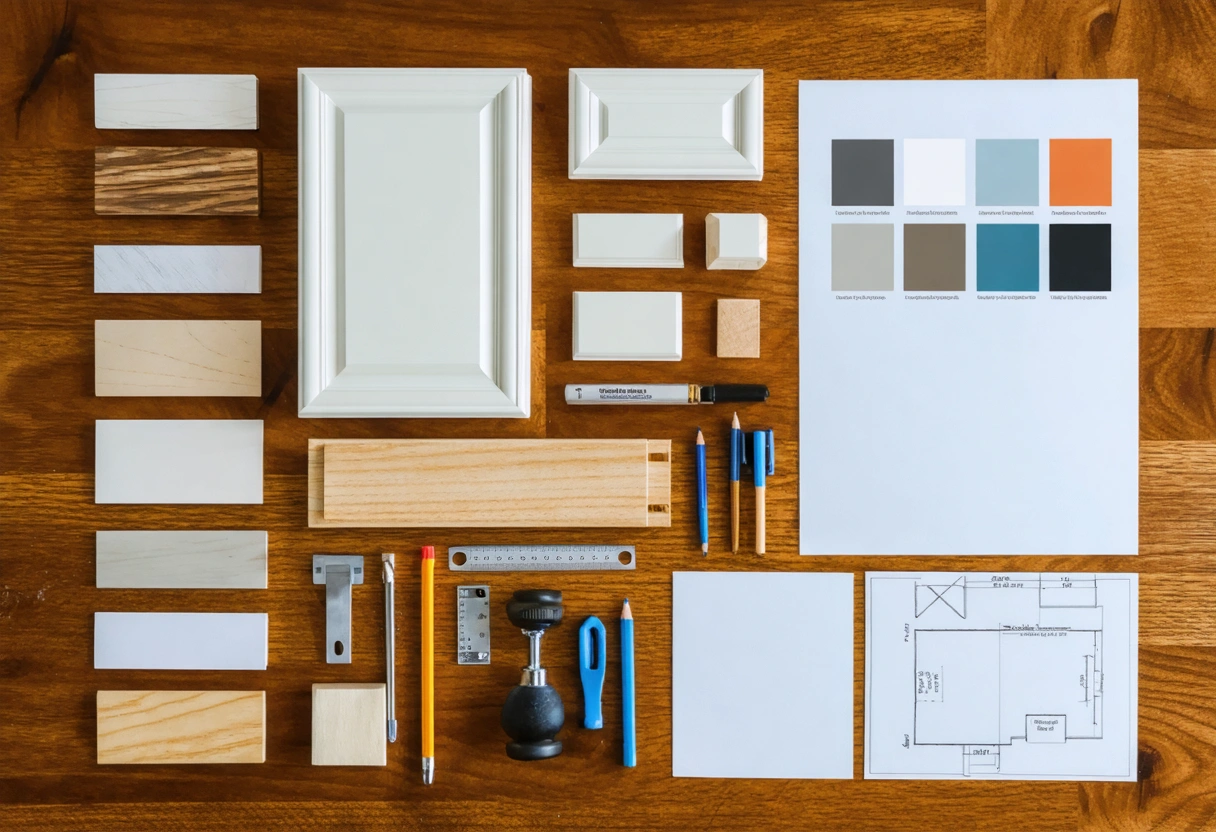
The result can look surprisingly similar to brand-new cabinetry because the parts you see most are new. Homeowners can choose from shaker doors, raised panels, slab fronts, traditional profiles, modern matte finishes, wood veneers, painted finishes, stains, and decorative hardware. Soft-close hinges and drawer glides are often added at the same time, giving older cabinets a more current feel.
Refacing is not the same as simply painting cabinets. Painting changes color but keeps the original doors, drawer fronts, and style. Refacing changes the door profile, updates the exposed surfaces, and can dramatically alter the kitchen’s design character. A dated arched oak kitchen, for example, can become a crisp white shaker kitchen, a warm walnut-inspired space, or a sleek contemporary design.
Many refacing projects also include practical upgrades. Common add-ons include roll-out trays, pull-out trash centers, new drawer boxes, crown molding, light rail, decorative end panels, glass-front doors, and upgraded under-cabinet lighting. These details can make refacing feel like a larger remodel while still preserving the cabinet framework.
What Full Cabinet Replacement Involves
Cabinet replacement means removing the existing cabinets and installing an entirely new cabinet system. This can be a like-for-like replacement using the same basic layout, or it can be part of a complete kitchen redesign that changes cabinet locations, appliance placement, storage zones, islands, pantries, and traffic flow.
Replacement offers the greatest design freedom. You can raise cabinet height to the ceiling, add deep drawer bases, move the sink, widen openings, improve corner storage, create a coffee station, add a pantry wall, or redesign the kitchen around better work zones. If the current layout is awkward, cramped, or poorly suited to your lifestyle, replacement may solve problems that refacing cannot.
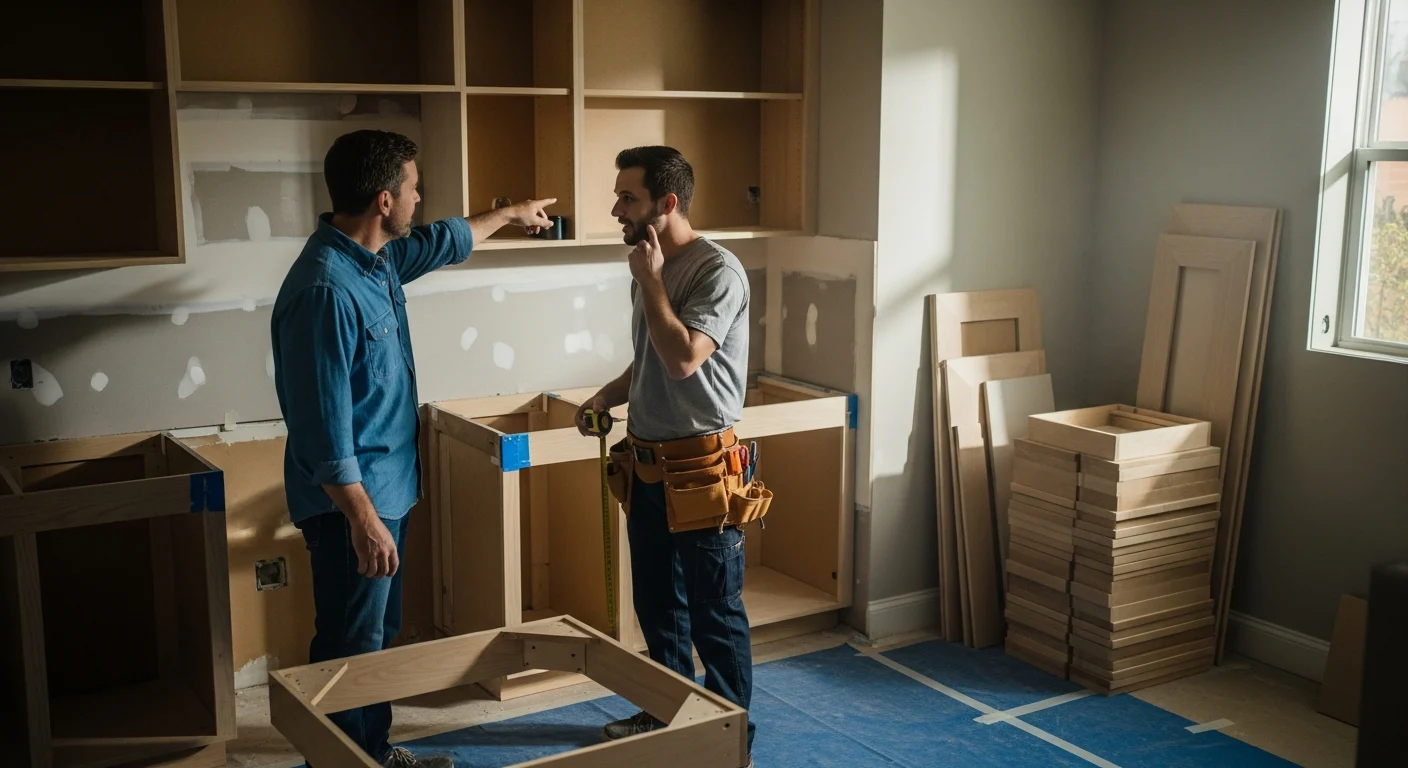
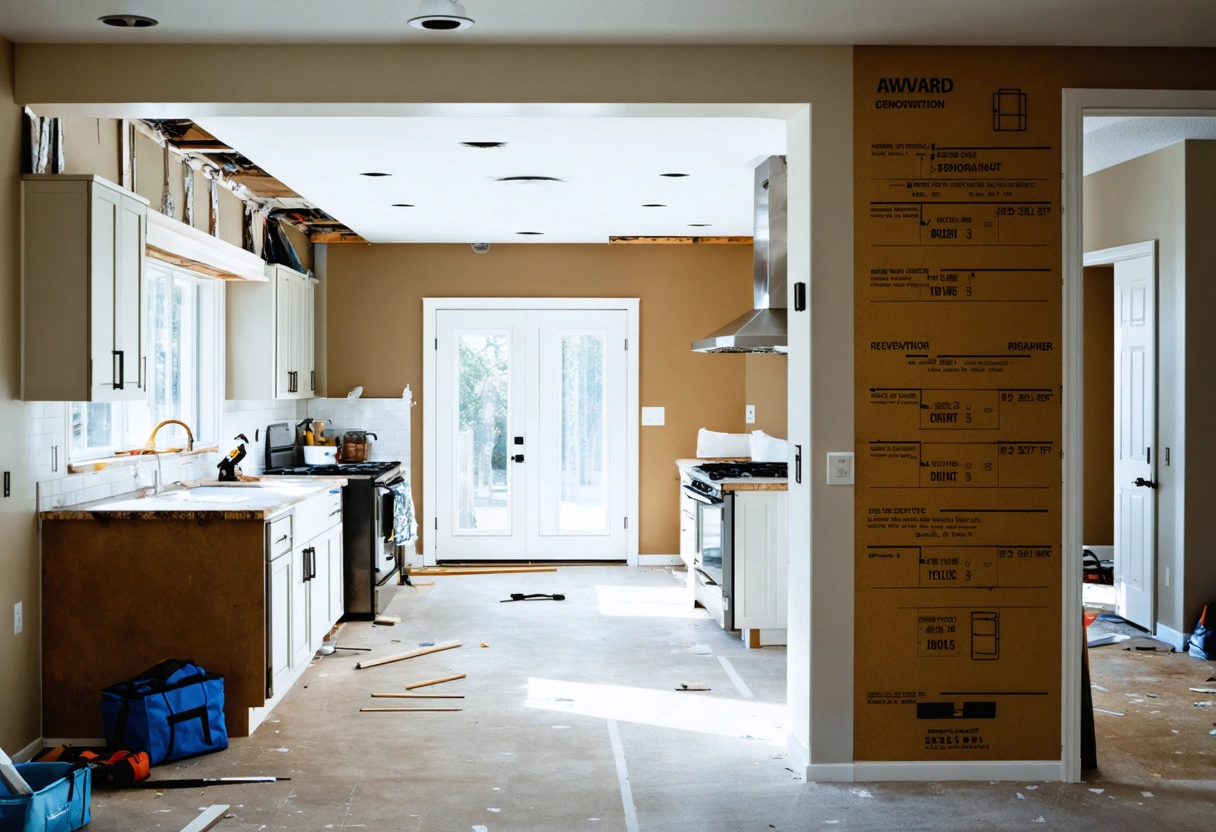
However, full replacement usually involves more disruption. Demolition can affect countertops, backsplash, flooring, electrical wiring, plumbing, and wall surfaces. If cabinets are removed, nearby finishes may need patching or replacement. Countertops often cannot be reused, especially if the footprint changes or the tops are stone, brittle, or tightly fitted to the old cabinets.
Replacement is also more dependent on lead times, measurements, ordering accuracy, and installation sequencing. Stock cabinets may arrive quickly, semi-custom cabinets may take several weeks, and custom cabinets can take months depending on demand and complexity. The payoff is a kitchen built around your exact needs, but the process requires more planning and patience.
Cost, Timeline, and Disruption Compared
Cabinet refacing is usually less expensive than full replacement because it uses the existing cabinet boxes and reduces demolition, disposal, and labor. The exact savings depend on material choice, number of cabinets, door style, hardware, and whether accessories are added. Refacing with premium wood veneer and custom doors will cost more than a basic laminate refacing project, but it is commonly still below the price of a full cabinet tear-out and reinstall.
Replacement costs vary widely. Stock cabinets can be relatively budget-friendly, while custom cabinetry can be one of the most expensive parts of a kitchen renovation. Installation labor, countertop replacement, plumbing changes, electrical updates, flooring repairs, and backsplash work can significantly increase the total project cost. When evaluating estimates, compare the whole kitchen impact, not just the cabinet line item.
Timeline is another major difference. A straightforward refacing project may take only a few days once materials are ready. The kitchen may remain partially usable during the process, although access will be limited. Full replacement can take longer because old cabinets must be removed, walls repaired, new cabinets installed, countertops templated and fabricated, and other trades scheduled.
Disruption matters if you have children, pets, work from home, or rely heavily on your kitchen. Refacing produces less debris and usually keeps the basic kitchen infrastructure intact. Replacement can temporarily turn the kitchen into a construction zone. That may be worth it for a complete transformation, but it is important to plan for temporary meal prep, dust control, and storage of kitchen contents.
| Factor | Cabinet Refacing | Cabinet Replacement |
|---|---|---|
| Best for | Solid cabinets with an acceptable layout | Damaged cabinets or major layout changes |
| Typical disruption | Lower, with less demolition | Higher, often involving multiple trades |
| Design flexibility | High for style and finish, limited for layout | Highest for layout, storage, and configuration |
| Timeline | Often shorter after materials arrive | Often longer due to demolition and installation sequencing |
When Refacing Is the Smarter Choice
Refacing is often ideal when the kitchen layout works, the cabinet boxes are in good condition, and the main problem is cosmetic. If you like where the sink, stove, refrigerator, and dishwasher are located, and your cabinets provide enough storage, there may be little reason to pay for a full replacement.
It is also a strong option when you want a high-impact update before selling a home. Kitchens influence buyer impressions, and fresh cabinet doors, modern hardware, and updated finishes can make the room feel much newer.
Refacing
also makes sense when speed matters. If your cabinet boxes are strong and you are not planning to move plumbing or appliances, refacing can deliver a fresh kitchen with a shorter construction window.
Another advantage is resource efficiency. Because the cabinet boxes remain in place, less material is sent to the landfill and fewer new raw materials are required. For homeowners who care about lowering renovation waste, this can be a meaningful benefit. The environmental impact becomes even more compelling when combined with durable doors, long-lasting hardware, and responsible disposal of old materials. The U.S. Environmental Protection Agency offers useful background on construction and demolition materials and why reducing renovation waste matters.
When Replacement Is Worth the Bigger Investment
Full cabinet replacement is usually the better choice when the underlying cabinets are failing. If boxes are warped, water-damaged, poorly built, or made from deteriorating low-quality particleboard, refacing may only cover up a problem.
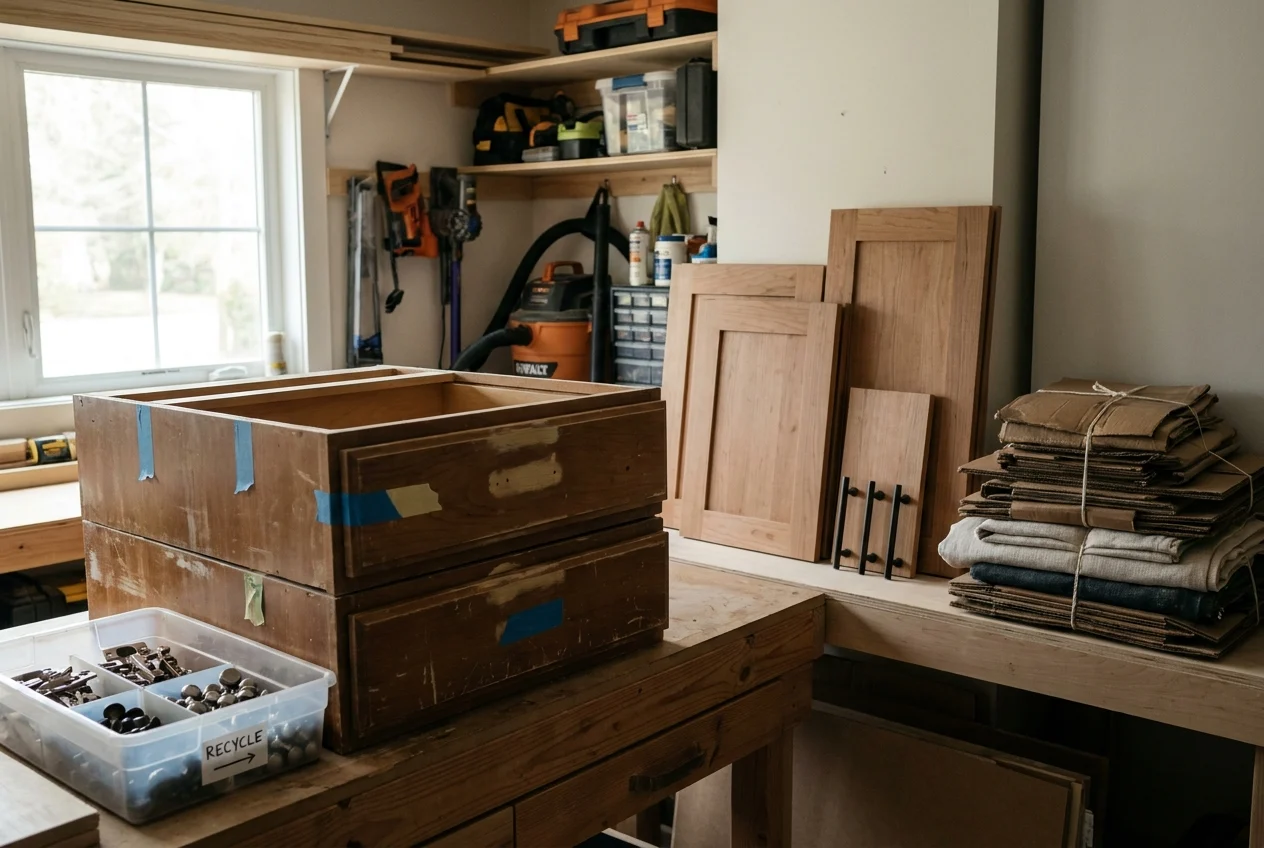
Replacement is also the stronger option when the kitchen layout no longer matches how you live. A family that cooks together may need wider walkways, more drawers, and better appliance spacing.
Consider replacement if you want to change cabinet depth, ceiling height, appliance sizes, or wall locations. Refacing can add accessories, but it cannot turn a shallow pantry into a full pantry wall or correct a kitchen where the refrigerator blocks a major walkway.
Style, Storage, and Resale Considerations
From a design standpoint, both options can produce a beautiful kitchen. Refacing can achieve popular looks such as white shaker cabinets, two-tone finishes, natural wood textures, slim modern hardware, and glass display doors.
Storage is where replacement often has the edge. Modern cabinet systems can include wide drawer bases for cookware, tray dividers, hidden charging drawers, pull-out spice storage, appliance garages, mixer lifts, and tall pantry cabinets.
For resale, think about neighborhood expectations and the condition of the rest of the kitchen. A smart refacing project can be excellent for a home where the kitchen is functional but dated. A full replacement may be more appropriate in higher-end homes, heavily remodeled properties, or kitchens where buyers would immediately notice an awkward layout. If hiring help, review practical guidance on how to avoid home improvement scams before signing a contract or paying a deposit.

How to Make the Final Decision
Begin with a cabinet inspection, then write down what you truly want to change. Separate cosmetic goals from functional problems. Cosmetic goals include color, door style, hardware, and finish.
Next, compare complete project scopes. For refacing, include doors, drawer fronts, veneer, hardware, hinges, drawer boxes, organizers, and any side panels or moldings. For replacement, include demolition, cabinets, installation, countertops, backsplash, flooring repairs, plumbing, electrical work, permits if required, and temporary kitchen arrangements.
It can also help to think in terms of lifespan. If refacing gives you a kitchen you will enjoy for the next 10 to 15 years, it may be the practical winner. If you suspect you will still dislike the layout after the new doors are installed, replacement is likely the better long-term decision. For broader planning, the National Association of Realtors provides helpful insight into remodeling projects and home value that can help frame expectations.
Choose the Option That Solves the Real Problem
Cabinet refacing is right for your home when the cabinet boxes are solid, the layout works, and your main goal is a dramatic visual update with less disruption.
Cabinet replacement is right when the cabinets are damaged, the layout is inefficient, or you want a kitchen designed from the ground up around better storage, movement, and daily use.
Need help with Cabinet Refacing vs. Replacement: Which is Right for Your Home??