





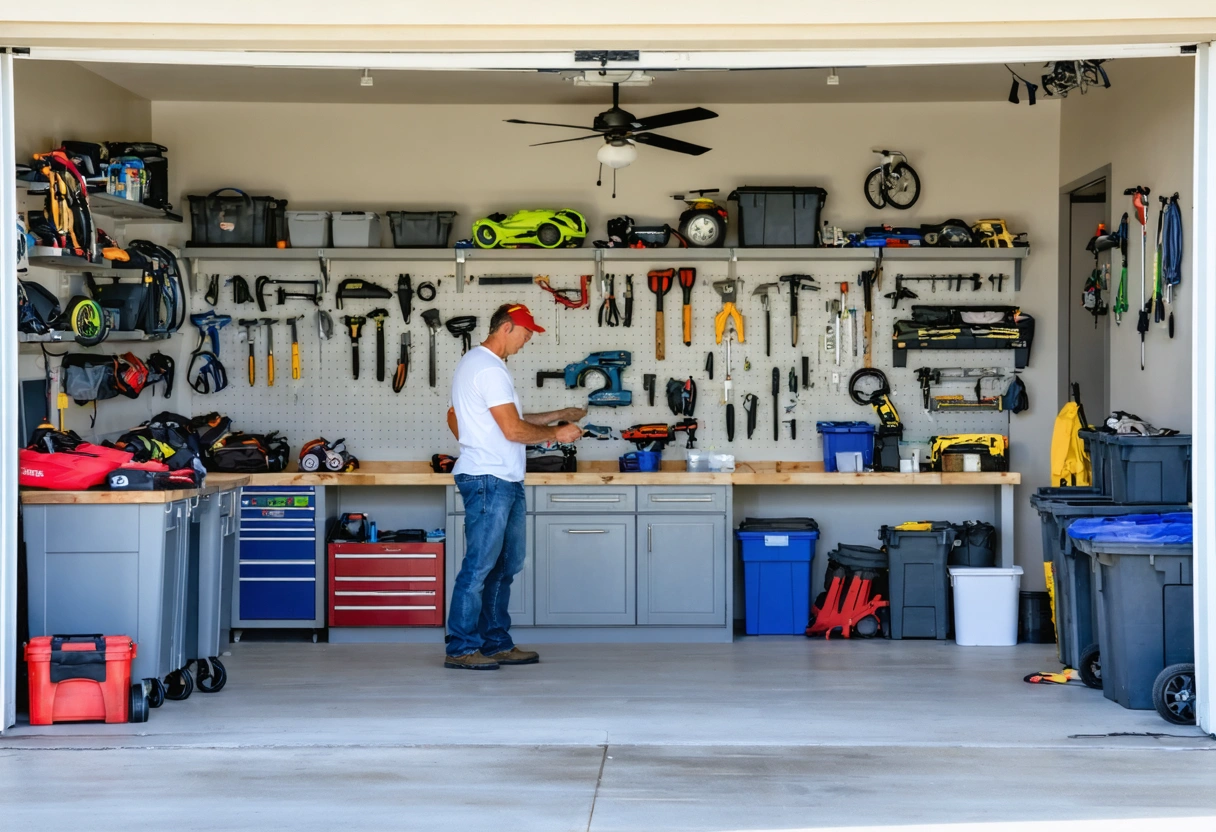
A well-organized garage makes it easier to find a screwdriver, grab a basketball, or unpack holiday decorations without shifting piles of clutter. Garage storage cabinets create designated spaces for items that might otherwise compete for room on open shelves, workbenches, and the floor.
The right cabinet system also protects belongings from dust, moisture, pests, and accidental damage. By matching cabinet materials, dimensions, and interior features to what you store, you can create a garage that supports home repairs, outdoor activities, and seasonal routines.
Start With a Practical Garage Storage Plan
Before choosing garage storage cabinets, take inventory of the tools, sports equipment, automotive supplies, and seasonal items currently in the space. Group similar belongings together and note which items are used frequently, occasionally, or only during certain months. This process reveals how much enclosed storage you need and where each category should be placed.
Measure the available wall space, ceiling height, door clearance, and the depth required for parked vehicles. Remember to account for garage door tracks, electrical outlets, windows, utility panels, and appliances. Accurate measurements help prevent cabinets from blocking essential features or making walkways too narrow.
Assign Storage Zones by Activity
Dividing the garage into zones makes cabinet organization more intuitive. A workshop zone can hold hand tools, power tools, hardware, and protective equipment. A sports zone can contain helmets, balls, pads, and smaller accessories, while a seasonal zone can store decorations, camping supplies, and weather specific gear.
Place frequently used items in cabinets near the main entrance or work area. Reserve higher shelves and less accessible corners for lightweight seasonal belongings that are retrieved only a few times each year. Heavy tools, bulk supplies, and dense storage bins should remain on lower shelves to reduce lifting risks and improve cabinet stability.
Choose Cabinets That Suit the Garage Environment
Garage cabinets are commonly made from steel, engineered wood, plywood, or durable plastic. Steel cabinets offer strength and resistance to impacts, making them suitable for heavy tools and workshop supplies. Plastic cabinets resist rust and are easy to clean, while quality wood based cabinets can provide a more finished appearance in dry, climate controlled garages.
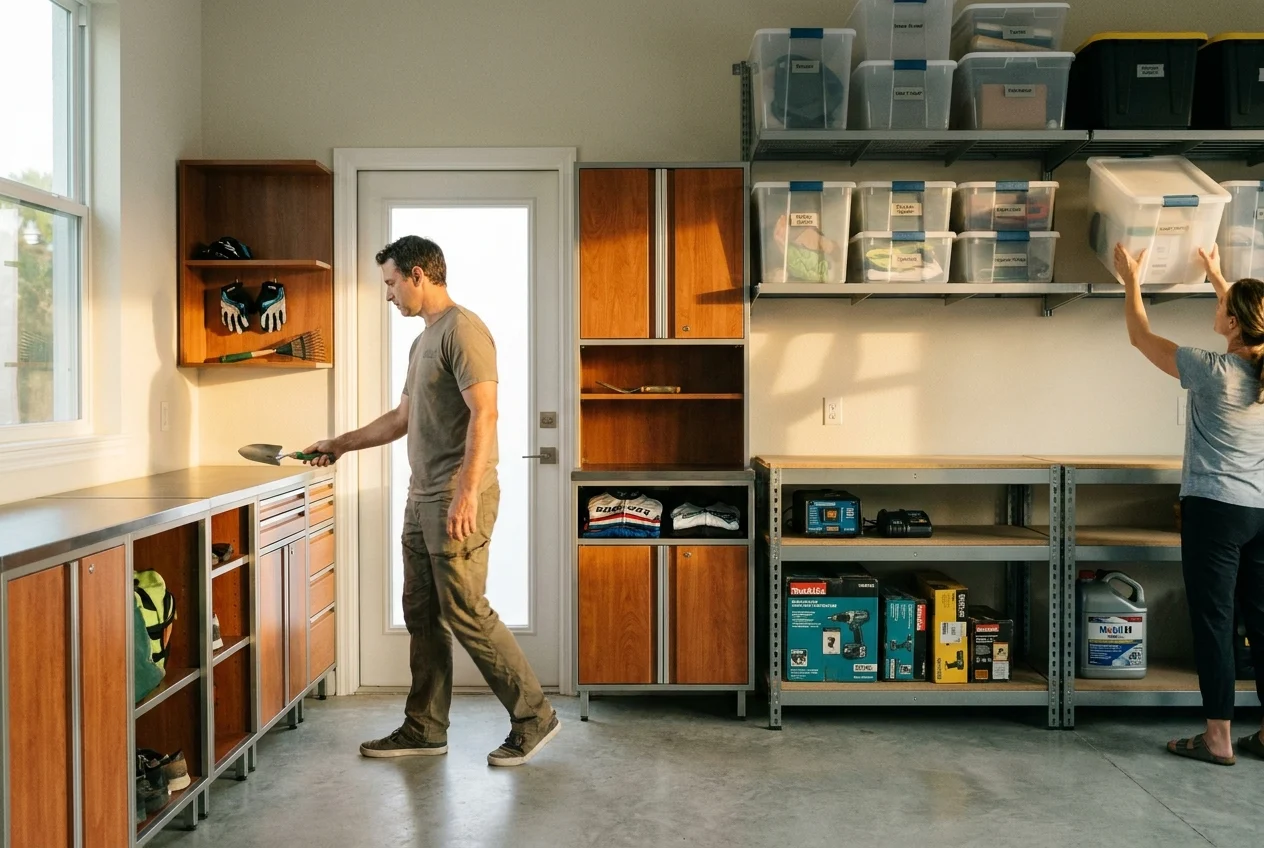
Consider temperature changes and humidity before selecting a material. Garages that experience damp conditions may require rust resistant metal finishes, moisture tolerant plastic, or sealed plywood. Cabinets should also have sturdy hinges, adjustable shelves, and weight ratings appropriate for the items they will support.
Compare Wall Mounted and Freestanding Designs
Wall mounted garage cabinets keep the floor clear, simplify sweeping, and place everyday supplies within comfortable reach. They work especially well above workbenches or along narrow walls where full height cabinets would take up valuable floor space. Installation requires secure attachment to wall studs or an approved mounting system.
Freestanding cabinets offer greater capacity and can accommodate large tools, sports bags, storage totes, and automotive products. Tall models make efficient use of vertical space, while base cabinets can support a work surface. Adjustable feet are helpful on uneven concrete floors because they keep cabinet doors aligned and reduce wobbling.
Look for Features That Improve Safety and Access
Lockable doors are useful for storing sharp tools, chemicals, fertilizers, and other products that should remain inaccessible to children or pets. Soft close hinges, recessed handles, and magnetic door catches can make cabinets easier and safer to use in a busy garage.
Adjustable shelving allows the interior to change as storage needs evolve. Full extension drawers provide clear access to small tools and hardware, while ventilated cabinet sections help damp sports gear dry more effectively. Labels on doors, shelves, or bins make it easier for everyone in the household to return items to the correct location.
Configure Cabinet Interiors for Different Categories
A cabinet becomes more useful when its interior matches the size, weight, and shape of the items stored inside. Instead of filling every cabinet with identical shelves, combine adjustable shelves, drawers, hooks, bins, and vertical dividers. This prevents small supplies from disappearing behind bulky equipment and reduces the need to unload an entire shelf to reach one item.
Organize Hand Tools and Power Tools
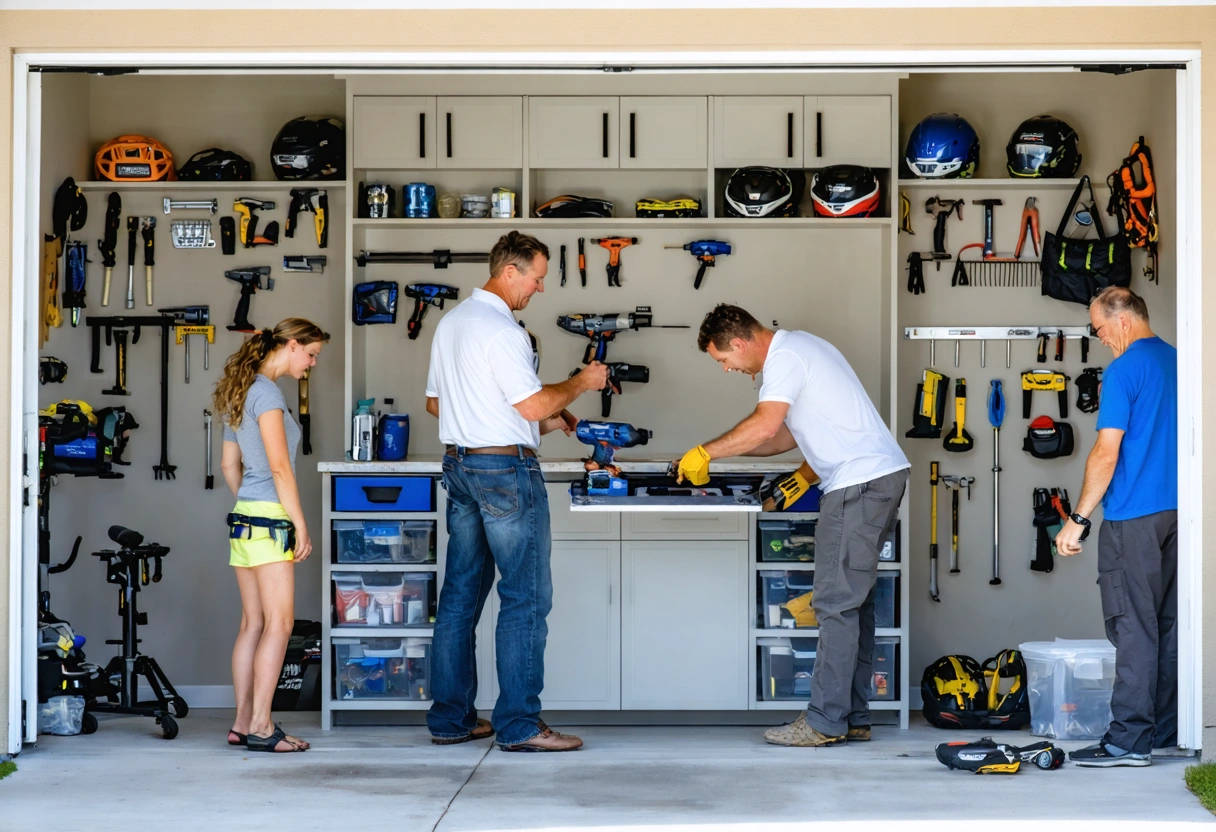
Store frequently used hand tools in shallow drawers, divided trays, or labeled containers near the workbench. Group screwdrivers, pliers, wrenches, measuring tools, and cutting tools by function. Drawer liners help prevent tools from sliding when drawers open and also protect the cabinet surface from scratches.
Power tools need shelves with sufficient weight capacity and enough clearance for handles, batteries, and cases. Keep each tool with its related accessories whenever possible. For example, place a drill beside its charger, spare batteries, and bit case. Store heavier saws and sanders on lower shelves where they can be lifted without reaching overhead.
Small hardware is easiest to manage in transparent, labeled containers or compartment organizers. Separate screws, nails, anchors, washers, and specialty fasteners by type and size. Place open containers inside a closed cabinet so loose pieces remain visible without collecting garage dust.
Create Accessible Sports Gear Storage
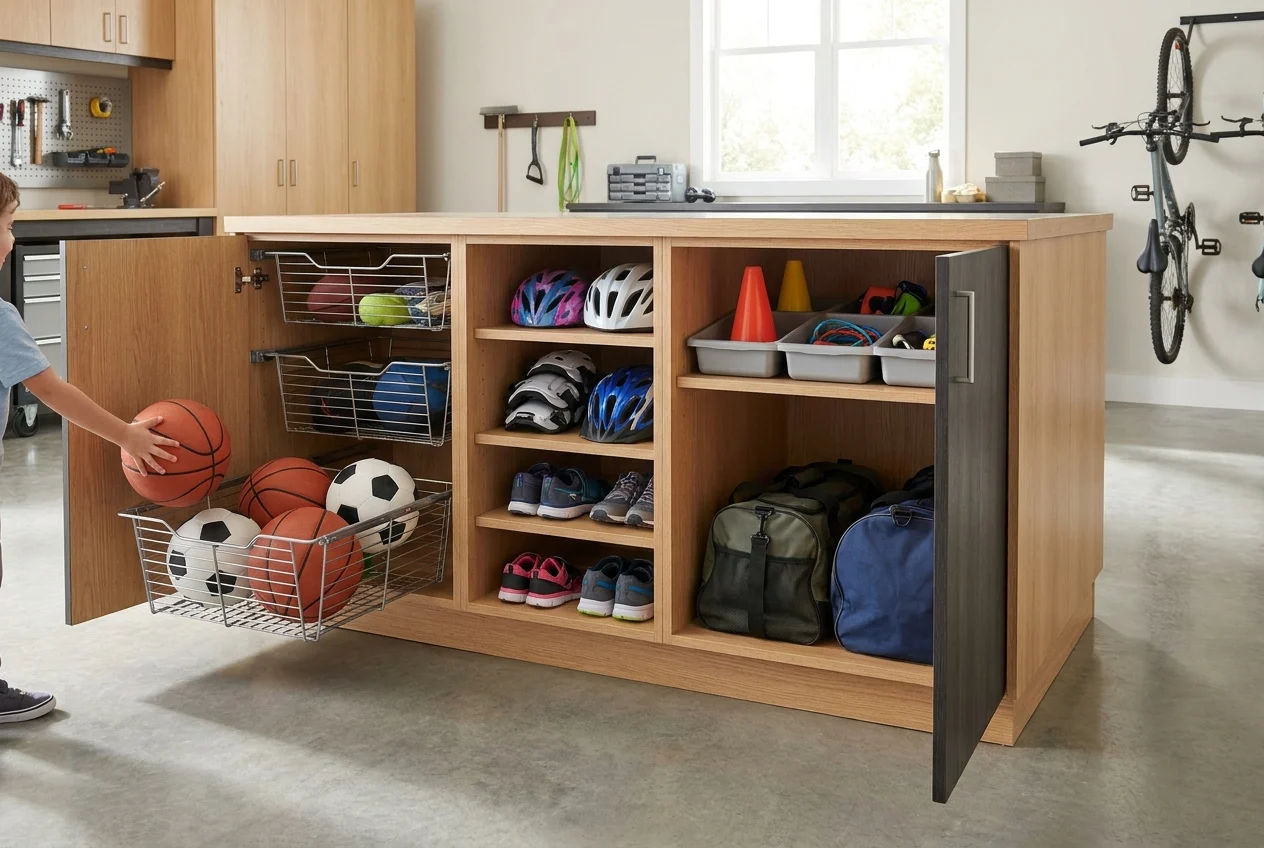
Sports equipment often includes a mixture of bulky bags, round balls, protective pads, footwear, and small accessories. Dedicate lower cabinet shelves to items children use regularly so they can retrieve and return equipment without climbing. Open baskets placed inside cabinets can hold balls, gloves, cones, and jump ropes while keeping them from rolling across the floor.
Use tall cabinet sections for bats, hockey sticks, rackets, and folded goals. Vertical dividers keep long equipment upright and prevent it from falling forward when the doors open. Helmets and pads should have enough space around them for ventilation, especially if they are stored shortly after use.
A separate bin for each activity can simplify departures. A soccer bin might contain shin guards, practice cones, goalkeeper gloves, and a ball pump, while a cycling bin could hold gloves, lights, repair tools, and spare tubes. Clearly labeled containers help prevent equipment from being mixed between family members or sports.
Protect Seasonal Decorations and Outdoor Supplies
Seasonal items should be cleaned and completely dry before being placed in cabinets. Use sealed bins for fabric decorations, string lights, table linens, and small ornaments. Rigid containers protect fragile items from being crushed, while dividers keep ornaments and specialty decorations separated.
Group seasonal supplies by event or time of year rather than by item type. Keeping all winter holiday decorations together makes retrieval more efficient than storing lights in one cabinet and ornaments in another. Add a simple contents label to each bin so you can locate specific items without opening every container.
Camping equipment, picnic supplies, and cold weather accessories can occupy upper or less accessible shelves during the off season. Avoid placing fuel canisters, propane cylinders, or other combustible materials in ordinary enclosed cabinets. Follow product labels and local safety requirements for storing fuels, chemicals, and pressurized containers.
Use Cabinet Dimensions Efficiently
Cabinet depth affects both capacity and movement through the garage. Deep cabinets can hold large totes and power tools, but they may interfere with vehicle doors or create narrow walkways.
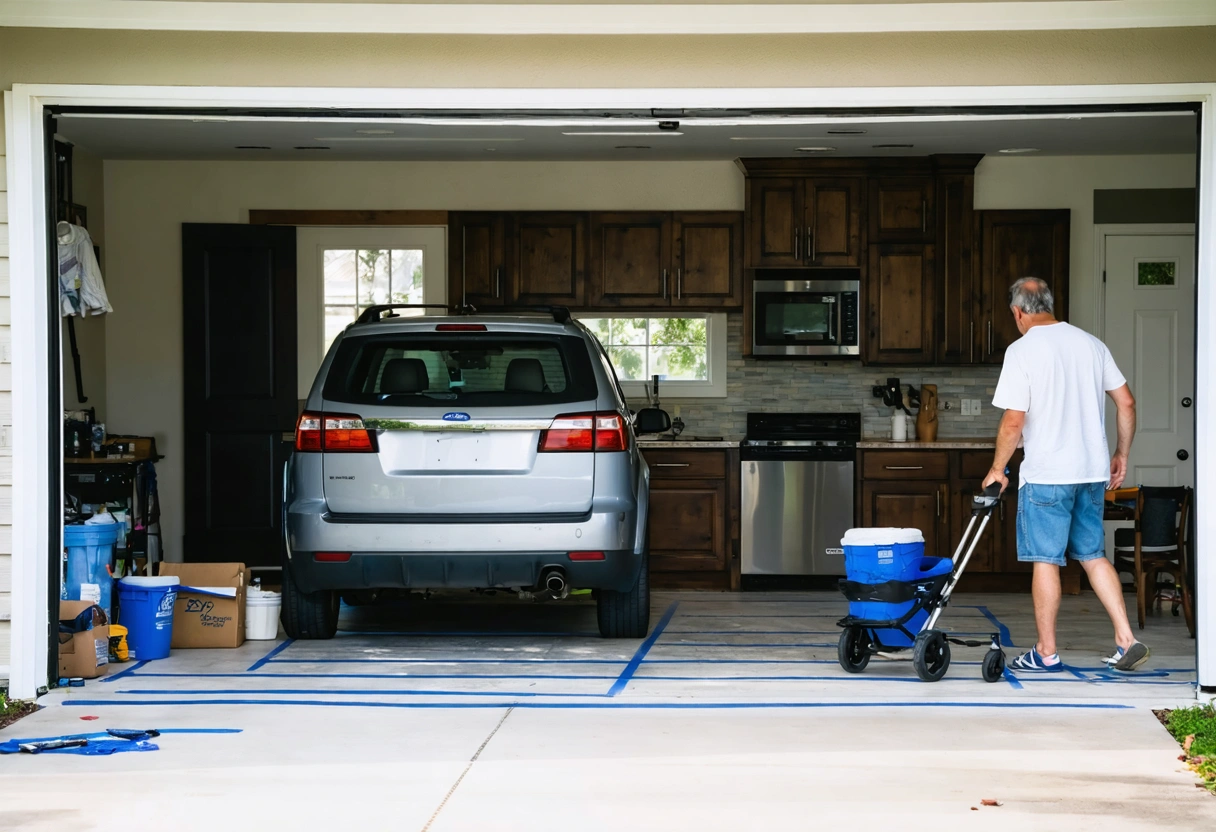
Before installation, outline the planned cabinet footprint on the floor and walls with removable painter’s tape. Park vehicles in their usual positions, open every door and trunk, and carry bulky items through the remaining space.
Take Advantage of Vertical Space
Tall cabinets make efficient use of wall height, but the upper sections should be reserved for lightweight, infrequently used items. Store folding chairs, empty coolers, paper goods, and seasonal textiles above shoulder height.
Leave enough clearance between tall cabinets and garage door tracks, ceiling mounted openers, pipes, and lighting fixtures. Cabinet doors must also be able to open fully without striking vehicles, walls, or nearby storage systems.
Combine Cabinets With a Work Surface
Base cabinets topped with a durable work surface can provide storage and a dedicated repair area. Choose a surface that can tolerate the expected tasks, whether those involve light household repairs, woodworking, gardening, or bicycle maintenance.
Keep the work surface mostly clear by assigning drawers or cabinets to the supplies used there. Everyday tools can occupy the top drawer, while larger equipment and project materials can remain below.
Install Garage Cabinets Securely
Proper installation protects both the stored items and anyone using the garage. Follow the cabinet manufacturer’s instructions, including requirements for wall anchors, mounting rails, fasteners, and shelf loads.
Tall freestanding cabinets should be anchored to the wall when recommended, particularly in homes with children or in areas where earthquakes are possible. Connecting adjacent cabinets can also improve alignment and stability.
Account for Concrete Floors and Moisture
Garage floors often slope toward the door or a drain, which can cause cabinet doors to swing or sit unevenly. Adjustable feet or leveling shims can correct minor differences.
Keeping wood based cabinets slightly above the concrete helps limit exposure to minor spills and moisture. Wall mounted cabinets and cabinets with raised legs also make it easier to notice leaks or pest activity.
Respect Weight Limits
Cabinet and shelf weight ratings should include the combined weight of tools, containers, liquids, and accessories. Spread heavy items across the shelf rather than concentrating them in one spot.
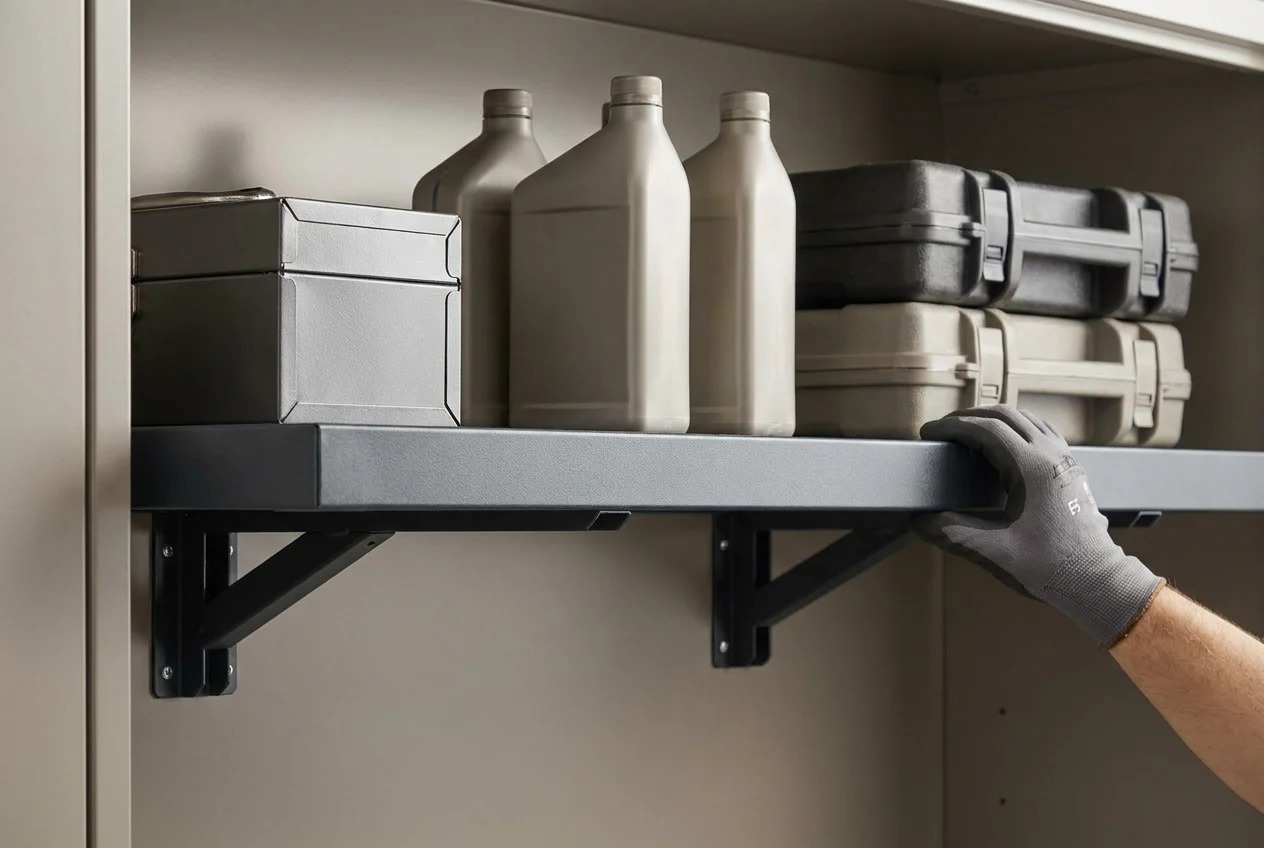
Drawers also have load limits, especially when fully extended. Dense collections of sockets, fasteners, and power tools can become heavier than expected. Divide these items among several drawers and keep the heaviest contents close to the cabinet base to improve stability.
Manage Chemicals, Automotive Products, and Hazardous Tools
Paints, solvents, pesticides, fertilizers, automotive fluids, and cleaning products require more care than ordinary household supplies. Keep each product in its original labeled container and follow the storage directions on the label.
Use a lockable cabinet when children or pets can access the garage. Separate products that should not be stored together, and place liquid containers upright in trays that can contain minor leaks.
Sharp tools should have guards or sheaths and should not be placed loosely on crowded shelves. Lock away saw blades, utility knives, axes, and similar equipment when necessary.
Store Flammable Materials Appropriately
Ordinary garage cabinets are not suitable for every flammable or combustible product. Gasoline, propane, oily rags, and similar materials may require approved containers, specialized storage, or placement outside living areas.
Keep ignition sources, including heaters, pilot lights, chargers, and spark producing tools, away from hazardous products. Dispose of unwanted chemicals through an appropriate household hazardous waste program instead of combining products or pouring them into drains.
Need help with Garage Storage Cabinets That Keep Tools, Sports Gear, and Seasonal Items in Order?