





Cabinet quality is often judged by the finish and door style, but the details hidden inside the box have a greater influence on everyday performance.
Understanding these components makes it easier to compare cabinet lines beyond appearance and price. A few minutes spent inspecting hardware specifications and construction methods can reveal whether a cabinet is designed for lasting performance or simply made to look appealing in a showroom.
How Cabinet Hardware Affects Daily Use
Cabinet hardware acts as the mechanical foundation for every door and drawer. High-quality hardware creates controlled, consistent movement, while poorly made components can lead to sagging doors, uneven gaps, noisy operation, and drawers that become difficult to open.
When evaluating cabinets, look beyond the presence of a soft-close feature. Consider the hardware manufacturer, weight rating, adjustability, mounting method, and availability of replacement parts.
What Soft-Close Hinges Actually Do
Soft-close hinges use a built-in or attached hydraulic damper to slow the door during the final part of its swing. This prevents slamming, reduces noise, and limits the repeated impact placed on doors, face frames, and cabinet boxes.
A quality concealed hinge should provide smooth resistance without making the door difficult to close. Many models also offer adjustment in multiple directions, allowing the installer to correct the door height, depth, and side-to-side position.
Not all soft-close hinges perform equally. Entry-level versions may use lightweight components or dampers that lose effectiveness over time. Better hinges typically feel solid, operate quietly across a range of temperatures, and can be removed or adjusted without damaging the cabinet.
Choosing Drawer Glides by Type and Capacity
Drawer glides, also called drawer slides, guide the drawer as it opens and closes. Common configurations include side-mount, center-mount, and undermount glides. Undermount glides are concealed beneath the drawer box, creating a cleaner appearance and leaving the drawer sides unobstructed.

Full-extension glides allow the drawer to open far enough for easy access to items stored at the back. Partial-extension models leave part of the drawer inside the cabinet, which can make deep drawers less convenient.
Weight capacity is particularly important for drawers that will hold cookware, dishes, pantry goods, or small appliances. The stated rating should apply to the installed pair of glides and should be considered under real use conditions.
Joinery Reveals How a Cabinet Is Built
Joinery refers to the methods used to connect cabinet box panels, drawer parts, face frames, and other structural components. Strong joints distribute stress across a larger area and help the cabinet remain square.
No single joint automatically guarantees a superior cabinet. Material thickness, adhesive quality, fastener placement, machining accuracy, and assembly standards all contribute to performance. Joinery should therefore be evaluated as part of the complete construction system rather than as an isolated feature.
Dovetail Drawer Construction
Dovetail joints use interlocking pins and tails to connect the front, back, and sides of a drawer box. The shape of the joint resists separation when the drawer is pulled open, making it well suited to frequent use.
Precise machining matters. The joint should fit tightly without large gaps, cracked edges, or excessive filler. However, dovetails alone do not make a drawer durable.
Dados, Dowels, Screws, and Staples
A dado is a groove cut into one panel to receive the edge of another. It increases the bonding surface and helps position parts accurately during assembly.
Dowel joints use cylindrical wooden pins inserted into matching holes. Accurate drilling and strong adhesive can make doweled construction durable and consistent. Screws may also provide reliable holding power, particularly when combined with glue and appropriate corner blocks.
Staples are efficient for production and can be suitable for attaching thin backs or reinforcing glued assemblies. Problems arise when staples or small fasteners serve as the primary structural connection in high-stress areas.
Cabinet Box Construction Supports the Hardware
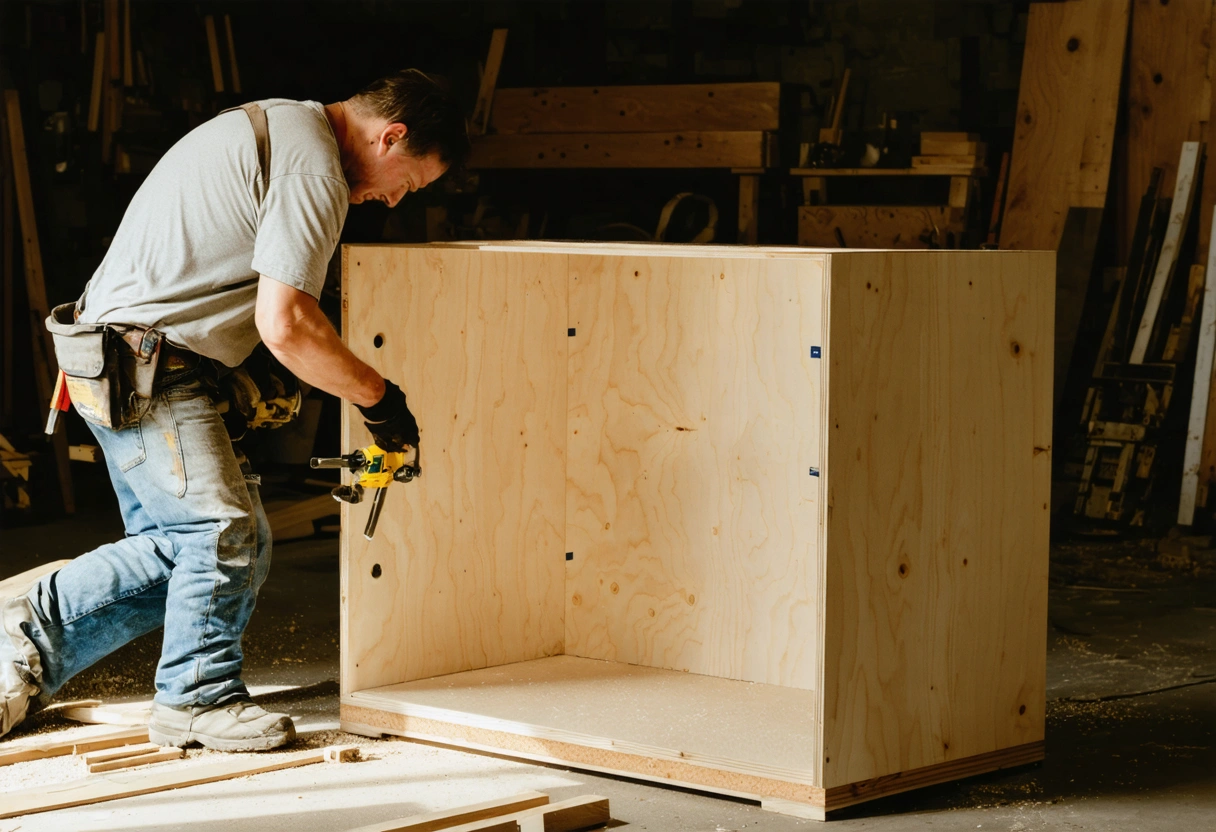
Even premium hinges and drawer glides cannot perform properly if the cabinet box lacks rigidity. Hinges depend on secure mounting points, while drawer slides require straight, parallel surfaces.
Panel Materials and Thickness
Cabinet boxes are commonly made from plywood, medium density fiberboard, particleboard, or combinations of these materials. Each can perform well when properly specified and assembled.
Plywood generally offers strong screw holding and good resistance to bending, making it useful for cabinet sides, bottoms, and structural rails. Furniture grade particleboard can provide a flat, stable surface, but its performance depends heavily on density and protection from moisture.
Inspect the areas where hinges and glides attach. Fasteners should be seated securely without stripped holes, splitting, or crumbling around the mounting plate. Thin panels may require specialized mounting hardware or reinforcement to provide adequate support.
Back Panels, Stretchers, and Corner Reinforcement
The cabinet back helps keep the box square and provides stability during installation. A substantial back captured in grooves generally offers more rigidity than a very thin panel attached only around the perimeter.
Base cabinets should also have sufficient support near the top to prevent the sides from spreading or twisting. Corner blocks, plywood stretchers, metal brackets, and securely joined rails can all contribute to a stable assembly.
Framed and Frameless Cabinets Require Different Details
Face frame cabinets have a frame attached to the front edges of the cabinet box. Hinges may mount to the frame, and drawer glides may require rear brackets or blocking to remain aligned.
Frameless cabinets rely more directly on the strength and accuracy of the side panels. Hinges and drawer glides typically mount to predrilled holes in the cabinet sides.
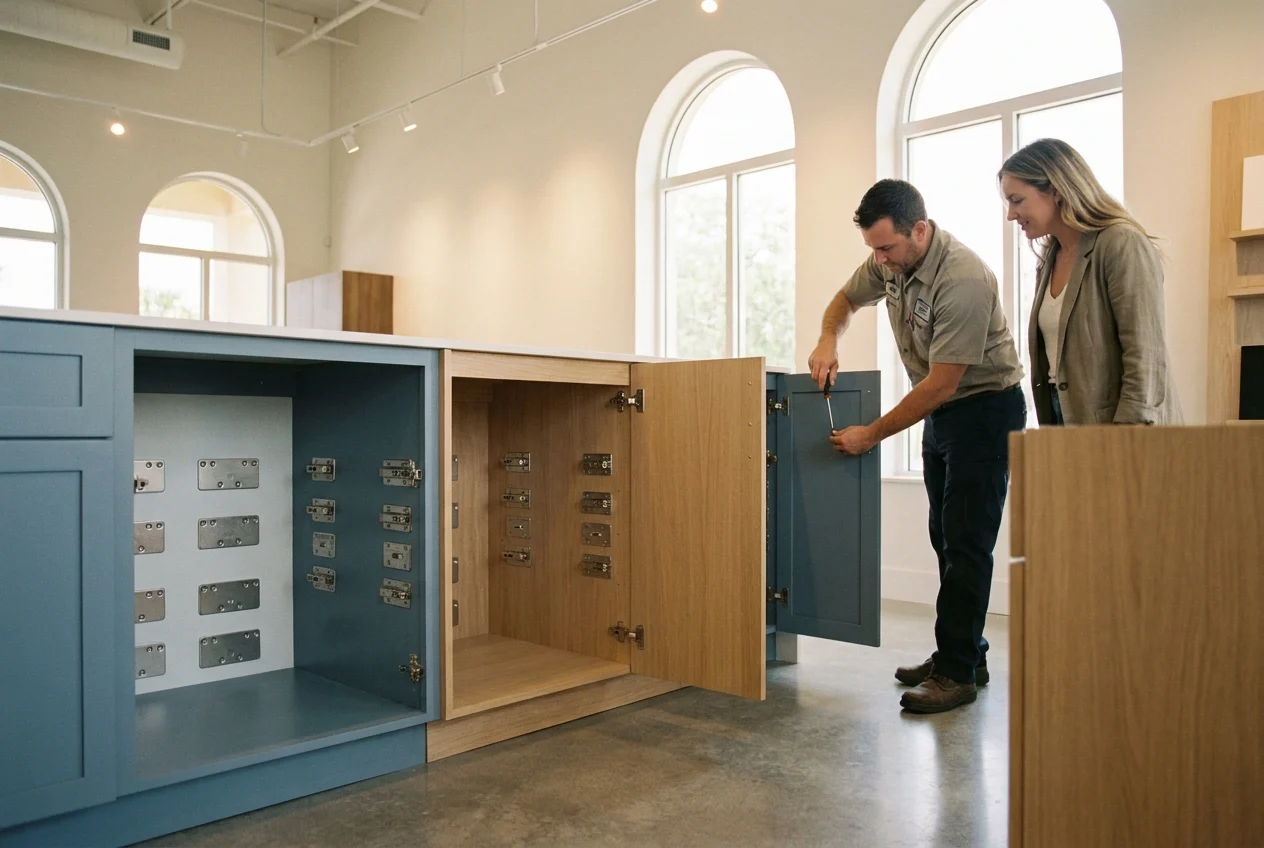
Neither approach is inherently superior. Quality depends on how the cabinet system is engineered and assembled. In both styles, mounting plates should sit flat, screws should hold securely, and hardware should align without improvised shims or excessive adjustment.
Hardware Adjustability and Serviceability
Cabinets naturally require occasional adjustment as a home settles, humidity changes, and doors carry the effects of repeated use. Serviceable hardware makes it possible to restore alignment without replacing an entire door, drawer, or cabinet.
Hinge Adjustment and Opening Angle
Most concealed hinges provide two way or three way adjustment. Side adjustment changes the gap between neighboring doors. Height adjustment raises or lowers the door, while depth adjustment controls how closely it sits against the cabinet.
The hinge opening angle also matters. A standard opening may be suitable for most cabinets, while corner cabinets, pullout units, and cabinets next to walls may require specialized hinges.
Some soft-close hinges allow the damping feature to be adjusted or switched off. This can be helpful on small, lightweight doors that may otherwise close too slowly.
Drawer Slide Release and Adjustment Features
Many undermount glide systems include release clips beneath the front corners of the drawer. These clips allow the drawer box to be removed for cleaning or service.
Adjustment should not be used to disguise a twisted drawer box or poorly installed cabinet. After alignment, the drawer should open with even resistance, remain stable from side to side, and close without being pushed firmly.
Replacement parts are another practical consideration. Hardware from an established system is usually easier to identify and replace years later. Proprietary components can perform well, but buyers should ask whether hinges, mounting plates, clips, and glides are covered by warranty and available separately.
Construction Details for Shelves and Interior Components
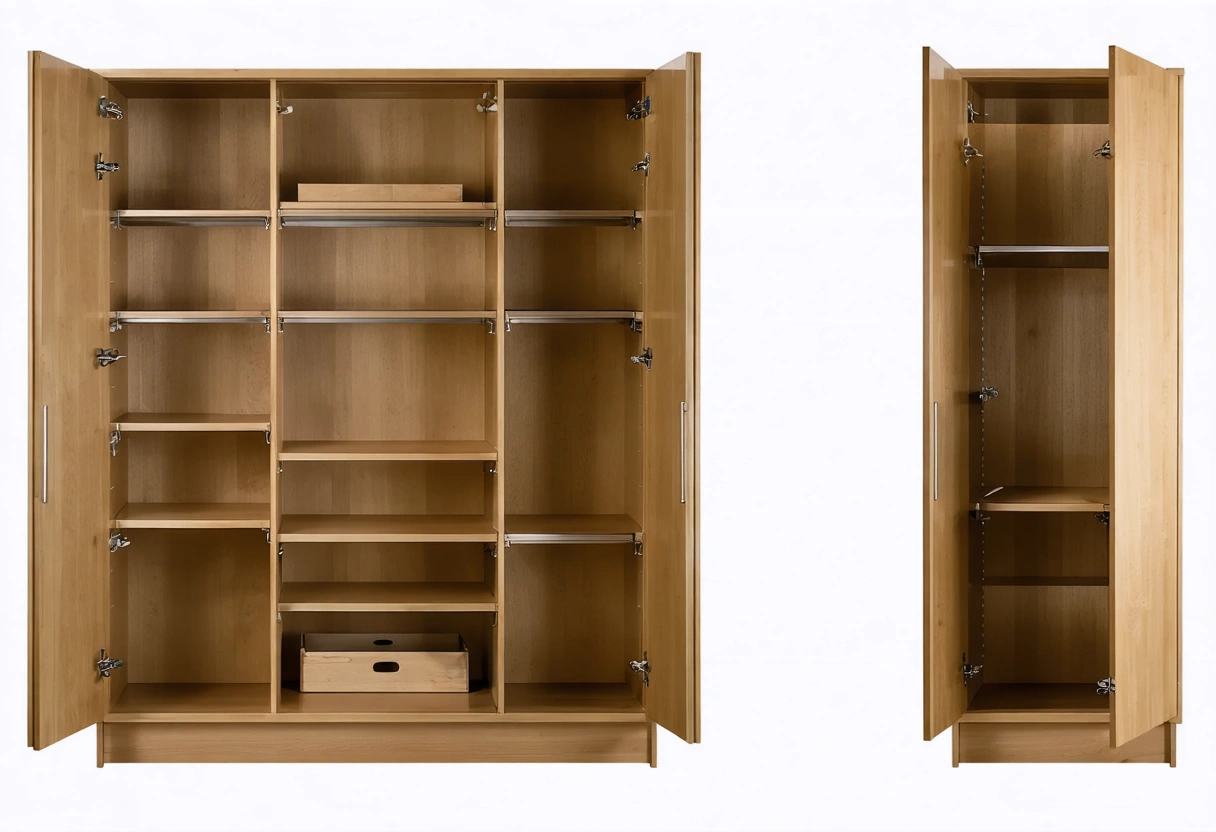
Fixed and adjustable shelves contribute to the structural performance of a cabinet. Fixed shelves joined into dados can help keep a tall cabinet square. Adjustable shelves offer greater flexibility, but their strength depends on shelf thickness, span, material, and the quality of the support pins.
Long shelves are more likely to sag, especially when loaded with dishes, canned goods, or small appliances. A thicker shelf, a solid wood front edge, or a center support can improve stiffness.
Pullout trays, waste systems, spice racks, and pantry organizers place additional stress on the cabinet. Their hardware should be fastened into structural panels or reinforced mounting surfaces.
How to Inspect Cabinet Quality in Person
A showroom inspection can reveal details that are difficult to judge from a specification sheet. Open and close several doors and drawers rather than testing only the display positioned at eye level.
Check Doors and Hinges
Open a door fully and gently test for excessive vertical movement. The hinge cups and mounting plates should remain secure, and the door should not feel loose.
Examine the gaps around adjacent doors. Even reveals suggest accurate cabinet assembly and proper adjustment. Irregular gaps may be correctable, but doors that are warped or cabinets that are out of square cannot always be fixed through hinge adjustment alone.
Test Drawers Under Realistic Conditions
An empty showroom drawer can make even modest slides feel smooth. If permitted, apply gentle downward pressure or place a reasonable sample load inside to evaluate stability.
Pull the drawer fully open and look underneath or along the sides to identify the glide type and attachment method. Confirm whether the slides provide full extension and check that both sides engage the soft-close mechanism at the same point.
Inspect Joints and Interior Surfaces
Remove a drawer if the release mechanism is accessible. Look for tight corner joints, smooth edges, a securely captured bottom, and a consistent finish. Drawer bottoms should not flex excessively or sit loosely in their grooves.
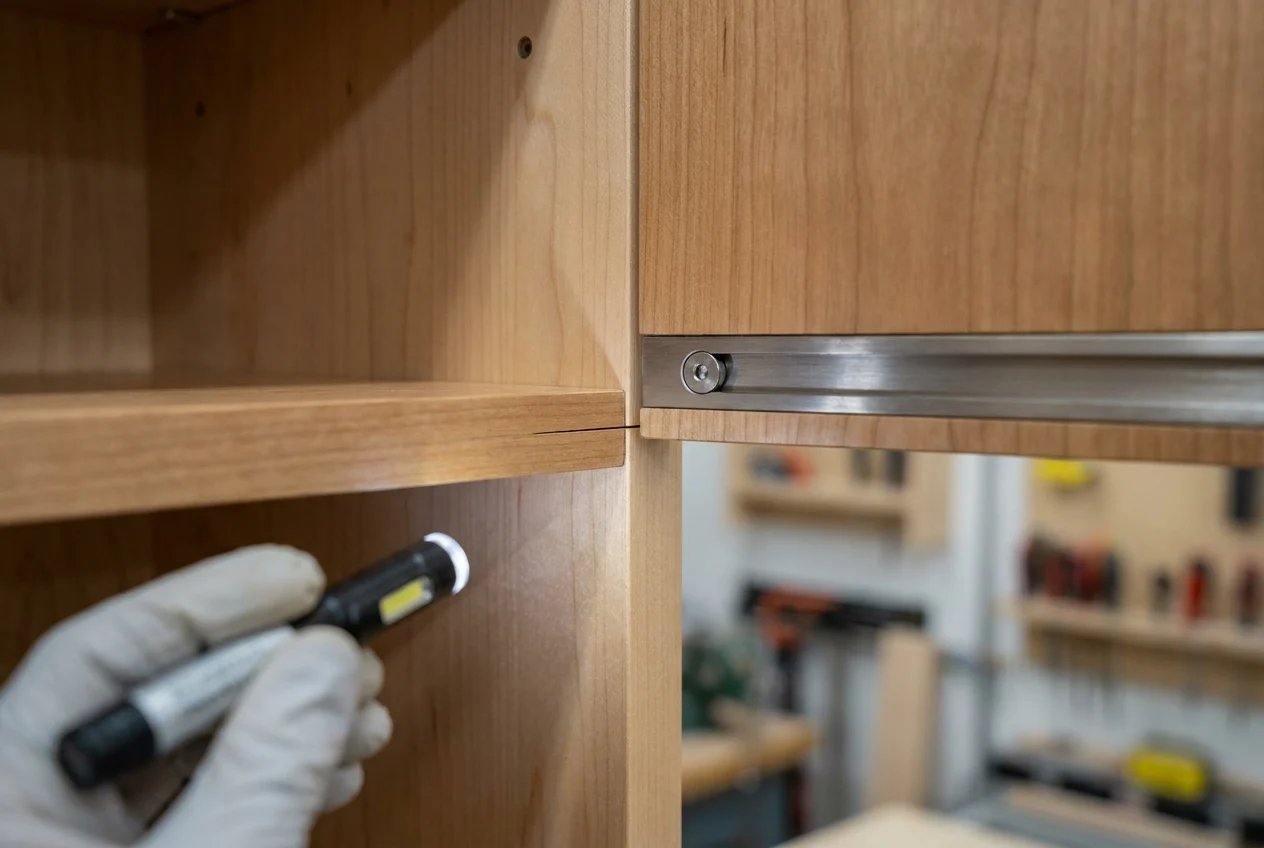
Inside the cabinet, examine panel connections, shelf supports, backs, and mounting rails. Glue squeeze-out, chipped coatings, exposed raw edges, poorly seated fasteners, and large gaps can indicate weak quality control.
Matching Construction to Cabinet Use
Not every cabinet requires the same level of reinforcement. A lightly used bathroom vanity has different demands than a wide kitchen drawer filled with cast iron cookware.
Prioritize high-capacity glides and rigid drawer boxes for cookware, dishes, pantry goods, and appliances. Tall pantry units benefit from strong backs, fixed structural shelves, and securely mounted pullout hardware.
For frequently used doors, choose adjustable hinges with replaceable mounting plates and reliable dampers. Large or heavy doors may require extra hinges to distribute the load.
Questions to Ask Before Buying
Ask for the drawer glide weight rating, extension type, hinge adjustment range, box material, panel thickness, and drawer bottom thickness. Confirm whether ratings apply to the complete installed system and whether special installation requirements affect performance.
Also ask how structural joints are assembled, where wall cabinets receive mounting fasteners, and which hardware components are covered by warranty. Clear specifications make meaningful comparisons easier and reduce reliance on broad labels such as premium, all wood, or soft close.
The strongest cabinet package is a coordinated system. Hinges, glides, joinery, panels, and installation must work together so doors remain aligned, drawers carry their intended loads, and cabinet boxes stay square throughout years of use.
Need help with Soft-Close Hinges, Drawer Glides, and Joinery: Cabinet Details That Matter?