




Small bedrooms and guest rooms often ask a lot from a limited footprint. They may need to store clothing, shoes, linens, luggage, seasonal items, and everyday essentials while still feeling calm, open, and comfortable.
A well-planned custom closet can turn awkward corners, shallow walls, and underused vertical space into practical storage. The key is to design around what the room truly needs to hold, then choose closet features that make every inch easier to access and maintain.
Start With a Clear Storage Plan
Before choosing shelves, drawers, hanging rods, or built-ins, take inventory of what the closet must store. In a small bedroom, the priority may be daily clothing, shoes, accessories, and folded items. In a guest room, the closet may need to balance visitor space with household overflow such as extra bedding, coats, gift wrap, or off-season decor.
Separating items by frequency of use helps determine the best closet layout. Everyday pieces should sit at eye level or within easy reach, while occasional items can be placed on higher shelves or in labeled bins. This simple planning step prevents the closet from becoming a crowded catchall and helps the design support real habits.
Measure More Than Just Width
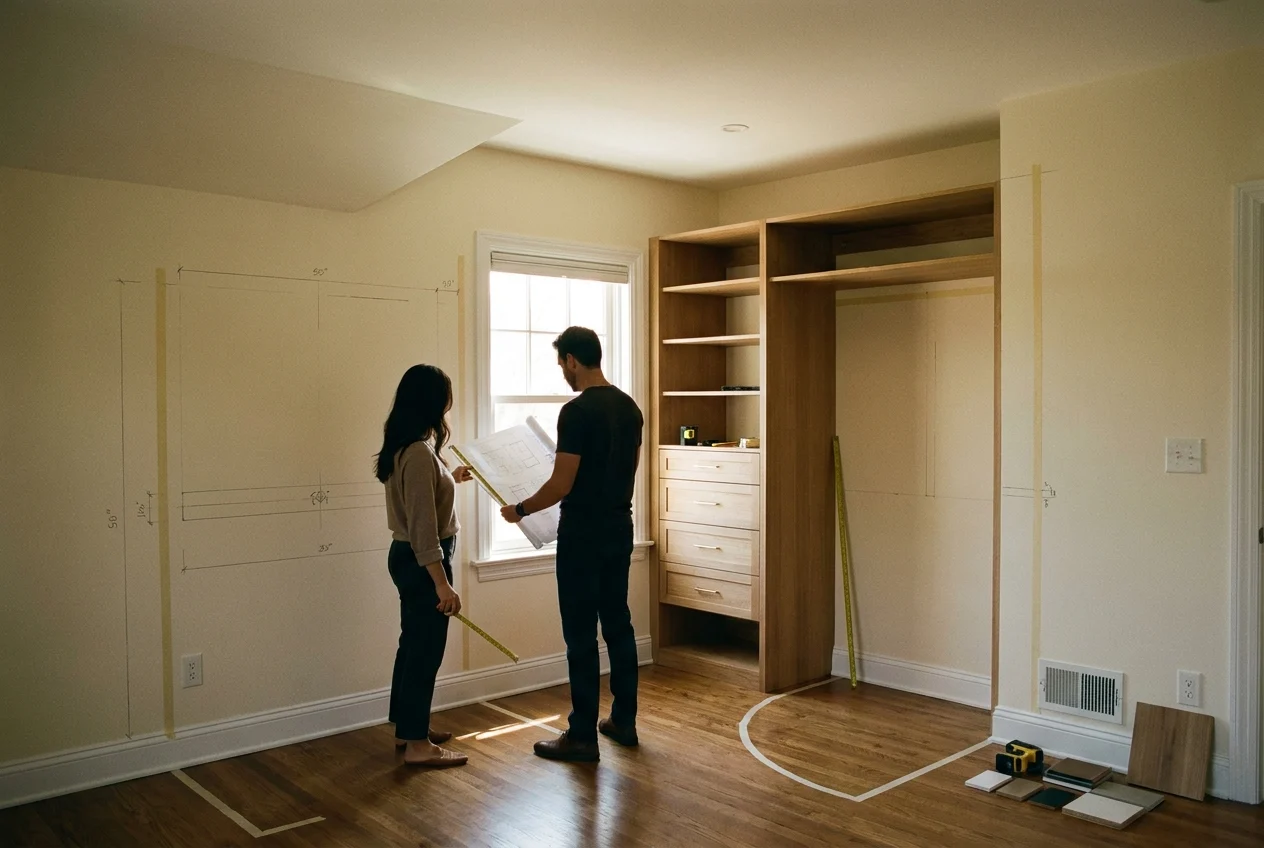
Accurate measurements are essential in compact rooms because even a few inches can affect the final design. Measure the closet width, height, and depth, but also note door swings, trim, outlets, vents, baseboards, sloped ceilings, and any obstructions that could limit storage placement.
Depth is especially important when designing custom closet systems for small bedrooms and guest rooms. A standard hanging section may not work well in a shallow closet, but shelves, hooks, pull-out rods, or angled shoe storage may provide a better fit without making the space feel cramped.
Group Items by Storage Type
Once the inventory is complete, group belongings into categories such as hanging clothes, folded garments, shoes, handbags, accessories, linens, and bulky items. This makes it easier to decide how much space should be dedicated to each storage type instead of relying on a one-size-fits-all closet layout.
For example, a room used mainly by guests may need fewer hanging rods and more open shelving for towels, blankets, and luggage. A small primary bedroom may benefit from double hanging rods, slim drawers, and vertical shoe storage to keep daily essentials organized without spreading into the room.
Use Vertical Space to Increase Capacity
In small rooms, the most valuable storage is often above eye level. Custom closet designs can take advantage of full wall height with upper shelves, stacked compartments, and tall cabinet sections that make use of space that standard closet rods typically ignore.
Vertical storage works best when it is planned in layers. Frequently used items should remain easy to reach, while rarely used belongings can move to the top. This approach increases storage capacity without adding bulky furniture to the bedroom or guest room.
Add High Shelves for Seasonal and Bulky Items
High shelves are ideal for items that do not need daily access, such as seasonal clothing, spare pillows, extra blankets, travel bags, and keepsake boxes.
For guest rooms, upper shelves can be especially useful because they allow homeowners to store household items while leaving lower sections open for visitors. Keeping a small portion of accessible hanging space and a clear shelf for guests makes the room more welcoming and functional.
Consider Double Hanging Rods
Double hanging rods can nearly double the usable hanging area in a compact closet. Placing one rod higher and one rod lower works well for shirts, blouses, jackets, skirts, and folded-over pants, especially when long garments are limited.
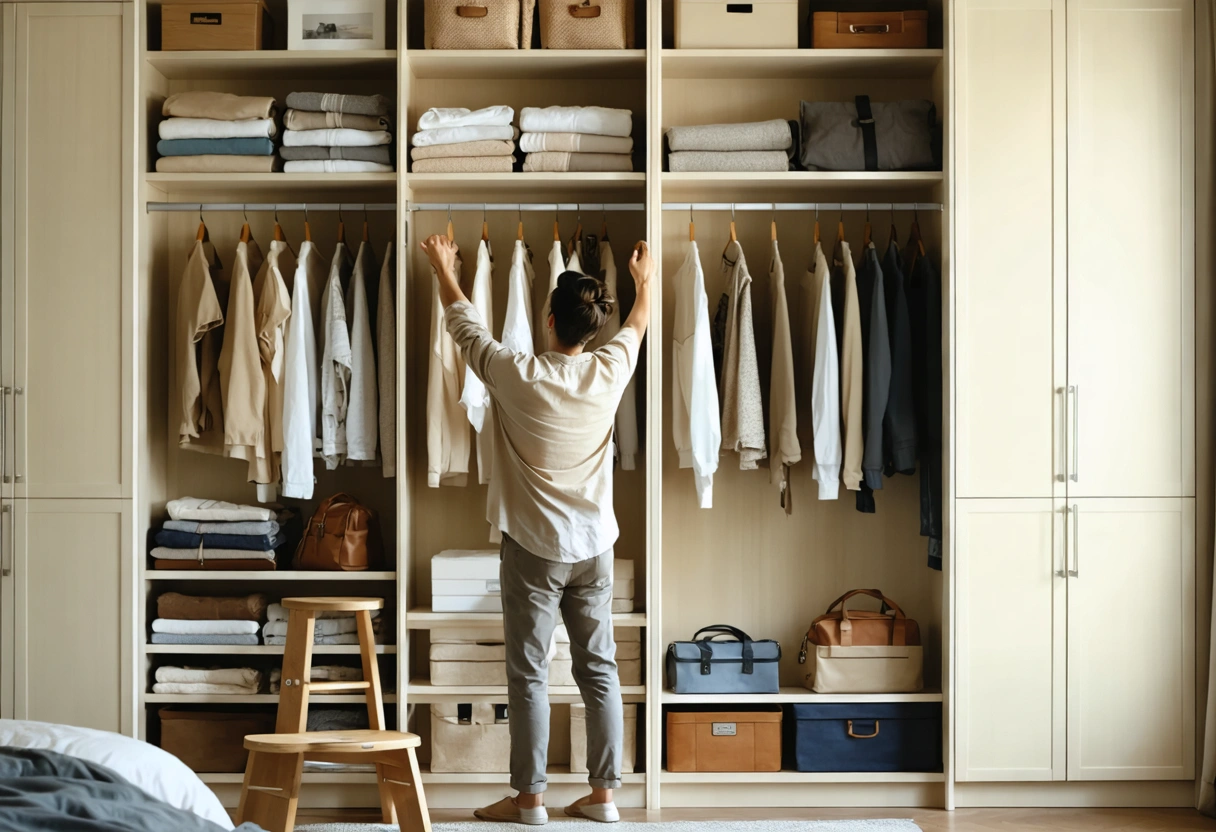
This layout is a strong choice for small bedrooms where clothing storage is the main challenge. To avoid overcrowding, reserve a separate narrow section for longer items such as dresses, coats, or robes, then use the double hanging area for shorter everyday pieces.
Choose Closet Features That Save Floor Space
Small bedrooms and guest rooms can quickly feel crowded when storage spills into dressers, nightstands, storage benches, and freestanding racks. A custom closet can reduce the need for extra furniture by building more function into the closet itself.
The best space-saving features are usually the ones that improve access. When items are easy to see and reach, the closet stays neater and the room feels less cluttered.
Use Pull-Out Accessories in Tight Areas
Pull-out closet accessories are helpful in narrow spaces because they bring items forward instead of forcing you to dig into the back of a shelf.
A pull-out valet rod is especially useful in a small bedroom closet. It provides a temporary place to hang outfits, plan clothing for the next day, or hold dry cleaning before it is put away.
Add Slim Drawers for Small Items
Drawers help contain smaller belongings that can make open shelves look messy. In a compact closet, shallow drawers are often more practical than deep ones because they allow socks, undergarments, jewelry, accessories, sleepwear, and folded shirts to be separated into easy-to-find categories.
If there is not enough room for a wide drawer stack, consider a narrow bank of drawers combined with shelves above. This can replace a small dresser in the bedroom and free up valuable floor space.
Install Adjustable Shelving
Adjustable shelves allow the closet to change as storage needs change. This is important in guest rooms, children’s rooms, and multipurpose spaces where the closet may need to store different items from season to season.
Shelves can be adjusted for folded sweaters, handbags, storage bins, linens, baskets, or shoes. If the room later becomes a nursery, office, hobby room, or full-time bedroom, adjustable shelving makes it easier to adapt the closet without replacing the entire system.
Make Shoes Easier to Store and See
Shoes often take up more space than expected, especially in small bedroom closets. When they are stored on the floor, they can block access to hanging clothes and make the closet feel disorganized.
The right shoe solution depends on the closet depth, the number of pairs, and the types of shoes being stored. Sneakers, flats, sandals, heels, and boots may each need slightly different spacing, so it is helpful to plan shoe storage around the actual collection instead of using identical shelves throughout.
Use Vertical Shoe Shelves
Vertical shoe shelves make use of height rather than floor space. A narrow column of shelves can fit along one side of a closet or between hanging sections, creating organized storage for frequently worn pairs.
For small bedrooms, this approach prevents shoes from spreading under the bed or collecting near the door. For guest rooms, a few open shoe shelves near the lower portion of the closet can give visitors a clear place to place footwear while keeping the room tidy.
Try Angled Shelves in Shallow Closets
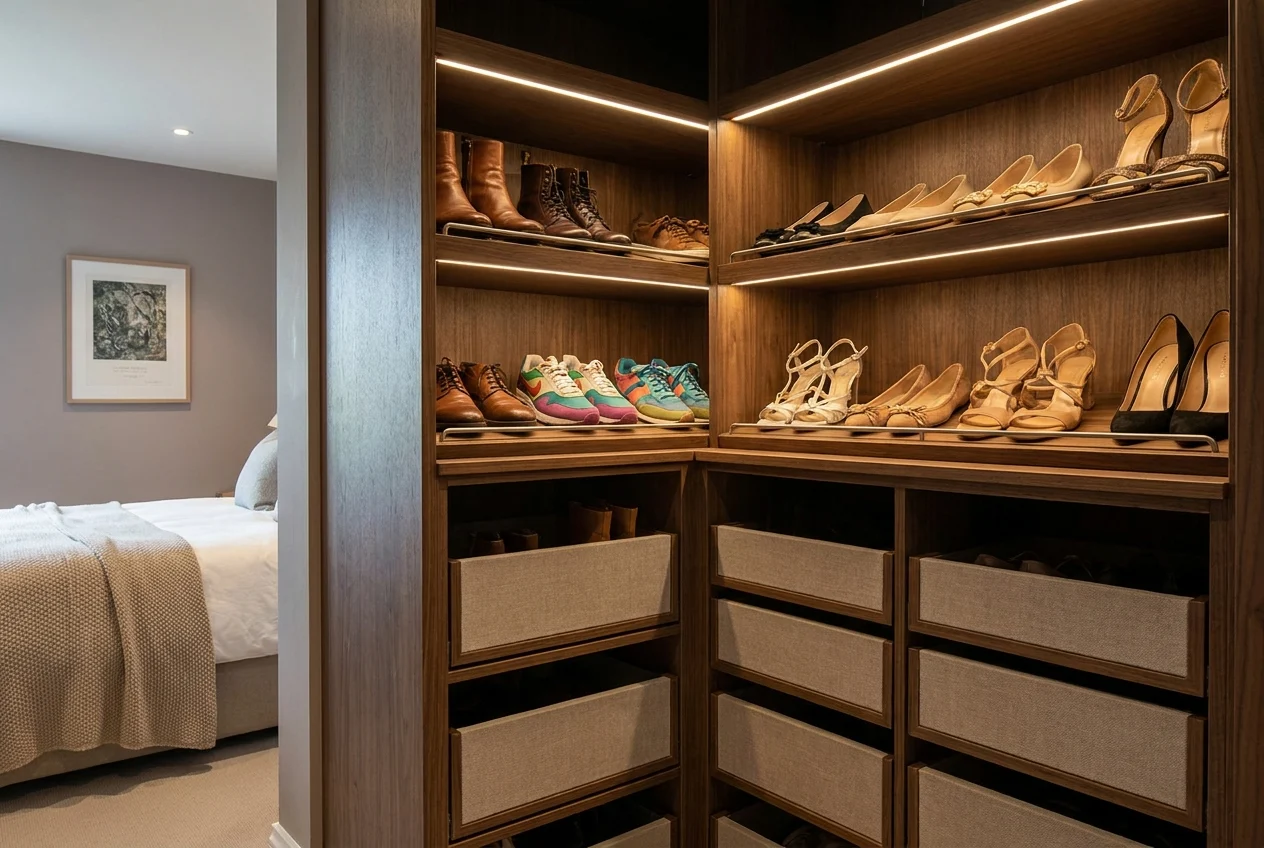
Angled shoe shelves can improve visibility and may work well in closets that do not have enough depth for standard flat shelves. The angled design displays shoes in a way that makes pairs easier to identify, which is useful when the closet is narrow or dimly lit.
Adding a small front rail or lip to each angled shelf helps keep shoes in place. This detail is especially helpful for heels, flats, and lightweight shoes that may slide forward when the shelf is tilted.
Reserve Space for Boots and Larger Footwear
Boots, high-top sneakers, and bulky seasonal shoes need taller compartments. If every shoe shelf is spaced for low-profile footwear, larger pairs often end up on the closet floor.
In guest rooms, a lower boot-height shelf can also work for small overnight bags or folded luggage. This flexible storage area gives the closet more long-term usefulness, especially if the room serves several purposes throughout the year.
Design Guest Room Closets for Dual Use
Guest room closets often need to serve two roles. They should provide a welcoming place for visitors to unpack, but they may also store household items when guests are not staying over.
The key is to create a defined guest zone. Even if most of the closet is used for linens, seasonal decor, or spare supplies, leaving a small amount of intentional open space makes the room feel prepared and comfortable.
Create an Empty Hanging Section
A short hanging section can make a big difference in a guest room. Visitors may only need space for a few shirts, dresses, jackets, or formal outfits, so a compact rod is often enough.
Keeping a few matching hangers in this section helps guests use the space right away. It also prevents the closet from feeling unfinished or overcrowded when someone opens the door.
Leave a Clear Shelf for Visitors
A clear shelf gives guests a place for folded clothing, a toiletry bag, a purse, or personal items. Ideally, this shelf should be at a comfortable height and easy to identify, rather than hidden behind bins or placed at the very top of the closet.
If the guest room closet stores extra linens, stack those items on upper shelves or in labeled bins so the guest shelf remains available. A small open cubby can also serve this purpose in closets where a full shelf is not practical.
Store Household Overflow in Labeled Bins
Guest room closets are useful for storing extra bedding, table linens, holiday items, files, gift wrap, craft supplies, or seasonal accessories. To keep the closet from looking chaotic, use labeled bins or baskets and group similar items together.
Opaque bins can create a cleaner look, while clear bins make it easier to identify contents quickly. For high shelves, lightweight bins with handles are helpful because they are easier to pull down safely when needed.
Improve Small Closet Access With Better Doors and Lighting
Even a well-designed closet can feel frustrating if the doors block access or the interior is too dark. Small rooms need closet features that make storage simple to use every day.

Consider Sliding, Bifold, or Pocket Doors
Traditional hinged closet doors require clearance in front of the closet, which can be difficult in a small bedroom with a bed, nightstand, or dresser nearby.
Sliding doors work well when there is limited room in front of the closet, but they only reveal one side at a time. Bifold doors provide wider access while using less swing space than standard doors.
Use Door Space for Lightweight StorageThe back of a closet door can hold lightweight items such as scarves, belts, hats, jewelry organizers, or small accessory pockets. This can free up shelf and drawer space while keeping frequently used items easy to reach.
Door storage works best when it does not interfere with the closet interior. Before adding hooks, racks, or organizers, check that the door can close fully and that hanging items will not bump into shelves, rods, or drawers.
Add Lighting for Better Visibility
Good lighting makes a small closet easier to use and helps prevent clutter from building up in dark corners. LED strip lights, puck lights, or motion-sensor fixtures can brighten shelves, drawers, and hanging areas without taking up much space.
Lighting is especially useful in guest rooms where visitors are unfamiliar with the layout. A simple motion-sensor light can make the closet feel more polished and convenient, while also helping guests find open shelves, hangers, and extra blankets.
Use Built-In Storage to Reduce Bedroom Furniture
One of the biggest advantages of a custom closet is that it can replace or reduce the need for freestanding furniture. In a small bedroom, every piece of furniture affects the walking path, sightlines, and overall comfort of the room.
Built-in closet components can often handle the same items that would normally go in a dresser, chest, shoe rack, or storage cabinet. This creates a cleaner look and keeps more of the room open for essential furniture.
Replace a Dresser With Closet Drawers
If the closet has enough width or depth, built-in drawers can store folded clothing, undergarments, pajamas, workout wear, and accessories. This may allow the bedroom dresser to be downsized or removed completely.
For the most efficient setup, place frequently used drawers between waist and chest height when possible. Lower drawers can hold heavier or less frequently used items, while shallow top drawers can organize small belongings that might otherwise clutter a nightstand or tabletop.
Add a Closet Countertop or Small Surface
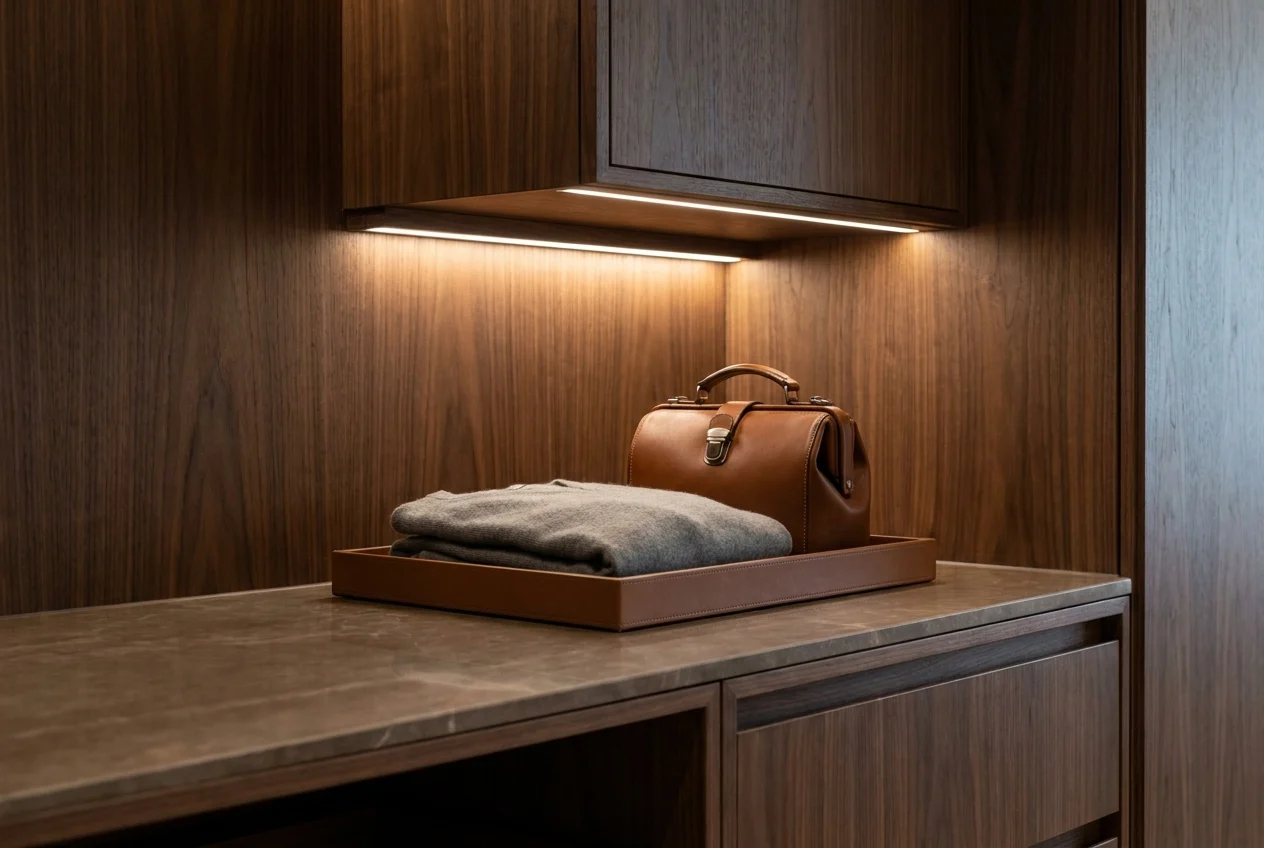
A small built-in surface above a drawer stack can serve as a convenient landing area inside the closet. It can hold folded laundry while putting items away, provide a spot for jewelry boxes or accessory trays, or help organize outfits for the week.
In a guest room, this surface can act like a compact luggage or personal item station if the closet layout allows. Keeping this function inside the closet helps maintain a cleaner, more open bedroom floor.
Include a Hidden Hamper
A pull-out or tilt-out hamper keeps laundry contained without requiring a separate basket on the floor. This is especially helpful in small bedrooms where laundry can quickly make the room feel messy.
If the room is used by guests, a hamper may not be necessary, but the same space can be designed as a removable bin for extra towels, spare bedding, or cleaning supplies.
Plan for Linens, Luggage, and Multipurpose Storage
Small bedrooms and guest rooms often hold more than clothing. They may also need to store sheets, towels, pillows, blankets, suitcases, air mattresses, hobby supplies, office materials, or keepsakes.
The goal is to prevent bulky items from taking over the most accessible zones. Daily essentials should stay within easy reach, while occasional and oversized items can be placed higher, lower, or in deeper compartments.
Use Deep Shelves for Bedding
Deep shelves are useful for storing folded comforters, quilts, pillows, and sheet sets. To keep stacks from toppling, divide wide shelves into smaller sections or use bins to separate bedding by size or room.
For guest rooms, consider keeping one complete bedding set together in a labeled bin or basket. This makes it easier to prepare the room quickly and prevents sheets, pillowcases, and blankets from becoming separated.
Create a Luggage Zone
Luggage can be awkward to store because it is bulky and used only occasionally. A tall vertical compartment, open bottom area, or high shelf can keep suitcases out of the way while still accessible when needed.
If guests frequently visit, leave enough open floor or shelf space for a small suitcase during their stay. This can reduce the need for a separate luggage rack and help keep bags off the bed or floor.
Use Labeled Containers for Mixed Items
When a closet stores several categories, labels become especially important. Containers for seasonal decor, extra toiletries, winter accessories, documents, or hobby supplies should be clearly marked so items can be found without unpacking the entire closet.
Consistent container sizes can also make shelves more efficient. Matching bins stack neatly, reduce visual clutter, and help the closet look intentional even when it stores a wide variety of household items.
Make Awkward Closet Shapes Work Harder
Small bedrooms and guest rooms often come with closets that are not perfectly shaped. Some are shallow, narrow, sloped, recessed, or interrupted by corners and structural details.
The best approach is to match each awkward area with the right type of storage. Not every section needs to hold hanging clothes. Some spaces are better suited for shelves, hooks, cubbies, baskets, or specialty accessories.
Use Narrow Side Walls for Hooks and Racks
Short side walls and slim gaps can be difficult to use with standard shelving, but they can work well for hooks, peg rails, or narrow racks.
In a guest room closet, a few hooks can give visitors a quick place to hang a purse, tote, travel steamer, or jacket. In a small bedroom, hooks can help keep frequently worn items off chairs, bedposts, and doorknobs.
Turn Corners Into Shelving
Closet corners can become dead space if rods overlap or shelves are too deep to access. Custom corner shelves can make these areas more practical for folded clothing, handbags, baskets, or linens.
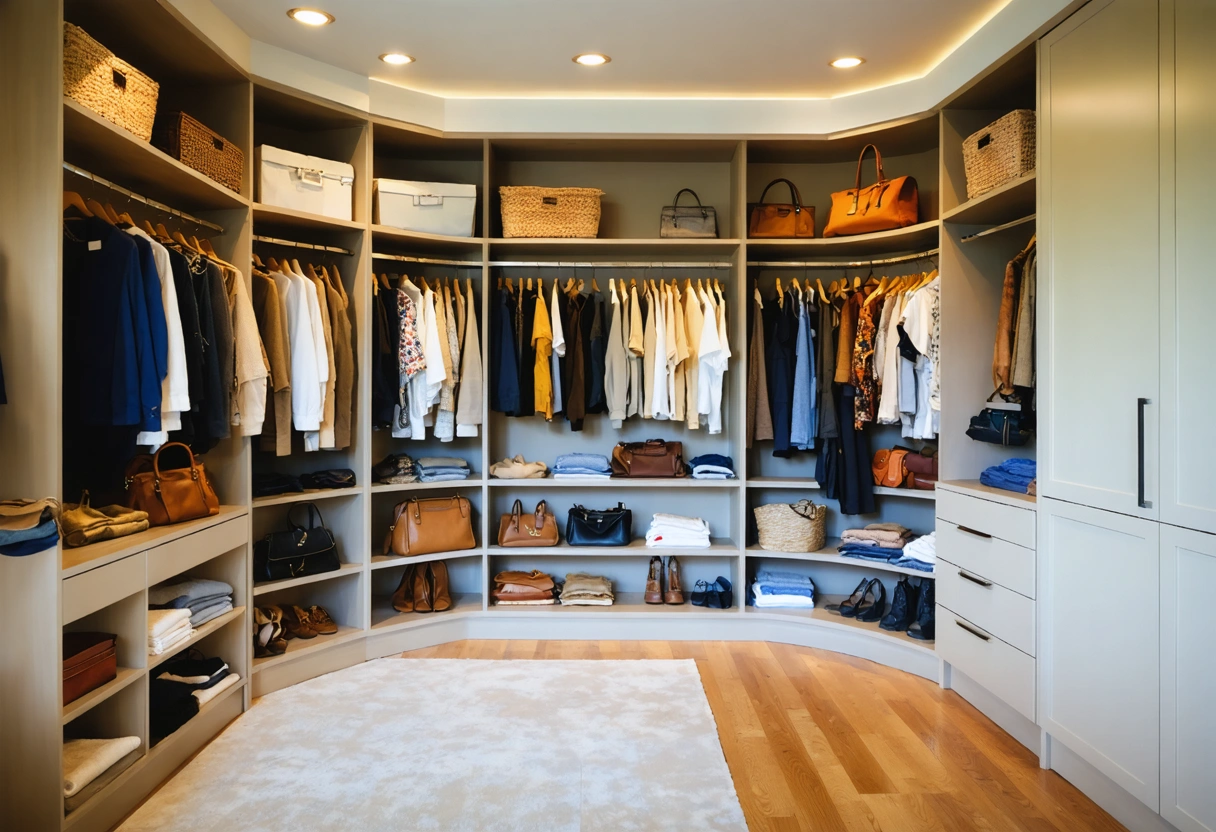
Open corner shelving works best for items that are easy to see and reach. If the corner is deep, use bins or baskets with handles so items can be pulled forward instead of disappearing into the back of the closet.
Adapt Storage to Sloped Ceilings
Closets under sloped ceilings require careful planning because full-height hanging space may not be available throughout. Lower areas can still be useful for drawers, shoe shelves, baskets, or short hanging rods.
The tallest section should be reserved for long hanging items, stacked shelves, or vertical cabinets. Shorter sections can hold folded garments, accessories, and seasonal storage without wasting the angled space.
Keep the Closet Visually Light
In a small room, closet design affects more than storage capacity. It also affects how open and calm the bedroom feels. Heavy, dark, or overly busy closet systems can make a compact space feel tighter, while simple finishes and clean organization can make the room feel more spacious.
Choosing the right mix of open and closed storage helps balance function with appearance. Items used daily should be easy to access, while clutter-prone categories can be hidden behind drawers, doors, or bins.
Choose Light Finishes
White, soft gray, natural wood, and other light finishes can help a small closet feel brighter. These finishes reflect more light and make it easier to see items inside the closet.
Light finishes are especially helpful in guest rooms because they create a clean, welcoming impression. If the room already has dark furniture or bold decor, a lighter closet system can help balance the overall design.
Use Matching Baskets and Bins
Matching baskets and bins make open shelving look more organized, even when the contents are varied. This is useful in closets that store linens, accessories, seasonal items, or household overflow.
For the most streamlined look, choose containers that fit the shelf depth and height properly. Bins that are too small waste space, while bins that are too tall can be difficult to remove and replace.
Avoid Overfilling Open Shelves
Open shelves are convenient, but they can make a closet feel cluttered if every surface is packed tightly. Leaving a little breathing room between stacks, bins, and accessories makes the closet easier to maintain and more pleasant to use.
A good rule is to keep the most visible shelves neat and simple. Less attractive or irregularly shaped items can be placed in bins, drawers, or upper storage zones where they will not dominate the room visually.
Takeaways
Custom closet ideas for small bedrooms and guest rooms work best when every shelf, rod, drawer, and bin has a clear purpose. By using vertical space, flexible storage, thoughtful lighting, and room-specific zones, even a compact closet can become more spacious, organized, and easy to maintain.
Need help with Custom Closet Ideas for Maximizing Space in Small Bedrooms and Guest Rooms?