




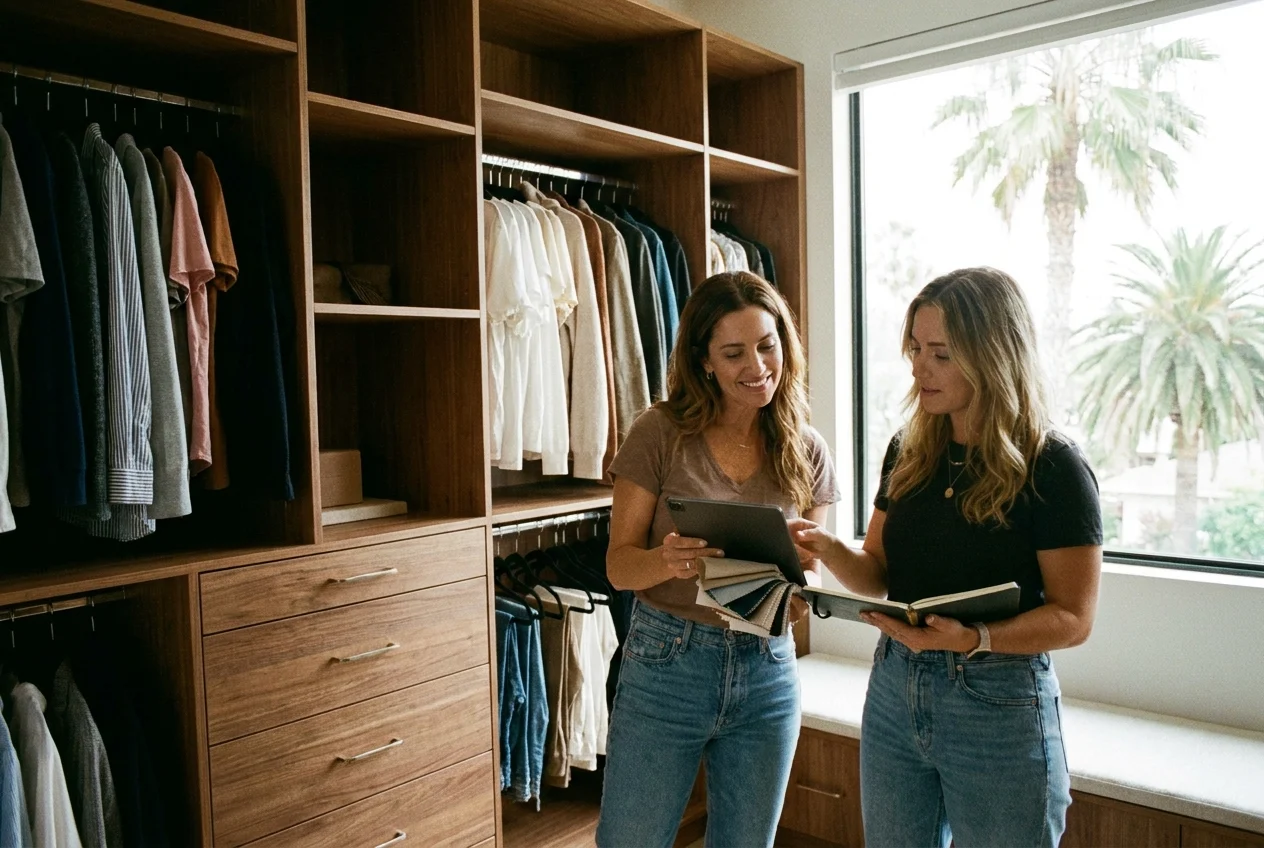
A well-planned closet does more than store clothing. It supports the way you get ready, protects the items you own, and makes the most of every inch of available space. Whether you have a compact reach-in closet, a walk-in dressing area, or an awkward underused storage zone, a personalized closet design can turn daily clutter into a more organized and enjoyable routine.
Custom closet solutions are especially valuable because no two wardrobes, homes, or habits are exactly alike. The right design considers what you wear, how you store seasonal items, which accessories need visibility, and how your space can function better over time. By focusing on your lifestyle first, closet organization becomes more practical, more attractive, and easier to maintain.
Why Your Daily Routine Should Shape the Design
The most successful personalized closet design begins with a clear understanding of how you actually use the space. A closet that looks beautiful but does not match your habits can quickly become frustrating. For example, someone who dresses for work every morning may need quick access to folded knits, hanging shirts, shoes, and accessories in one streamlined zone. Someone with an active lifestyle may benefit from dedicated sections for workout gear, casual layers, and laundry management.
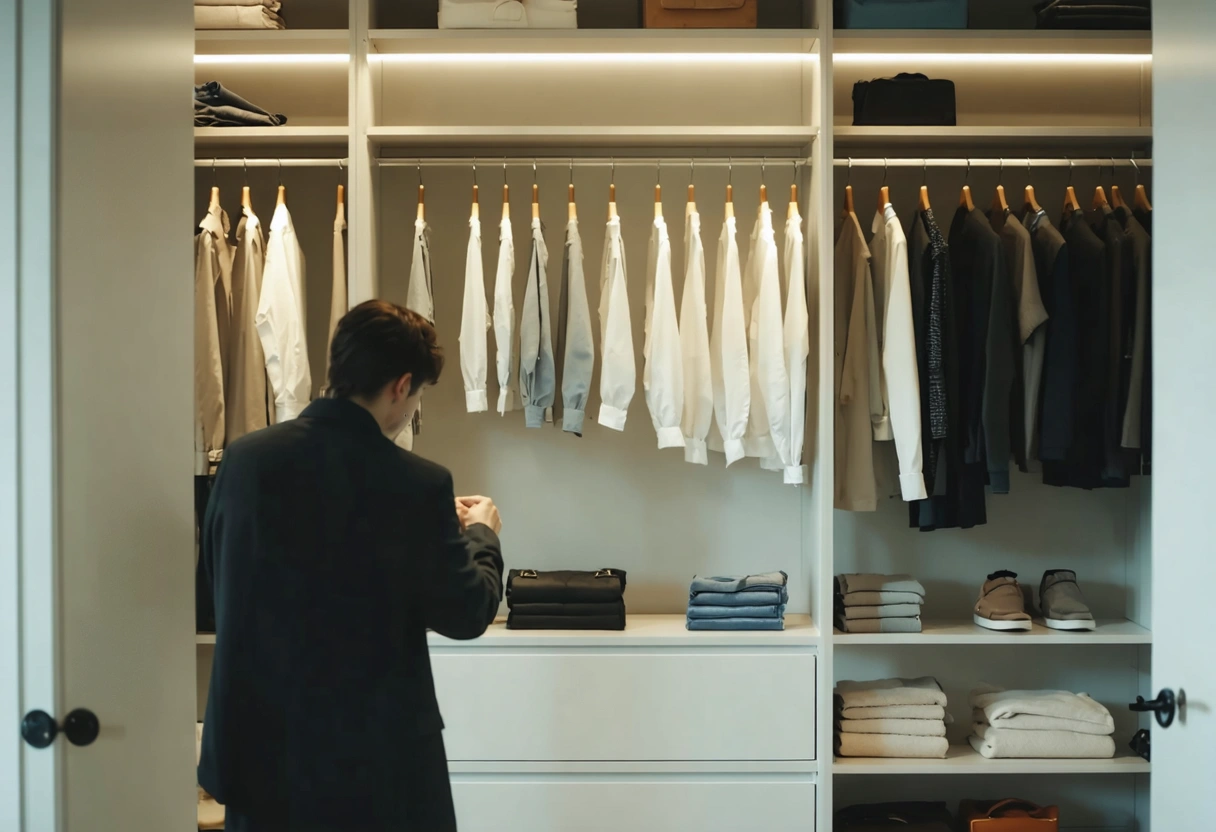
Thinking through your daily routine helps determine what should be most visible and easiest to reach. Items used every day should be placed at eye level or within comfortable arm’s reach, while occasional or seasonal pieces can be stored higher or in less prominent areas. This simple approach reduces decision fatigue and keeps the closet from becoming a catchall for items that do not belong.
A personalized layout also accounts for the order in which you get dressed. If you choose shoes first, open shelving or angled shoe storage near the entrance may be helpful. If accessories complete your outfits, shallow drawers with dividers or dedicated hooks can keep belts, jewelry, scarves, and bags from getting buried. Designing around behavior creates a closet that feels natural to use rather than one that requires constant adjustment.
Questions to Ask Before Planning Your Layout
Before choosing finishes, drawers, shelves, or hanging rods, it is useful to assess what is working and what is not. Do your clothes feel crowded? Are shoes difficult to find? Do folded items topple over? Are there areas of the closet that remain empty while others are overloaded? These observations reveal the storage problems your custom closet solutions need to solve.
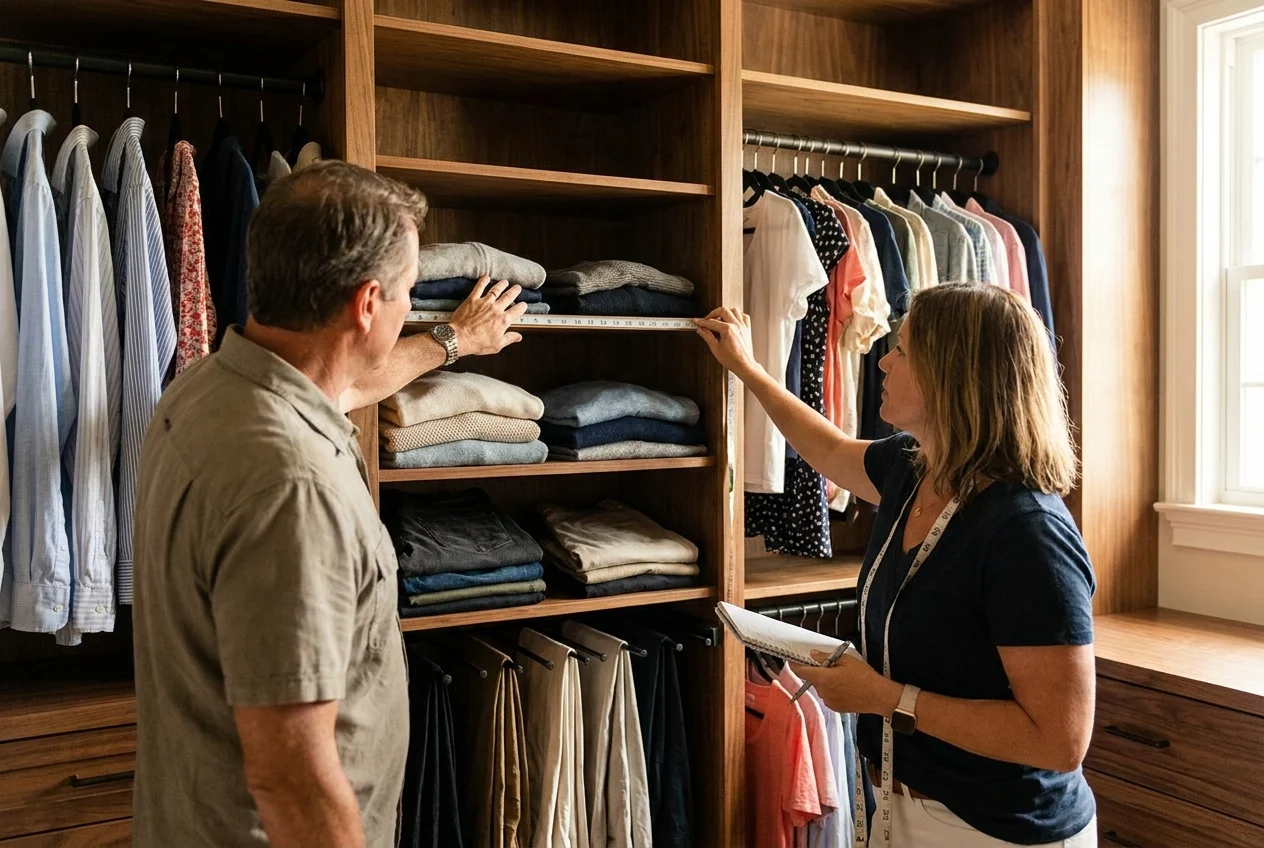
It also helps to measure the types of items you own. Long dresses, suits, coats, handbags, folded denim, athletic wear, and shoe collections all require different storage dimensions. A closet designed around real inventory will perform better than one based on standard assumptions. This is one of the biggest advantages of a custom approach compared with a one-size-fits-all system.
Key Custom Storage Features That Improve Closet Organization
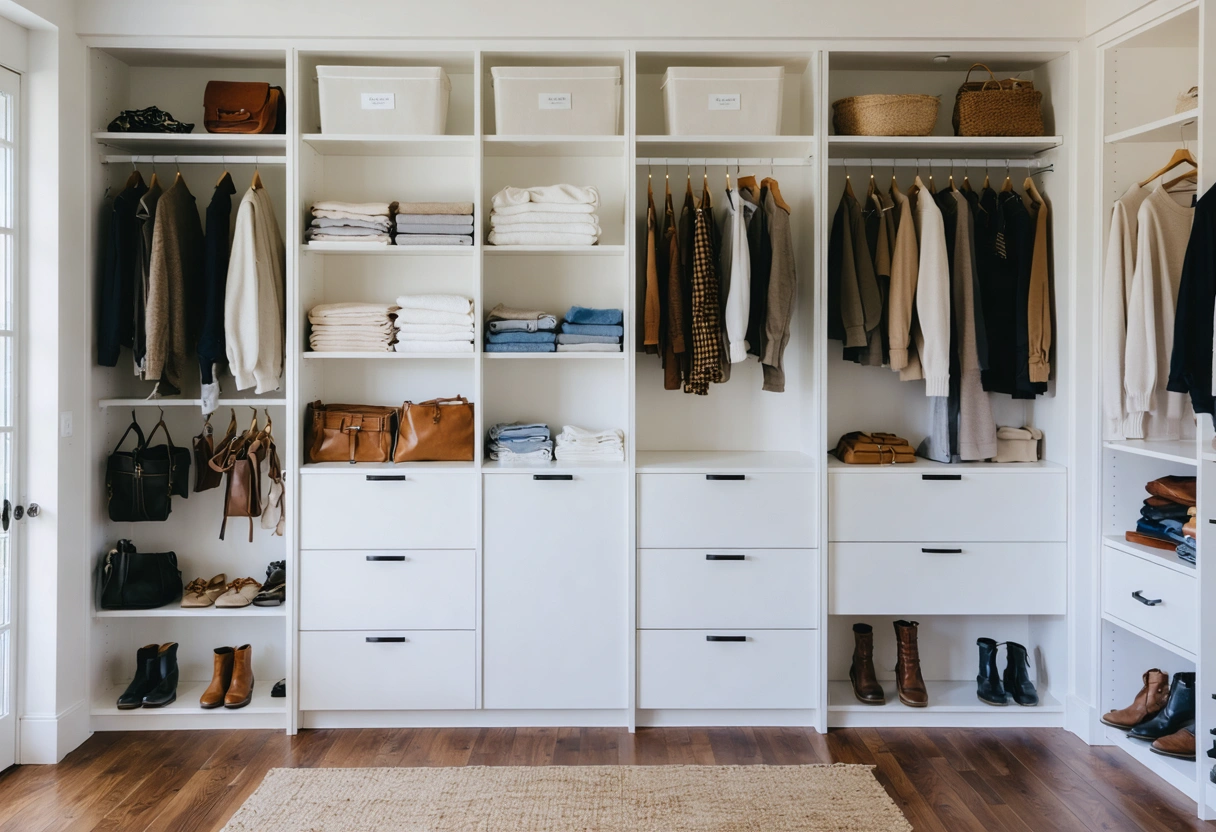
Personalized closet systems can include a wide range of storage features, but the best choices depend on your wardrobe and available space. Double hanging rods are ideal for shirts, blouses, jackets, skirts, and folded trousers because they maximize vertical storage. Full-length hanging sections are better for dresses, coats, robes, and formalwear. Combining both creates flexibility and prevents wasted space.
Adjustable shelving is another important feature because wardrobes change over time. Shelves can be used for sweaters, handbags, storage bins, hats, or display pieces, and adjustable spacing allows the closet to evolve as your needs shift. In smaller closets, shelves can make use of vertical areas that might otherwise be left empty, especially above hanging sections or near corners.
Drawers add a clean, built-in look while keeping smaller items hidden and organized. They are useful for undergarments, socks, accessories, workout clothing, sleepwear, and delicate garments that should not be overexposed. Drawer dividers can further improve organization by assigning every category a specific place, which makes it easier to maintain order after laundry days or seasonal wardrobe changes.
Making Shoes, Accessories, and Specialty Items Easier to Find
Shoes and accessories often create clutter because they vary so much in size and shape. A personalized closet design can solve this with dedicated shoe shelves, pull-out racks, cubbies, or vertical storage. The right shoe storage depends on whether you own mostly flats, sneakers, boots, heels, or a mix of styles. Boots may need taller compartments, while everyday shoes should be placed where they are easy to grab.
Accessories benefit from visibility and separation. Jewelry trays, belt racks, scarf hooks, valet rods, and handbag shelves help prevent small items from disappearing into drawers or piling up on open surfaces. When these details are built into the closet plan, the space feels more intentional and polished while also making outfit planning faster and more enjoyable.
Designing for Small, Awkward, or Underused Closet Spaces
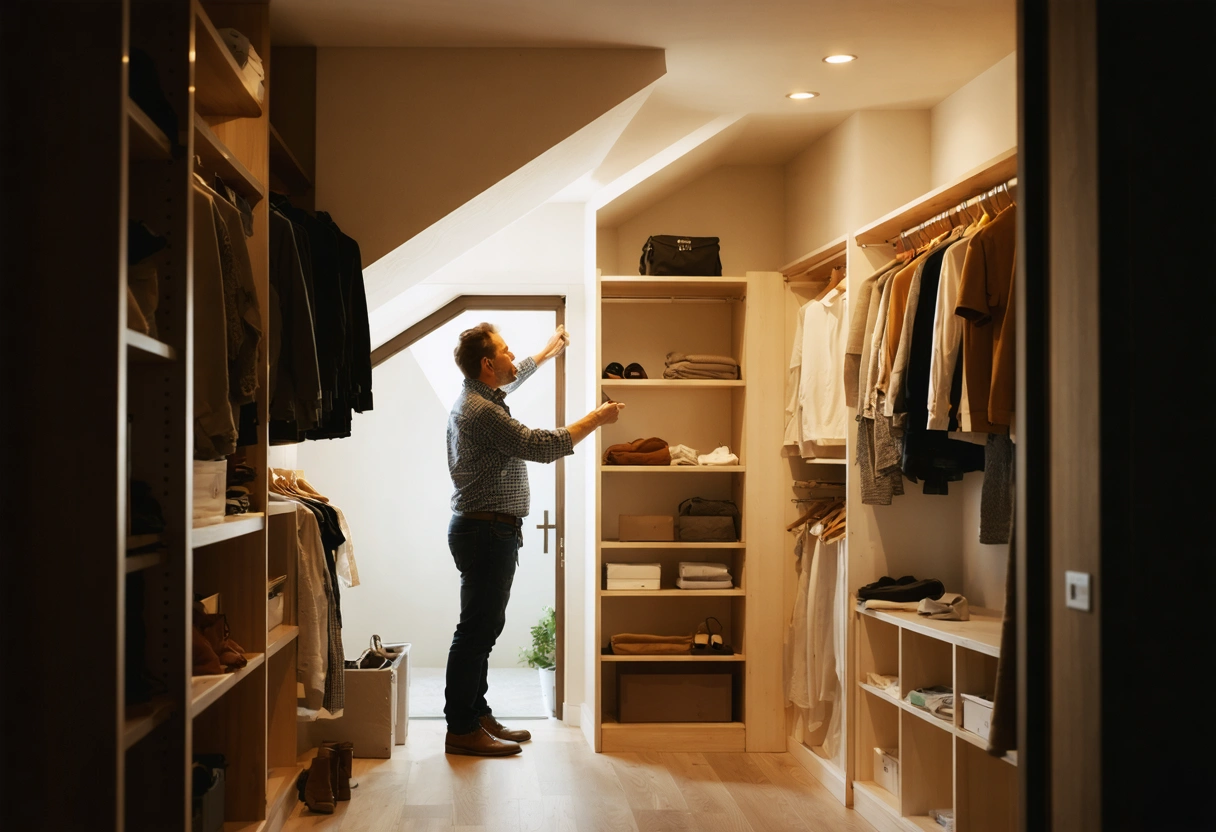
Not every closet begins as a spacious walk-in with perfect proportions. Many homes have narrow reach-in closets, sloped ceilings, deep corners, shallow walls, or oddly placed doors that make standard storage difficult. Personalized closet design is especially powerful in these situations because it can turn architectural limitations into useful storage opportunities. Instead of forcing a generic system into an imperfect footprint, a custom layout works with the shape of the room.
For a small reach-in closet, the goal is usually to increase usable vertical space and reduce hidden dead zones. A single rod and one high shelf often leave a large amount of wasted room below shorter hanging garments. Replacing that setup with double hanging, side shelving, drawers, or baskets can dramatically increase storage capacity without expanding the closet itself. Sliding baskets or pull-out shelves can also make deeper areas more accessible.
Awkward corners require thoughtful planning because items can easily become difficult to reach. Corner shelves, curved rods, staggered hanging sections, or custom cabinetry can keep those spaces functional. In closets with sloped ceilings, lower areas can be used for shoes, folded storage, or drawers, while taller sections can hold hanging garments. The key is to assign each part of the closet a purpose based on its height, depth, and accessibility.
Using Vertical Space Without Creating Clutter
Vertical storage is one of the most effective ways to improve closet organization, but it needs to be planned carefully. Stacking items too high without structure can create clutter and make everyday use inconvenient. Upper shelves are best for items that are light, clearly labeled, and used less frequently, such as seasonal clothing, extra bedding, travel bags, or keepsake storage.
To make upper storage more practical, consider matching bins, fabric boxes, or clear containers that fit the shelf depth. Items should be grouped by category rather than randomly stored. For example, one bin might hold winter accessories, another might hold beachwear, and another might hold special occasion pieces. This creates a clean visual effect while still allowing the closet to function as a highly efficient storage system.
Choosing Materials, Finishes, and Lighting for a Polished Look
Function should guide the structure of a custom closet, but materials and finishes determine how the space feels. The right finish can make a closet look brighter, larger, warmer, or more luxurious. White and light neutral finishes are popular because they reflect light and create a clean backdrop for clothing. Wood tones add warmth and can make a closet feel more like built-in furniture. Darker finishes can look elegant, especially in larger closets with strong lighting.
Material selection should also consider durability. Closets are used daily, so shelves, drawers, and rods need to withstand repeated movement, weight, and changing storage needs. Smooth, easy-to-clean surfaces are helpful in busy households. Drawer glides, hinges, handles, and rods may seem like small details, but they influence how sturdy and satisfying the closet feels over time.
Lighting is another major factor in personalized closet design. Poor lighting makes it harder to distinguish colors, find items, and appreciate the organization you have created. Even a beautifully designed closet can feel less functional if shadows hide shelves or drawers. Overhead lighting, integrated shelf lighting, drawer lighting, and motion-activated fixtures can all improve visibility.
Creating a Boutique-Inspired Experience at Home
A closet does not need to be extravagant to feel special. Small design choices can create a boutique-inspired atmosphere that makes getting dressed more enjoyable. Matching hangers create visual consistency.

If space allows, a mirror, seating area, or countertop can add comfort and convenience. A small bench can help with shoes, while a counter over drawers can serve as a surface for folding clothes or arranging accessories.
Planning for Seasonal Changes and Long-Term Flexibility
A strong closet design should support your wardrobe today while allowing room for change. Clothing needs often shift with career changes, lifestyle transitions, family needs, hobbies, travel habits, and climate.
Seasonal rotation is one of the easiest ways to keep a closet organized throughout the year. Heavy coats, boots, and sweaters may dominate in colder months, while lighter clothing, sandals, and swimwear take priority in warmer months.
Families can also benefit from flexible design. A child’s closet may need lower rods and open bins at first, then more hanging space, drawers, and shelves as they grow.
Editing Your Wardrobe Before Finalizing the Design
One of the smartest steps before installing a personalized closet system is to edit the wardrobe. Designing around items you no longer wear can waste valuable space.
This process also helps identify patterns. You may discover that you need more space for folded casual wear and less for formal clothing, or that your shoe collection requires more structure than expected.
How Personalization Supports Better Organization Habits
A custom closet does not organize life automatically, but it makes good habits much easier to maintain. When every item has a logical home, putting things away becomes faster and less stressful.
Personalization also reduces the need for constant reorganizing. Many clutter problems come from storage that does not match the items being stored. If shelves are too deep, stacks fall over.
Another benefit is improved decision-making. A clear, organized closet makes it easier to see what you own, combine outfits, and avoid unnecessary purchases. When clothing is hidden or crammed together, it is common to buy duplicates or forget about pieces that would otherwise be useful.
Building a Closet That Works as Beautifully as It Looks
Personalized closet design is about much more than
Need help with Personalized Closet Design: Transforming Your Space with Custom Solutions?