






Choosing a countertop is one of the most important decisions in a kitchen or bathroom remodel. The surface affects daily maintenance, visual style, food preparation, durability, and the overall project budget. For homeowners in Venice, Florida, the material should also fit a relaxed coastal lifestyle while standing up to frequent use, sunlight, moisture, and entertaining.
Quartz and granite are both attractive, long lasting options, but they perform differently. Understanding how each material is made and maintained can help you select a countertop that complements your cabinetry, hardware, and everyday routines.
How Quartz and Granite Countertops Differ
The primary difference between quartz and granite is how the countertop material is produced. Granite is a natural stone quarried from the earth, while quartz countertops are engineered using crushed natural quartz combined with resins, pigments, and other materials. This distinction influences each surface’s appearance, maintenance needs, consistency, and resistance to common household wear.
Neither option is automatically better for every Venice area home. A homeowner who values natural variation may prefer granite, while someone seeking consistent color and minimal maintenance may lean toward quartz. The right choice depends on the room, design preferences, cooking habits, and expectations for long term care.
Quartz Offers a More Consistent Appearance
Because quartz is manufactured, its colors and patterns can be carefully controlled. Slabs are available in subtle solid shades, fine textures, and designs that resemble marble or natural stone. This consistency can make it easier to coordinate countertops with made-to-order cabinets, backsplashes, flooring, and decorative hardware.
Quartz is nonporous, so it does not require routine sealing. Its low maintenance surface resists many common stains when spills are cleaned promptly. However, quartz is not completely heatproof. Hot pans, slow cookers, and other heat-producing appliances should be placed on protective pads or trivets to reduce the risk of discoloration or damage.
Granite Provides Natural Character
Every granite slab has its own mineral patterns, color movement, and visual texture. These natural differences can create a distinctive focal point in a kitchen, bathroom, bar, or laundry area. Homeowners who appreciate organic materials often enjoy selecting the exact slab that will be used in their project.
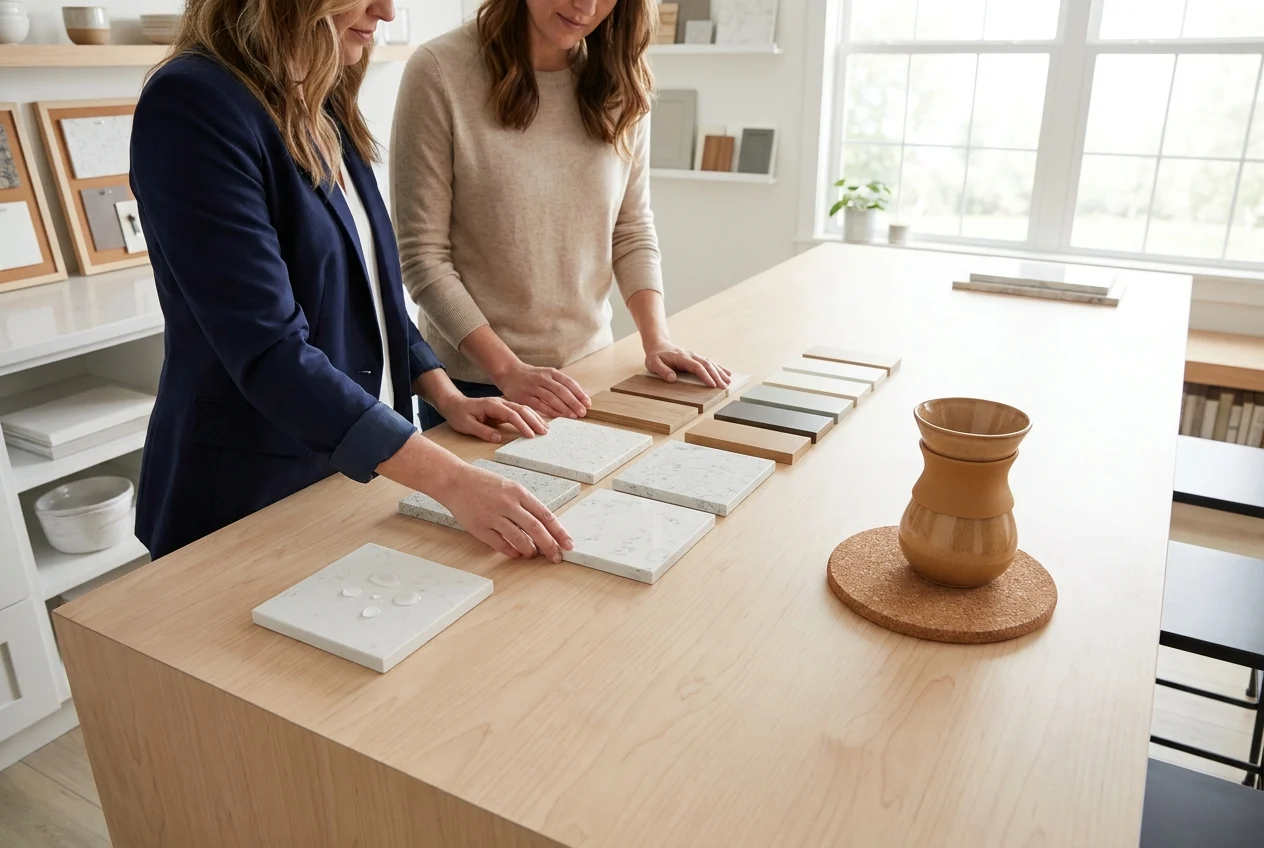
Granite is highly durable and generally handles heat well, although protective trivets are still recommended. Since granite is porous, most slabs should be sealed periodically to help resist moisture and staining. The frequency depends on the stone, sealer, and level of use.
Comparing Everyday Performance and Maintenance
Countertop performance should be evaluated according to how the space is actually used. A busy family kitchen may prioritize stain resistance and simple cleanup, while a guest bathroom vanity may place more emphasis on color and pattern. Considering these practical details early can prevent a beautiful surface from becoming inconvenient later.
Both quartz and granite are durable enough for many residential applications, but neither is indestructible. Heavy impacts can chip edges, harsh chemicals can affect the finish, and poorly supported overhangs can create structural concerns. Professional measurements, appropriate cabinet support, and careful installation are important for either material.
Cleaning and Stain Resistance
Quartz is typically easier to maintain because its nonporous surface does not need sealing. Mild soap, water, and a soft cloth are usually sufficient for routine cleaning.
Properly sealed granite also offers good stain resistance, but spills should be wiped up promptly, especially oils, wine, coffee, and acidic liquids. Homeowners should follow the stone supplier’s recommendations for cleaning and resealing rather than relying on a fixed schedule for every granite surface.
Heat, Sunlight, and Venice Area Conditions
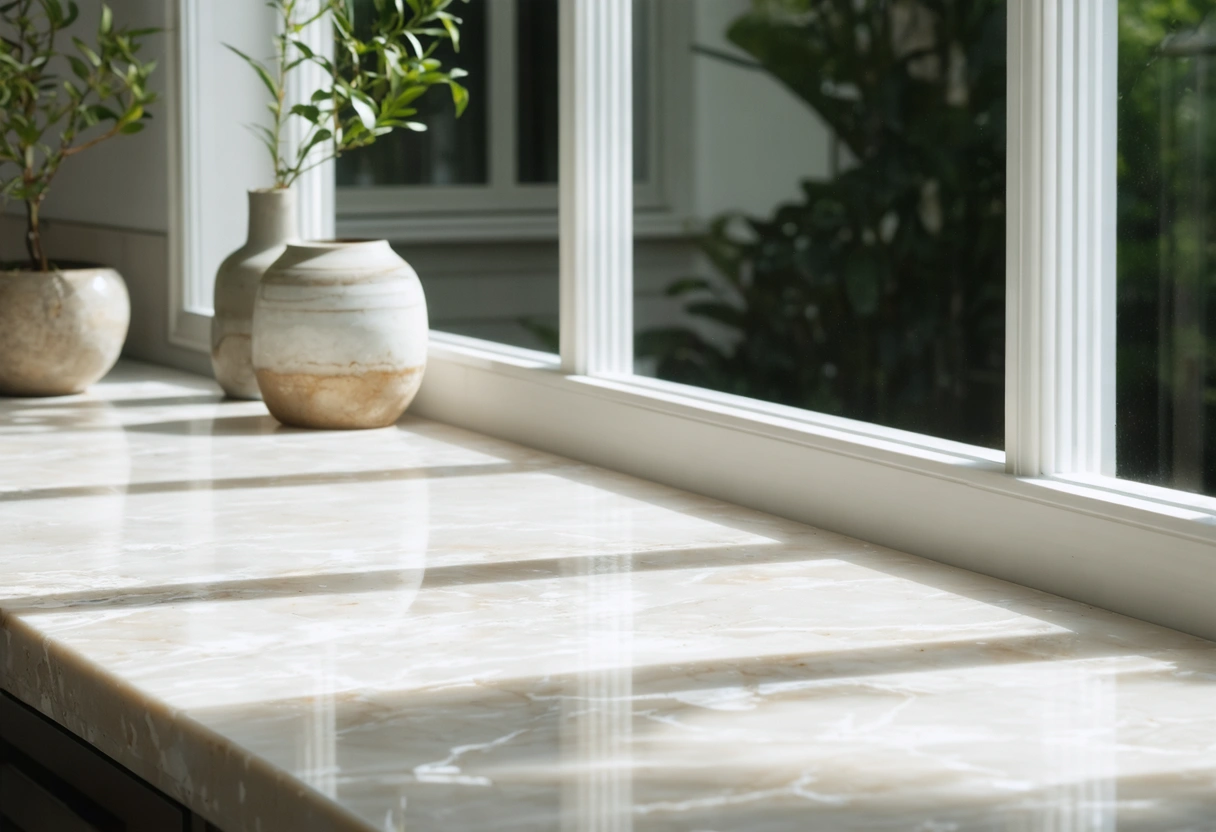
Florida sunlight is worth considering in rooms with large windows or strong daily exposure. Extended ultraviolet exposure may cause some quartz colors or resins to change over time, making placement and window treatments relevant during material selection.
Indoor humidity is not usually a major concern for a correctly installed countertop, but moisture around sinks, faucets, seams, and backsplashes still requires attention. Quality installation and proper sealing at vulnerable areas help protect the countertop, cabinetry, and surrounding finishes in Venice homes.
Cost and Long Term Value
Quartz and granite are available across a broad range of prices. The final cost depends on the slab or color selected, countertop thickness, total square footage, edge profile, number of cutouts, seam placement, installation requirements, and the amount of material needed to complete the layout.
Entry level options in either category may be similarly priced, while rare granite patterns and premium quartz designs can cost considerably more. Comparing materials by installed project price is more useful than comparing slab prices alone.
Maintenance Costs Over Time
Quartz generally has fewer ongoing maintenance requirements because it does not need periodic sealing. Granite may require resealing, but this is typically a manageable maintenance task when performed according to the supplier’s guidance.
Choosing a durable surface that works well with the household’s routines can provide better value than selecting based only on the lowest initial price. A countertop that is easy to care for, properly supported, and visually compatible with the cabinetry is more likely to remain satisfying as the room ages.
Designing Countertops Around Cabinets and Finishes
Countertops occupy a large visual area, but they should not be selected in isolation. Cabinet color, door style, flooring, backsplash material, wall color, lighting, plumbing fixtures, and hardware all influence how a slab looks in the finished room.
Pairing Countertops With Cabinet Colors
White and light painted cabinets work with many quartz and granite selections. A soft white quartz can produce a clean, airy appearance, while granite with natural movement can add warmth and character.
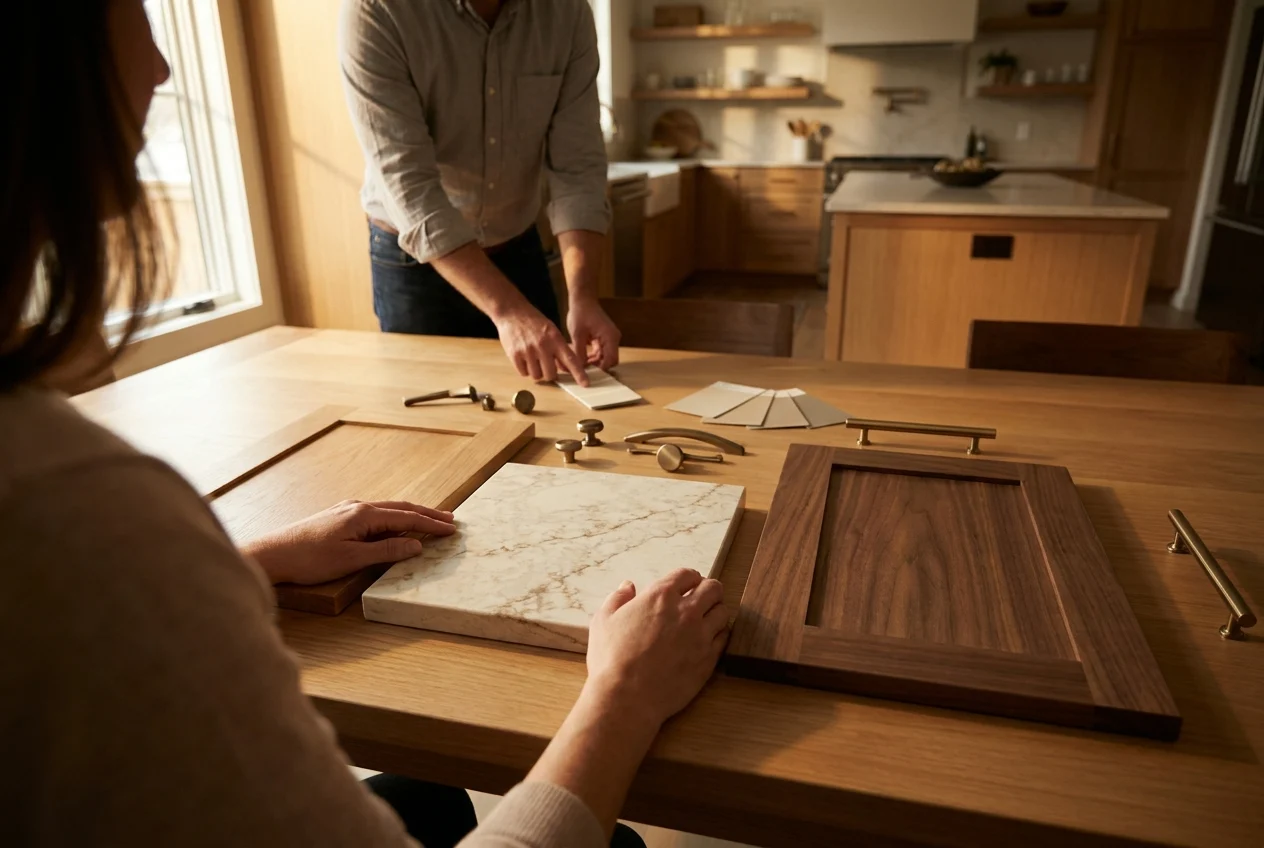
Wood cabinetry often benefits from a countertop that relates to its undertones. Warm woods may coordinate well with cream, beige, taupe, brown, or softly veined surfaces.
In coastal inspired Venice homes, homeowners often prefer light, relaxed palettes. Soft white, sand, pale gray, and subtle blue green accents can feel appropriate without turning the room into a theme.
Balancing Pattern and Visual Movement
If cabinetry, flooring, or backsplash tile already has a noticeable pattern, a quieter countertop can help balance the room. Conversely, simple cabinets and restrained flooring can provide a suitable background for a granite slab with dramatic mineral movement or a quartz design with prominent veining.
Small samples are helpful for narrowing choices, but they may not represent the full pattern of a slab. This is especially important with granite and heavily veined quartz.
Coordinating Hardware and Fixtures
Countertop undertones can guide the selection of cabinet hardware, faucets, sinks, and lighting. Warm stone colors often complement brushed brass, bronze, or warm nickel finishes.
Matching every metal finish is not always necessary. A coordinated mix can add depth when the finishes share a clear relationship and are repeated intentionally.
Edge Profiles, Seams, and Layout Details
The practical details of fabrication can influence both the appearance and durability of a countertop. Edge profiles, seams, sink installation, appliance clearances, and overhangs should be planned with the cabinetry rather than treated as last minute decisions.
Selecting an Edge Profile
A simple eased edge has a clean shape that suits contemporary, transitional, and coastal interiors. Rounded edges can feel softer and may be practical in busy households.
The chosen edge should also suit the countertop pattern. Dramatic veining may need little ornamentation, while a quieter surface can support a more detailed profile.
Planning Seams Carefully
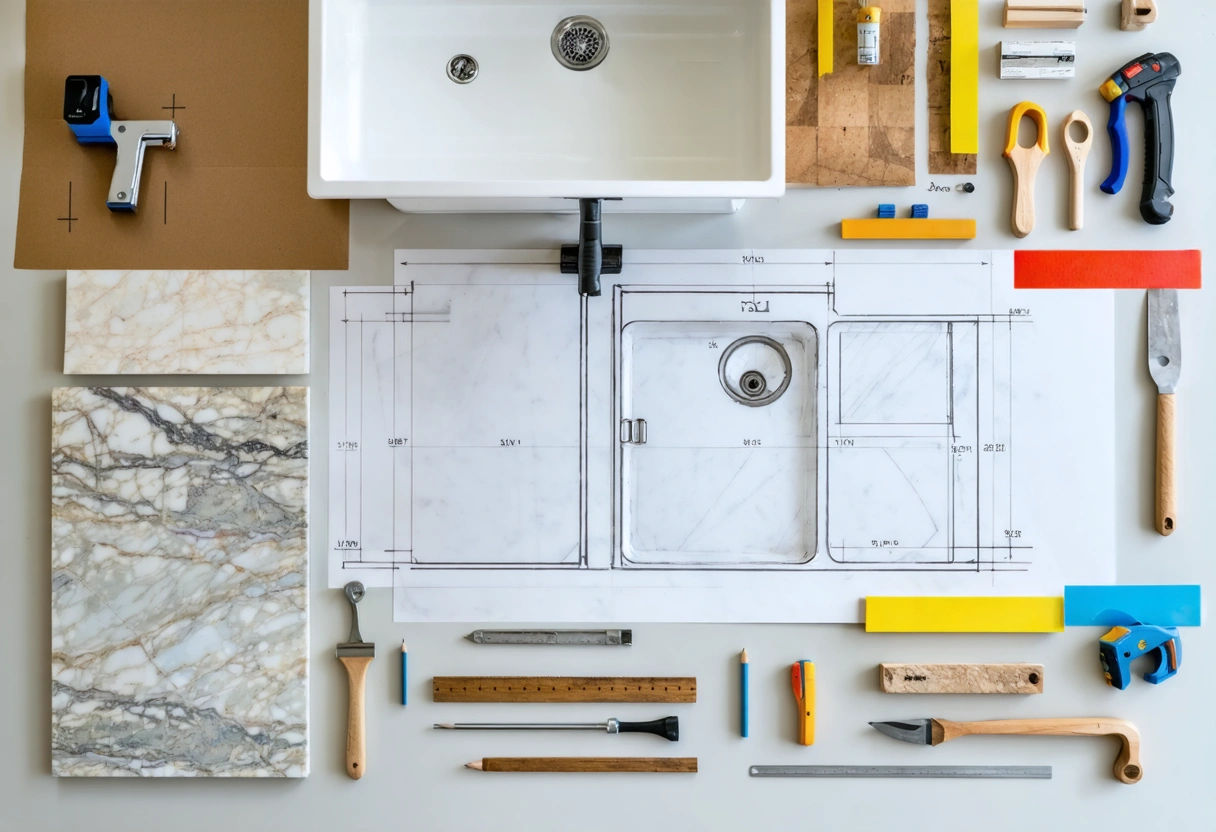
Large or complex countertop layouts may require seams. Their location depends on slab dimensions, pattern direction, transportation limits, cabinet support, cutouts, and installation access. Although fabricators work to make seams neat and secure, they will not always be invisible.
Granite’s natural movement can either help disguise a seam or make pattern matching more challenging. Veined quartz also requires thoughtful placement so the design flows naturally.
Sinks, Faucets, and Overhangs
Undermount sinks create a streamlined appearance and make it easy to wipe debris directly into the basin. Drop in sinks may be appropriate for certain budgets, styles, or replacement projects.
Faucet holes, soap dispensers, filtered water taps, and air switches should also be confirmed in advance. Island and peninsula overhangs need sufficient support based on their depth, countertop material, and cabinet construction.
Choosing the Right Surface for Each Room
A material that works well in the main kitchen may not be the best choice for every countertop in the home. Evaluating each room separately allows homeowners to prioritize maintenance, sunlight exposure, moisture, design impact, and budget where they matter most.
Kitchen Countertops
Quartz is often appealing in a busy kitchen because it offers consistent color and straightforward care. It can be especially practical for households that cook frequently and want to avoid routine sealing.
Granite can be an excellent kitchen choice for homeowners who value natural variation and want each surface to feel unique. It performs well when properly installed, sealed as needed, and cleaned with stone appropriate products.
Bathroom Vanities
Both materials can work well for bathroom vanities. Quartz offers a nonporous surface and consistent appearance, which can be helpful in compact rooms where pattern alignment is noticeable.
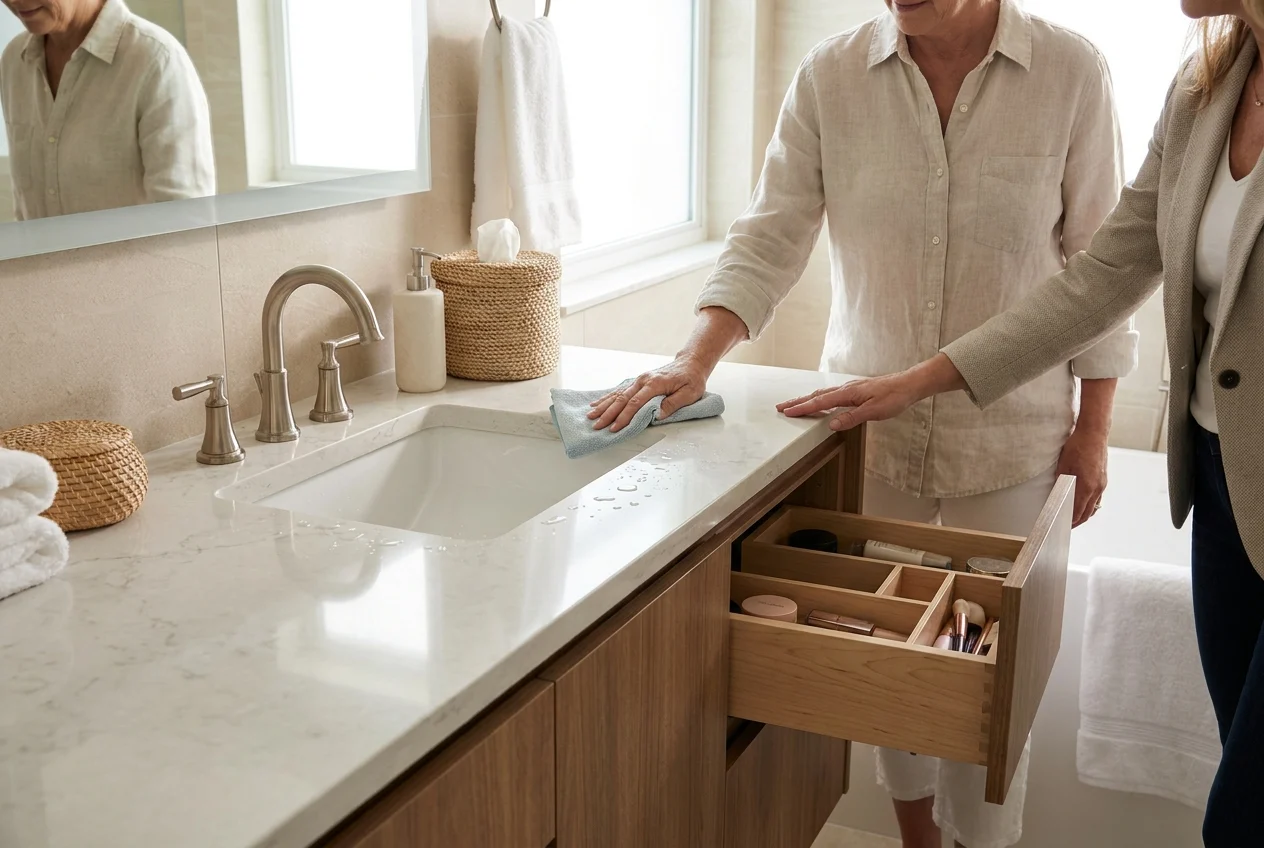
Regardless of material, standing water should not be allowed to collect around faucets and sink rims. Cosmetics, hair color, oils, and strong cleaning products should be wiped up promptly.
Laundry Rooms, Bars, and Other Work Areas
Laundry room countertops benefit from stain resistance and easy cleaning, particularly when the surface is used for folding, sorting, or treating clothing. Quartz can be a practical choice, but homeowners should consider exposure to bleach and other strong products.
For beverage bars and entertainment areas,appearance and stain resistance are both important. Quartz provides a polished, consistent look, while granite can add natural character. Prompt cleanup is recommended for wine, citrus, coffee, and other potentially staining liquids.
Making a Confident Countertop Selection
Before deciding between quartz and granite, compare full size samples under the room’s actual lighting. Review maintenance requirements, heat exposure, slab variation, seam locations, edge profiles, and installed pricing.
Quartz may be the better fit for homeowners who prioritize consistent patterns and minimal maintenance. Granite may be preferable for those who value natural stone, unique movement, and greater resistance to sunlight.
Cabinet Outlet & More helps homeowners in Venice, Florida and surrounding communities coordinate countertops with made-to-order cabinetry, vanities, hardware, and other finishing details. A personalized design consultation can simplify material comparisons and help ensure that every selection works together from planning through installation.
Need help with Quartz vs. Granite Countertops: A Practical Guide for Venice Homeowners?
