






In many Florida homes, the laundry room has to work harder than it looks. Between beach towels, sports uniforms, pet items, humidity, sandy clothes, and frequent wash cycles, this small space can quickly become one of the busiest storage zones in the house.
A well-planned laundry area does more than hide detergent and baskets. It helps streamline weekly routines, protect supplies from moisture, reduce clutter, and make better use of every cabinet, shelf, wall, and corner. Whether your laundry room is a dedicated room, a garage alcove, a hallway closet, or a compact pass-through space, the right storage strategy can make it feel more efficient and easier to maintain.
Plan Around Florida’s Climate and Daily Laundry Habits
Florida living brings unique laundry challenges that should influence how the room is organized. High humidity can affect paper products, powdered detergents, cleaning cloths, and anything stored in cardboard packaging. If the laundry space is connected to the garage, near an exterior door, or located in a non-air-conditioned area, moisture management becomes even more important.
Start by identifying what actually happens in the space each week. A household that regularly handles swimwear, pool towels, work uniforms, school clothes, or beach gear will need different storage than a household focused on delicate garments and everyday linens. Mapping out these routines helps determine whether the priority should be hanging space, towel storage, sorting bins, utility shelves, or closed cabinets.
Ventilation and airflow should also be part of the plan. Damp towels, wet bathing suits, and cleaning rags should not be tossed into closed hampers where mildew can develop. Open shelving, ventilated baskets, wall hooks, and designated drying areas can help items dry faster while keeping them off the floor and away from freshly washed laundry.

Choose Storage Materials That Stand Up to Moisture
In a Florida laundry room, storage materials should be selected with durability in mind. Wire shelving, coated metal baskets, plastic bins, and moisture-resistant cabinetry can perform better than unfinished wood or thin cardboard containers. Clear lidded bins are especially useful for keeping extra supplies visible while helping protect them from humidity, dust, and pests.
If you prefer a more finished look, consider cabinets with easy-to-clean surfaces and hardware that can tolerate frequent use. For open shelves, use washable bins or baskets to group smaller items such as dryer sheets, stain removers, lint rollers, mesh wash bags, and extra sponges. This keeps the shelves tidy without making daily essentials hard to reach.
Create Dedicated Zones for Sorting, Washing, Drying, and Storage
An efficient laundry room works best when every task has a clear place. Instead of treating the room as one general storage area, divide it into functional zones. A sorting zone might include divided hampers for whites, darks, towels, and delicates. A washing zone should keep detergent, stain remover, bleach alternatives, and measuring tools close to the washer. A drying zone may include a hanging rod, fold-down rack, or wall-mounted hooks for air-dry garments.
The storage zone should be planned separately from the active work zones. Bulk supplies, seasonal linens, extra paper products, cleaning refills, and less frequently used items can be stored higher up or in deeper cabinets. Everyday products should stay at eye level or within easy reach so the room supports the routine instead of slowing it down.
Counter space is especially valuable in a laundry room, even if it is limited. A flat surface above front-loading machines, a small folding table, or a pull-out shelf can provide a designated spot for folding clothes, treating stains, and organizing items before they leave the room. When folding space is not available, clean laundry often ends up on top of appliances, chairs, or nearby floors, which can make the entire area feel cluttered.
Make Vertical Space Work Harder
Many laundry rooms have unused wall space above the washer, dryer, utility sink, or door. Installing shelves, cabinets, peg rails, or wall-mounted organizers can free up floor space and keep supplies off appliance tops. Tall, narrow storage can be especially helpful in compact Florida homes where the laundry area shares space with a pantry, mudroom, hallway, or garage entry.
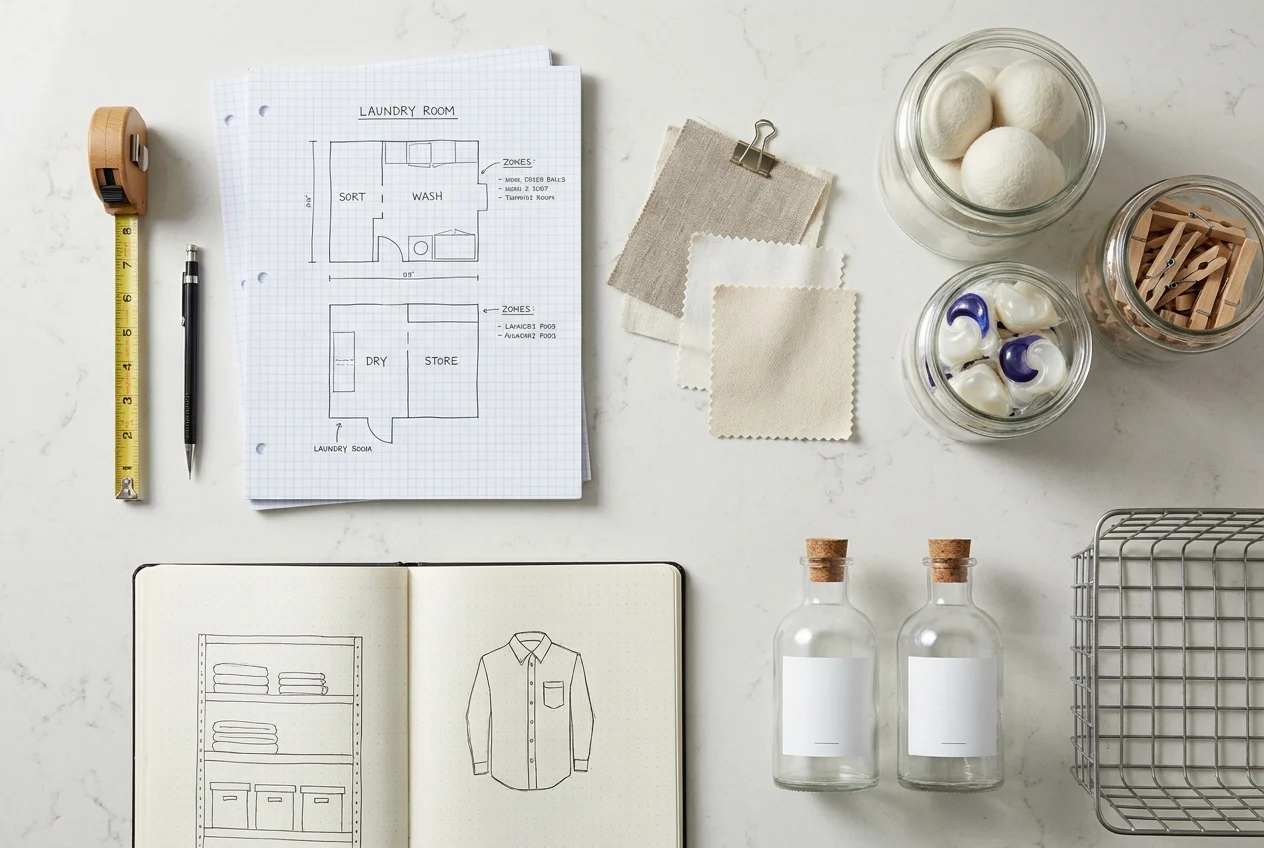
Vertical storage also makes it easier to separate household cleaning products from laundry products. Place potentially hazardous items higher and out of reach of children and pets, while keeping safe everyday tools in accessible bins or caddies. Labeling shelves or containers can help everyone in the household return items to the right place, which is one of the simplest ways to maintain long-term organization.
Use Smart Cabinetry to Hide Clutter Without Losing Access
Closed cabinetry can dramatically improve the appearance of a laundry room, but it should be planned carefully so it does not simply hide disorganization behind doors. The most effective cabinets are designed around the height, size, and frequency of use of the items inside. Tall bottles of detergent, fabric softener, stain sprays, and cleaning refills need adjustable shelves so you are not forced to lay products on their sides or crowd them into awkward corners.
Upper cabinets are ideal for products you want concealed, especially if your laundry room is visible from a kitchen, hallway, or garage entry. They can store backup detergent, light bulbs, batteries, pet grooming supplies, household cloths, and seasonal cleaning items. To make upper storage more efficient, place less frequently used supplies on the top shelf and everyday laundry products on the lowest shelf. This keeps the room attractive without creating a daily reach problem.
Base cabinets can be even more useful if they include pull-out trays or deep drawers. A deep lower drawer can hold bulk detergent containers, extra towels, cleaning bottles, or a laundry caddy. Pull-out trays prevent items from disappearing at the back of a cabinet, which is a common reason households accidentally buy duplicate supplies. In a humid climate, keeping products visible and rotated also helps reduce the chance of forgotten items leaking, clumping, or expiring.
Consider a Utility Sink Cabinet
If your laundry room has a utility sink, the cabinet below it can become valuable storage when used properly. Because plumbing reduces available space, under-sink areas work best for compact items such as scrub brushes, rubber gloves, small buckets, stain tools, and extra sponges. Use waterproof bins or trays under the sink to contain drips and protect the cabinet base.
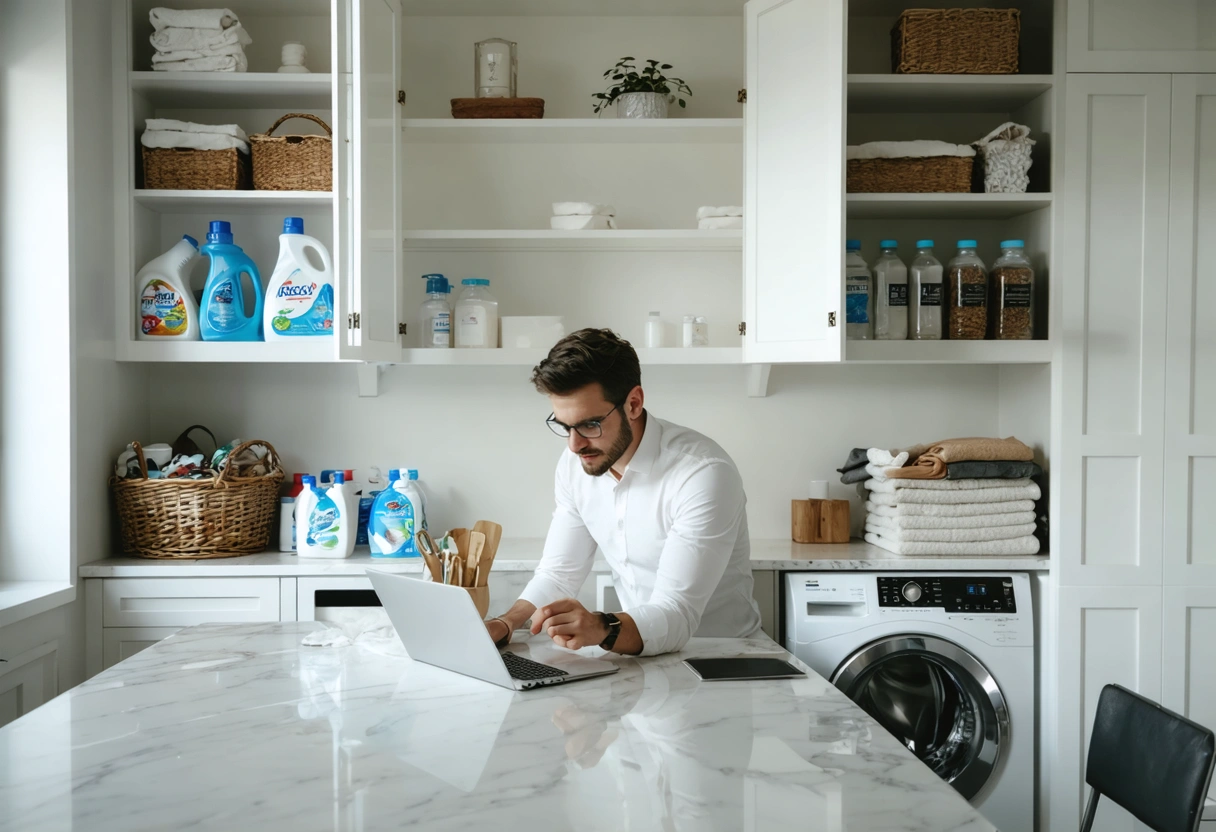
A utility sink is especially practical in Florida homes where outdoor living is part of everyday life. It provides a place to rinse sandy shoes, soak stained clothing, wash pet bowls, clean gardening tools, and pre-rinse swimsuits before they go into the washer. Storing the right supplies nearby turns the sink into a true work station rather than an underused fixture.
Design Better Systems for Hampers, Baskets, and Linens
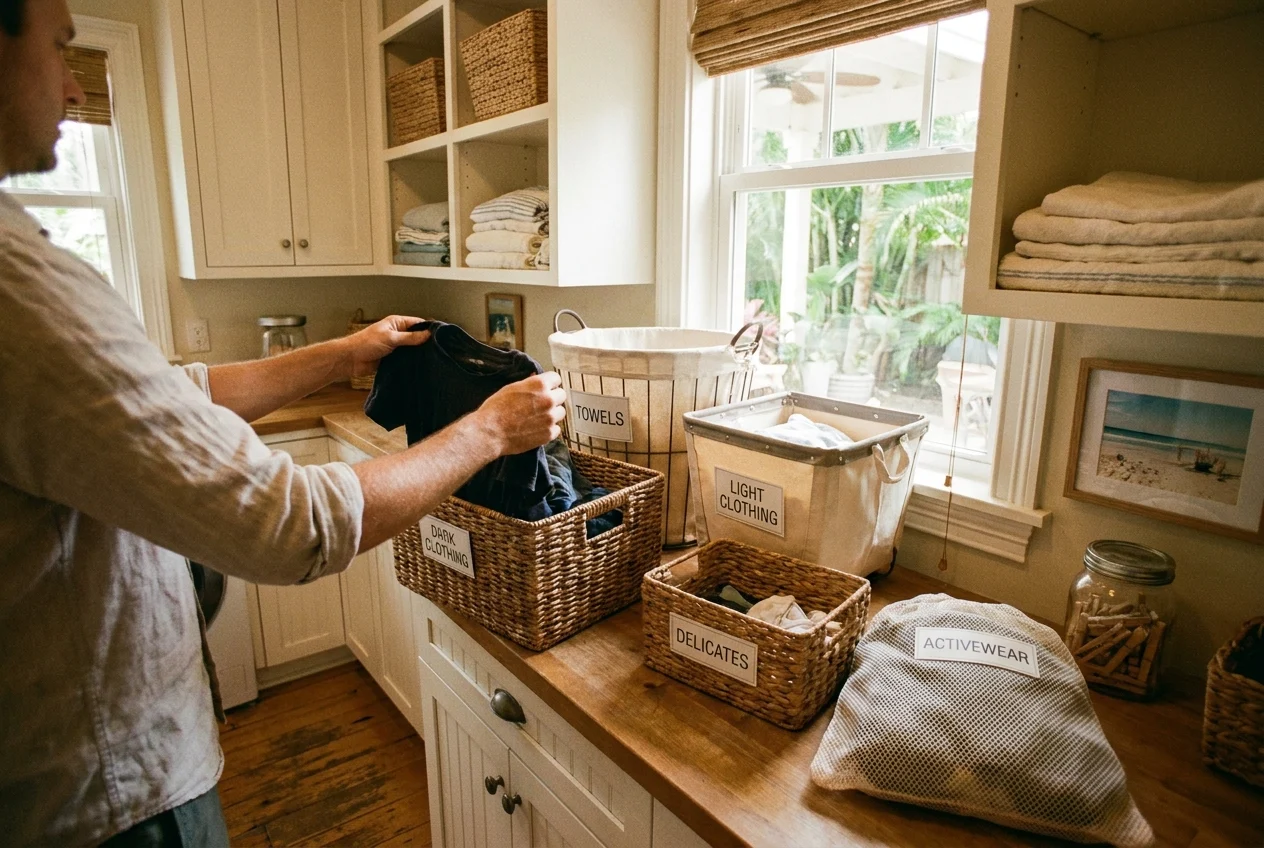
Hampers and baskets are often the difference between a laundry room that stays functional and one that constantly feels chaotic. Instead of relying on one large hamper, create a sorting system that reflects how you actually wash. Separate bins for towels, dark clothing, light clothing, delicates, and activewear can reduce time spent sorting on laundry day and help prevent damp items from being buried under dry ones.
For families, labeled hampers can make routines easier for children and adults alike. A simple label such as “towels,” “uniforms,” or “air dry” gives everyone clear instructions. If space allows, choose hampers with removable liners so loads can be carried directly to the washer. In narrow rooms, slim rolling hampers can slide between appliances or along a wall, turning unused gaps into practical storage.
Clean laundry needs a system too. Without a defined landing place, folded items often linger in baskets for days. Open cubbies can help separate clean clothes by family member or category. A shelf for folded towels, a basket for orphan socks, and a small tray for items found in pockets can prevent small pieces from spreading throughout the room.
Store Linens With Purpose
If your laundry room doubles as a linen storage area, group items by use rather than by size alone. Pool towels, guest towels, kitchen towels, cleaning cloths, pet towels, and bed linens should each have a defined section.
In Florida, pool and beach towels often deserve their own dedicated shelf or basket near the laundry area. Choose breathable storage so towels are fully dry before they are put away.
Add Drying Solutions for Delicates, Swimwear, and Damp Gear
Air drying is especially important for swimwear, performance fabrics, delicate garments, and certain uniforms. Florida households often wash these items more frequently because of heat, outdoor activities, and regular exposure to sunscreen, saltwater, pool chemicals, and sweat.
Wall-mounted drying racks are excellent for small laundry rooms because they fold away when not in use. A hanging rod above a counter or between two cabinets can hold garments on hangers as they dry.
For very damp items, such as swimsuits and beach towels, consider a drip-friendly zone near a utility sink or over a waterproof mat. This helps control moisture and protects flooring.
Improve Odor Control
Odor control is closely tied to airflow and organization. Damp laundry left in closed bins, crowded corners, or forgotten baskets can quickly develop a musty smell.
Keep the washer itself clean as part of the room’s overall system. Leave the washer door open after use when safe to do so, wipe the gasket on front-loading machines, and store cleaning tablets or maintenance supplies in a labeled container nearby.
Maximize Small Laundry Closets and Garage Laundry Areas
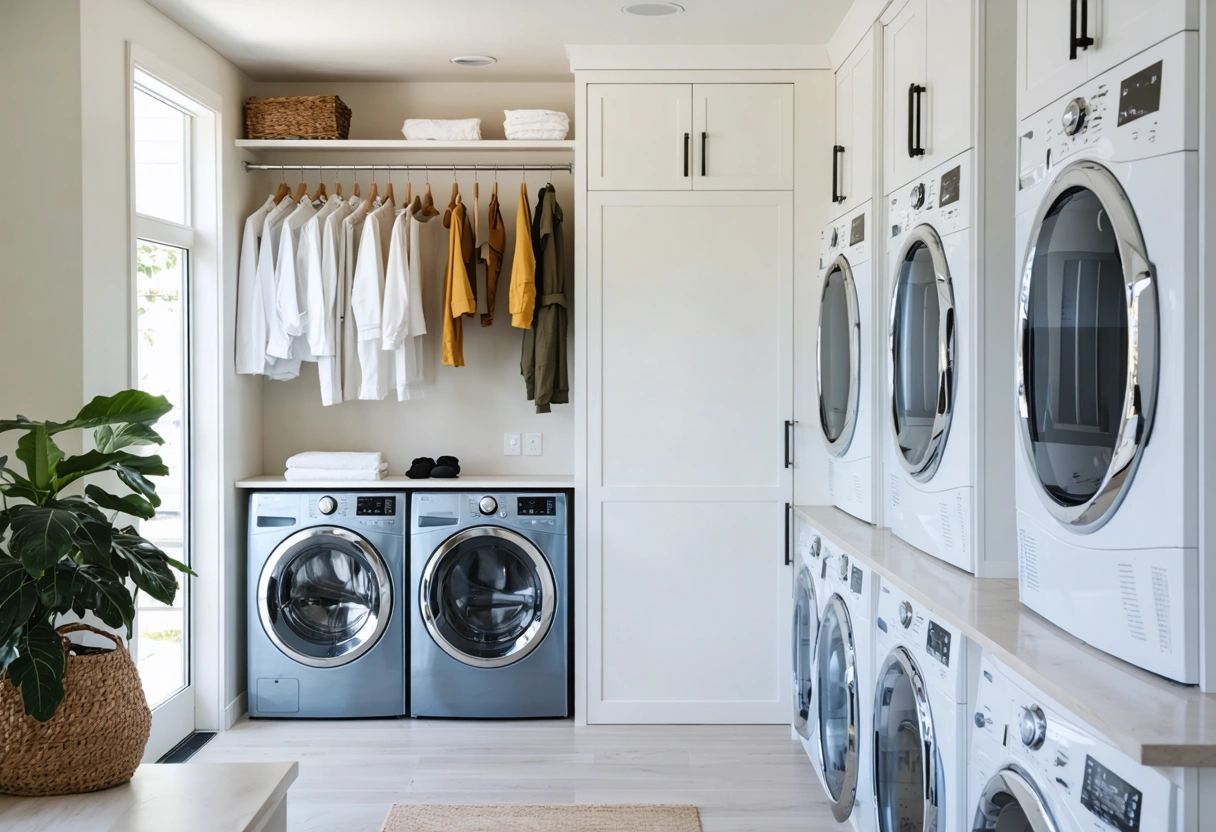
Not every Florida home has a spacious laundry room. Many homes have laundry closets, pass-through laundry areas, or washer and dryer setups in the garage.
In a laundry closet, shallow shelves are often better than deep ones because they prevent items from getting lost. Use matching bins to group supplies and keep the look clean when closet doors are open.
Garage laundry areas require extra attention to heat, dust, and pests. Store detergents and paper goods in sealed containers or closed cabinets whenever possible. Avoid placing laundry supplies directly on the garage floor, especially near exterior doors where water, leaves, insects, or debris may enter.
Protect the Floor and Pathways
Laundry spaces work best when the floor remains clear. Baskets, bulk purchases, shoes, and cleaning tools can quickly create trip hazards, particularly in
Need help with Laundry Room Revamp: Creating an Efficient, Organized Space in Your Florida Home?