






A well-designed closet should make daily routines easier, protect clothing and accessories, and use every available inch effectively. Whether a home has a spacious walk-in closet or a compact reach-in closet, the best storage plan depends on more than square footage. Clothing needs, accessibility, room layout, and personal habits all influence which features will provide lasting value.
For homeowners in Venice, Florida, customized closet organization can also help accommodate seasonal wardrobes, lightweight linens, shoes, luggage, and other everyday essentials. Understanding how walk-in and reach-in closets function is the first step toward creating a personalized system that feels organized, attractive, and easy to maintain.
Start With Space, Access, and Everyday Habits
Before selecting shelving, drawers, or hanging rods, consider how the closet will be used each day. A walk-in closet allows a person to enter the storage area and may provide usable wall space on two or three sides. A reach-in closet is accessed from the room and typically has a shallower footprint. Although the basic layouts differ, either type can work exceptionally well when the design reflects the homeowner’s wardrobe and routines.
Begin by taking inventory of what needs to be stored. Count long hanging garments, shirts, folded clothing, shoes, handbags, jewelry, and accessories. It is also helpful to identify items that are used frequently and those that can be placed on higher shelves. This practical review prevents the common mistake of choosing a visually appealing system that does not provide the right balance of hanging, folding, and enclosed storage.
How Walk-In Closets Use Their Footprint
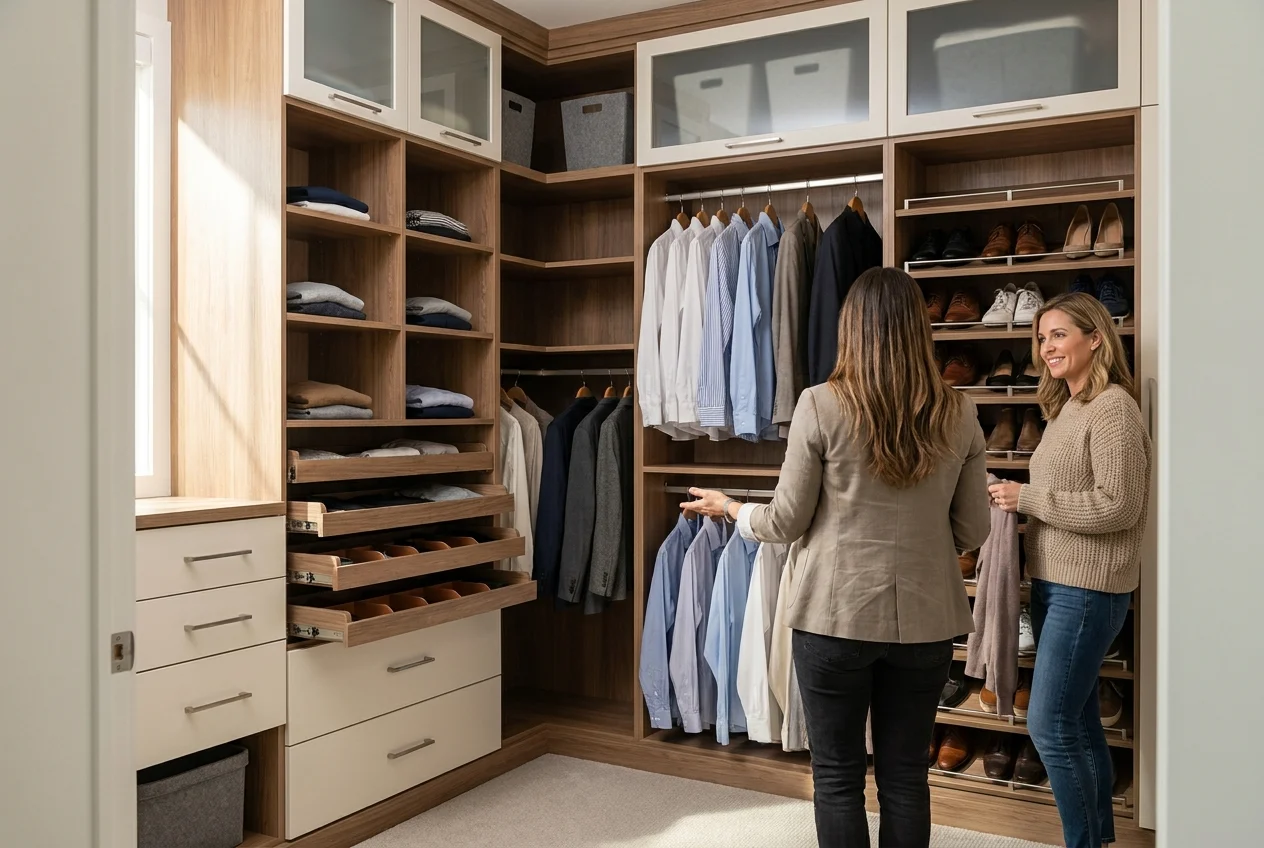
Walk-in closets offer more opportunities to create distinct storage zones. One wall might hold double hanging rods for shirts and pants, while another includes drawers, shelves, and space for longer garments. Larger layouts may also accommodate a bench, mirror, hamper, or center cabinet, provided that comfortable walking clearance is preserved.
More space does not automatically guarantee better organization. Deep corners, poorly placed rods, and oversized shelving can make items difficult to reach. A made-to-order design can address these challenges by fitting components to the room’s exact dimensions and placing frequently used belongings within comfortable reach.
How Reach-In Closets Maximize a Compact Area
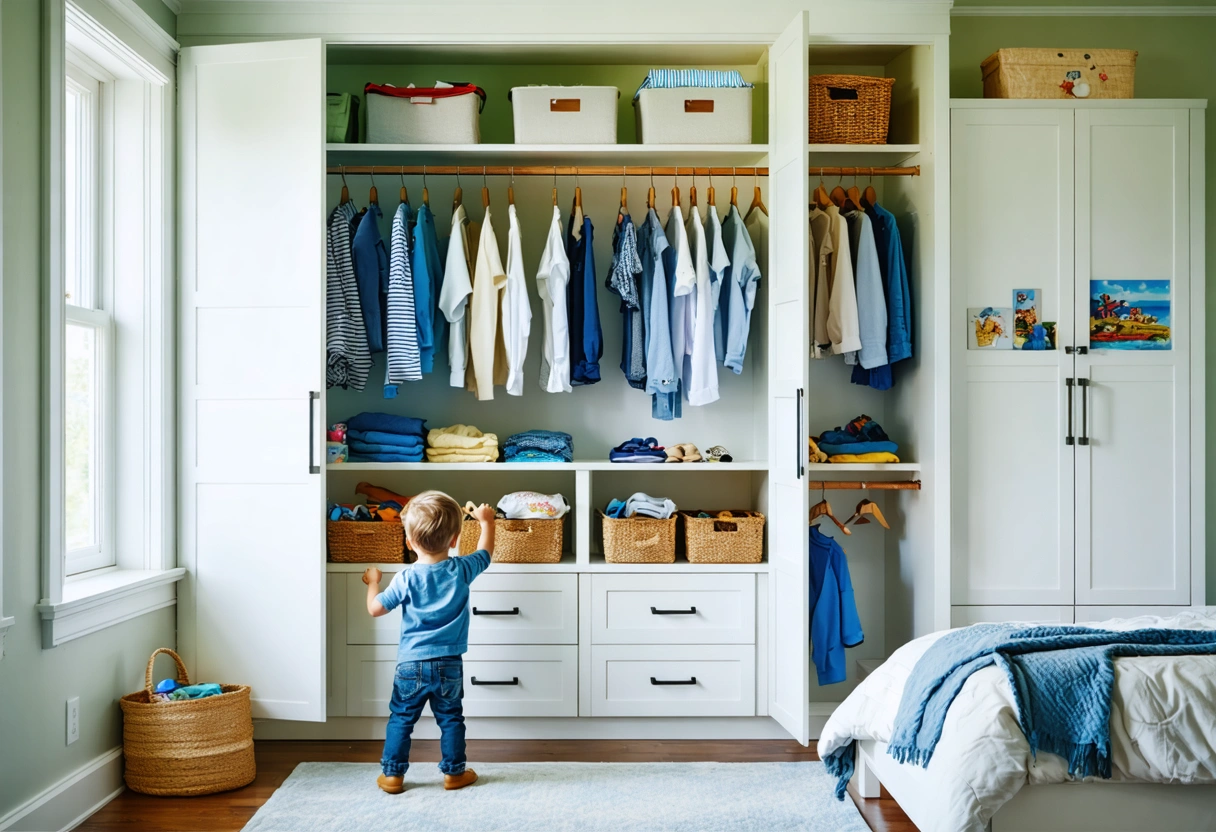
Reach-in closets benefit from careful vertical planning. Double hanging sections, adjustable shelves, drawer units, and dedicated shoe storage can significantly increase capacity without changing the closet’s footprint. The design should also account for door style because sliding doors, bifold doors, and hinged doors provide different levels of access to the interior.
A common reach-in closet problem is a single rod with one shelf above it. This arrangement often leaves valuable space unused and allows folded items or shoes to become cluttered.
Compare the Strengths and Limitations of Each Closet Type
Walk-in closets are often preferred for their generous capacity and room-like feel. They can support separate storage zones for two people and offer more flexibility for specialized features.
Reach-in closets use less floor space and keep clothing visible from the adjoining room. They can be highly efficient in bedrooms, guest rooms, hallways, and smaller homes throughout the Venice area.
When a Walk-In Closet May Be the Better Fit
A walk-in closet may suit homeowners with an extensive wardrobe, shared clothing storage, or a preference for separate zones for dressing and organization. It can also provide space for accessories, luggage, linens, and other items that might otherwise require additional furniture in the bedroom.
The most successful walk-in layouts prioritize function before decorative details. Clear walking paths, accessible corners, suitable lighting, and a balanced mix of open and enclosed storage help the space remain practical over time.
When a Reach-In Closet May Offer Better Value
A reach-in closet can be the better option when preserving bedroom floor space is important or when an existing closet opening already supports convenient access.
Reach-in systems are also useful for children’s rooms, guest bedrooms, entry areas, and linen storage because adjustable shelves and rods can adapt as needs change.
Choose the Right Mix of Closet Components
The overall closet type matters, but the individual components determine how useful the space will be. A personalized closet design should allocate storage according to the items a homeowner owns rather than relying on equal sections or standard dimensions.
Hanging Space for Different Garment Lengths
Double hanging rods are one of the most effective ways to increase storage for shirts, folded pants, skirts, and other shorter garments. A separate full-length section can accommodate dresses, coats, robes, and longer pieces without allowing fabric to collect on a shelf or drawer below.
Walk-in closets often have enough wall space to separate clothing by type or by person. In a reach-in closet, combining a narrow long-hanging section with a larger double-hanging section can provide a practical balance.
Adjustable Shelving for Changing Needs
Adjustable shelves offer flexibility for folded clothing, handbags, hats, baskets, and display items. Shelf spacing can be changed when a wardrobe evolves or when the closet needs to accommodate different belongings.
Shelf depth also deserves careful attention. Shelves that are too shallow may not support folded clothing securely, while overly deep shelves can cause smaller items to disappear behind one another.
Drawers and Enclosed Storage
Built-in drawers can reduce the need for a separate dresser and give smaller items a designated home. They work well for undergarments, sleepwear, exercise clothing, jewelry, and accessories.
Enclosed cabinets can keep less frequently used belongings protected and reduce visual clutter. They may be particularly useful for personal items, travel accessories, extra linens, or seasonal pieces.
Shoe and Accessory Organization
Shoe storage should match both the number and types of shoes being stored. Flat shelves may be suitable for sandals, sneakers, and everyday footwear, while taller openings may be needed for boots.
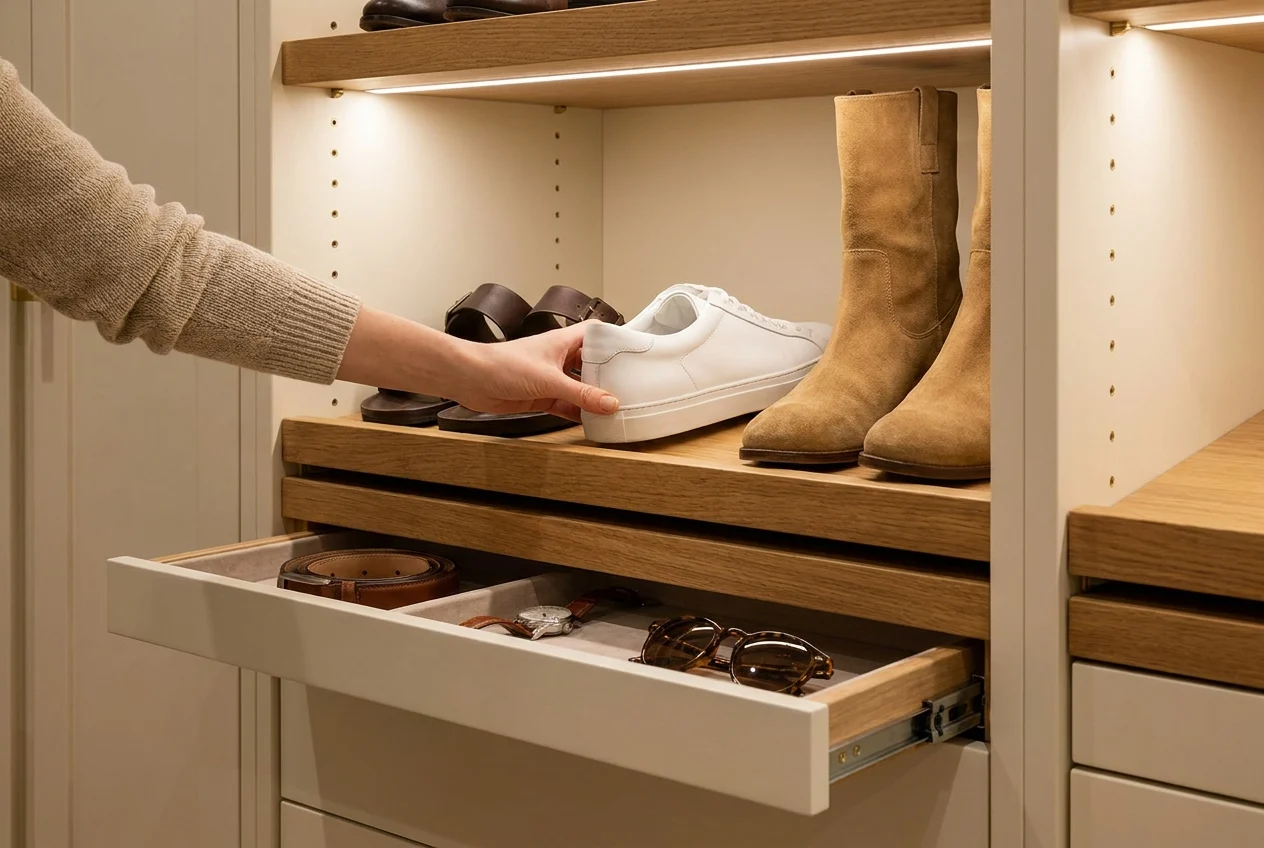
Belts, scarves, ties, handbags, and jewelry are easier to manage when each category has a dedicated location. Pullout racks, shallow drawers, hooks, dividers, and smaller cubbies can prevent accessories from becoming tangled or overlooked.
Plan Around Doors, Corners, and Clearances
A closet system must function within the room, not simply fit on the wall. Door movement, drawer clearance, baseboards, electrical outlets, attic access, windows, and air vents can all affect the final design.
Door Considerations for Reach-In Closets
Sliding doors conserve floor space, but they usually limit access to one section of the closet at a time. Storage components should be arranged so that drawer fronts and pullout accessories align with accessible portions of the opening.
Bifold doors can expose more of the interior, although the folded panels may partially block the sides. Hinged doors provide broad access and can sometimes support hooks or other lightweight organization features, but they require enough open floor area to swing comfortably.
Corner Planning in Walk-In Closets
Corners can add capacity when designed well, but they can also create hard-to-reach pockets. Shelves that meet without sufficient spacing may block access, while overlapping hanging sections can cause garments to bunch together.
Comfortable pathways are equally important. Drawers, hampers, and cabinet doors should open without obstructing movement through the closet. Preserving usable clearance often creates a better result than filling every wall with the deepest possible components.
Consider Lighting, Visibility, and Finishing Details
Good lighting helps homeowners distinguish colors, locate smaller items, and keep the closet organized. Walk-in closets may need more than one fixture to prevent shadows near shelves and hanging sections.

Lighting placement should be coordinated with rods, shelves, cabinets, and doors. Fixtures should illuminate the storage areas without interfering with access or exposing clothing to unnecessary heat.
Finishes That Complement the Home
Closet finishes can coordinate with bedroom furniture, bathroom cabinetry, flooring, or the home’s broader interior style. Light finishes may help a compact reach-in closet feel brighter, while wood tones can add warmth to a larger walk-in space.
Appearance should be balanced with durability and maintenance. Shelves, drawer boxes, hardware, and supporting components need to withstand repeated daily use. Smooth, easy-to-clean surfaces are practical in the Venice, Florida climate, where sand, humidity, and frequent indoor and outdoor activity can affect household storage areas.
Account for Southwest Florida Lifestyles
Closet organization in the Venice area often needs to support lightweight clothing, sandals, beach accessories, golf attire, travel items, and occasional cool-weather garments. Designing around these real wardrobe patterns can be more useful than following a generic closet template.
Upper shelves can hold luggage, extra bedding, or less frequently used seasonal items. Frequently worn clothing and shoes should remain within easy reach, while beach bags, hats, and activity gear may benefit from open cubbies or hooks.
Ventilation and Moisture Awareness
Air circulation is an important consideration in Florida homes. Closets should not block existing vents, and clothing should have enough room to hang without being compressed tightly against walls or one another.
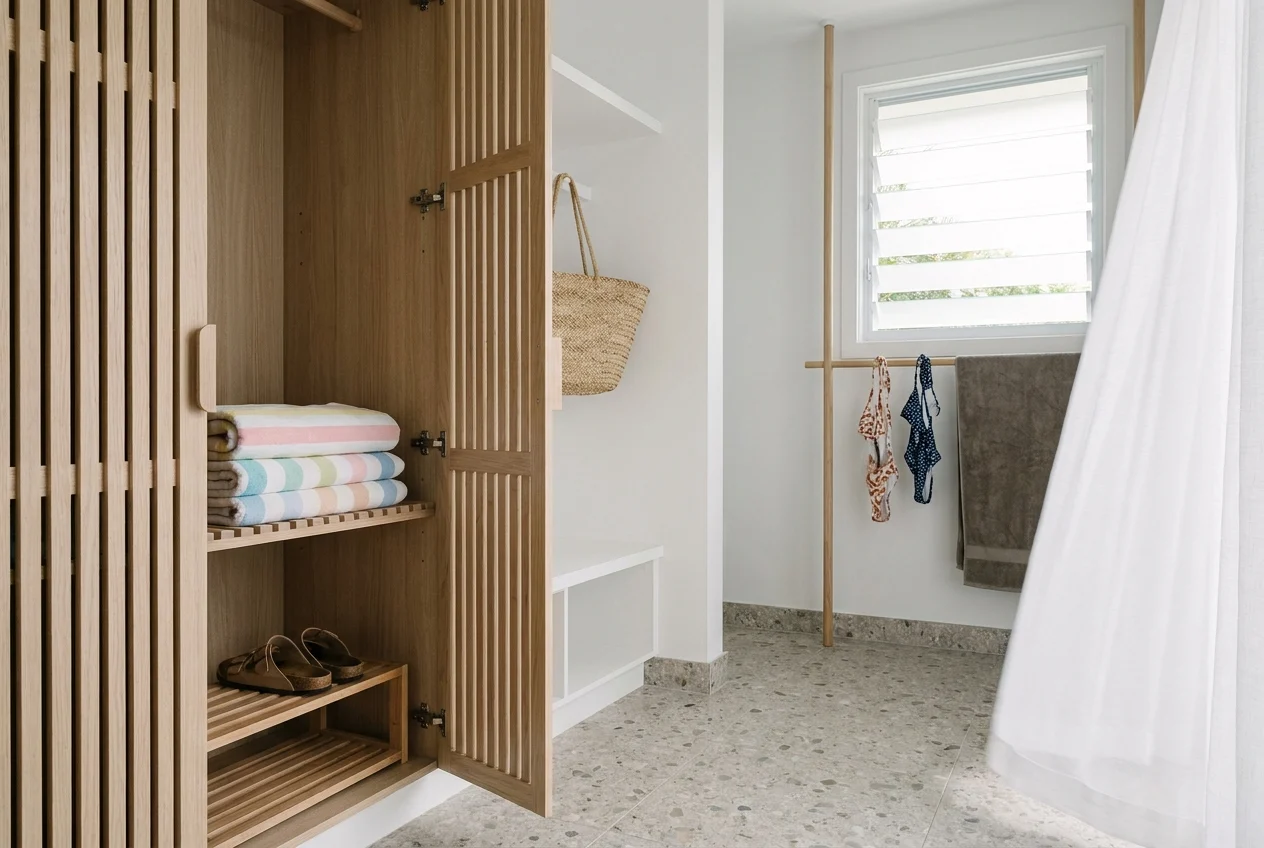
Closed cabinets and drawers can protect belongings from dust, but they should not be used to conceal damp items. Shoes, beachwear, towels, and other belongings should be dry before storage.
Decide Whether to Reconfigure or Work Within the Existing Closet
Not every storage improvement requires structural changes. Many reach-in closets can gain considerable capacity through better shelving, additional rods, drawers, and accessories. A walk-in closet may also be transformed by replacing poorly arranged components without changing walls or flooring.
Structural changes may be worth considering when the current opening is too narrow, the closet occupies space inefficiently, or an adjoining area offers a practical opportunity to improve access.
Questions to Ask Before Changing the Layout
Consider whether the current closet can hold the wardrobe with a better configuration, whether doors limit access, and whether nearby floor space is more valuable for the bedroom or closet.
A professional design consultation can help compare options and clarify which improvements offer practical long-term value. Accurate measurements, made-to-order components, and coordinated installation can reduce guesswork while ensuring the finished closet fits the room properly.
Make the Final Choice Based on Function
Walk-in closets provide room for multiple storage zones and specialized features, while reach-in closets preserve floor space and can deliver impressive efficiency. Neither option is automatically better.
Cabinet Outlet & More helps homeowners in Venice, Florida, and surrounding communities plan personalized closet systems with practical storage, quality materials, and attractive finishes. A consultation can help determine whether reconfiguring an existing reach-in closet, improving a walk-in layout, or exploring a larger renovation is the most sensible next step.
Need help with Walk-In vs. Reach-In Closets: Choosing the Right Storage Solutions?